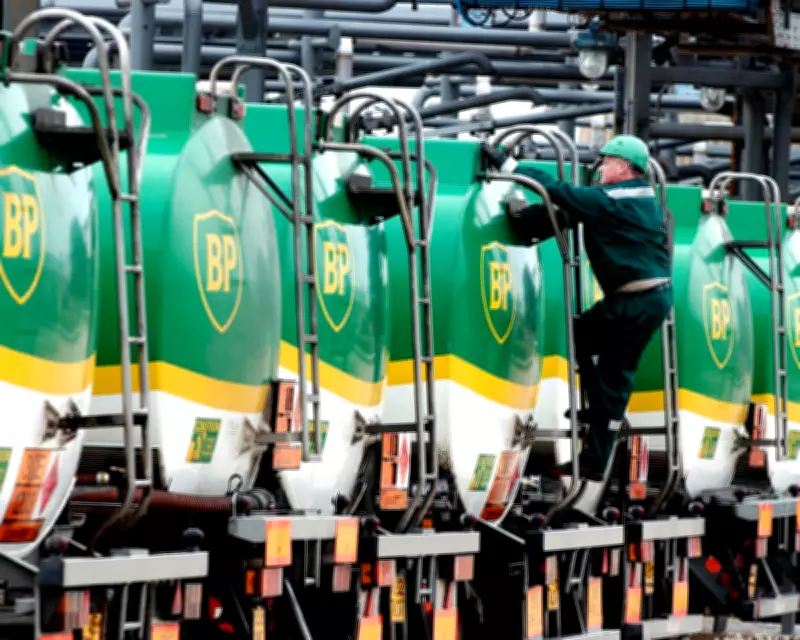
BP has announced plans to sell stakes in two flagship carbon capture and storage projects in the north-east of England, as the company continues to pull back from its green agenda. The oil giant aims to reduce its share in the Net Zero Teesside (NZT) project, which seeks to develop the UK's first gas power plant equipped with controversial carbon capture technology to eliminate emissions. Additionally, BP intends to cut its stake in the Northern Endurance Partnership (NEP), which plans to construct a network of offshore pipelines to transport carbon dioxide from the Humber, including from the Teesside power plant, for storage under the North Sea.
Background of the Projects
These flagship carbon capture initiatives were championed by BP's former chief executive, Bernard Looney, who described them as "the right thing for the world, a tremendous business opportunity" that would create the nation's first major carbon capture project and "maybe the world's first zero-carbon industrial cluster." However, Looney's departure nearly three years ago triggered a tumultuous period for the 117-year-old company, marked by a leadership overhaul and the steady dismantling of his green agenda, which failed to win over BP shareholders.
Current Status and Plans
BP stated that the "time is right" to sell a portion of its equity in both projects, which have recently entered the construction phase, and to bring in additional partners to support their long-term future. The company did not specify how much of its share it hopes to sell or whether it is in discussions with potential buyers. Other participants in the projects include Norway's state oil company Equinor, which holds stakes in both schemes, and French oil company TotalEnergies, which has a stake in the NEP pipeline project.

BP's decision to step back from the UK's carbon capture plans comes amid reports that the company is considering a retreat from the North Sea after more than 60 years of operations in the basin. The new chief executive, Meg O'Neill, who assumed the role in April, is reportedly reviewing the company's global portfolio and may consider reducing its exposure to the UK, partly due to the government's energy policies.
Government Policies and Reactions
The UK government has banned new exploration licences in the North Sea and resisted calls to amend the previous government's windfall tax regime to encourage more oil and gas production. Energy secretary Ed Miliband recently used a social media post to condemn BP's windfall profits as "morally and economically wrong," though he quickly deleted the comments. O'Neill has already outlined plans to dismantle the company's 'gas and low-carbon' division, established under Looney, signaling a return to BP's previous structure of an upstream oil and gas production business and a downstream unit focused on refining, fuel distribution, and retail activities.