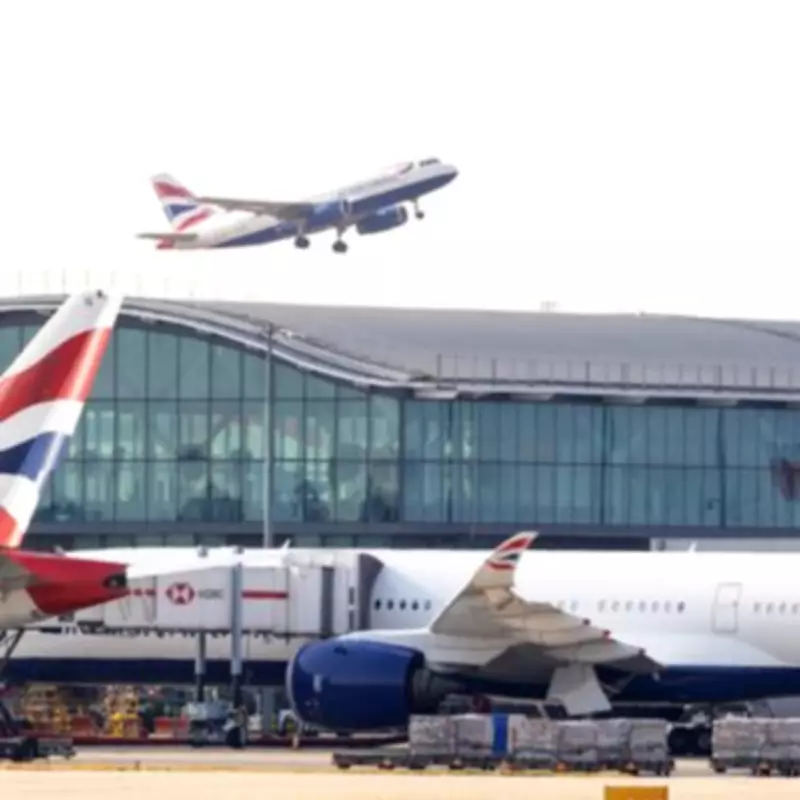
British Airways is set to impose fare increases as a result of the Iran war, but has reassured passengers that flights will go ahead. The airline's parent company, International Airlines Group (IAG), revealed it is facing a £1.7 billion surge in its jet fuel bill this year due to the fallout from the Middle East conflict.
Cost Recovery Measures
IAG, which also owns Iberia, Vueling, and Aer Lingus, aims to recoup around 60% of that increase—approximately £1 billion—through a combination of higher fares and cost reductions. The company declined to specify how much would come from price rises, noting that it will vary by route and airline. However, IAG Chief Executive Luis Gallego stated: "British Airways as a more premium brand will have a higher pass through."
No Fuel Surcharges
The company confirmed this week that it will not follow several rivals by adding fuel surcharges to recoup some of the cost spike. IAG downplayed the threat of jet fuel shortages, despite reports of potential disruption over the coming months, even if the conflict between the US, Israel, and Iran is resolved politically.

Jet fuel prices have soared amid the blockade of the Iran-controlled Strait of Hormuz, particularly impacting shipments to Asia. This surge and threats to supplies in some countries have led a number of airlines to cut back on planned flights. Recent data shows 13,000 flights globally have been pulled this month.
Summer Plans Unaffected
IAG expressed confidence that it will have enough jet fuel for the busy summer period. Mr. Gallego said: "We currently see no issues with fuel availability in our main markets, particularly as we benefit from our investment in fuel self-supply at our hubs."
Experts believe airlines will go to great lengths to avoid cancellations, but concerns remain about potential cutbacks if the Iran war continues. Mr. Gallego insisted that the company is "managing the uncertainty" caused by the fuel price increase. He added: "Whilst the impact of the higher fuel price will inevitably lead to lower profit this year than we originally anticipated, we are confident in our business model and strategy."
Financial Performance
IAG reported "strong demand across most of our markets" but noted "softer demand" in the eastern Mediterranean. The company recorded a profit of £365 million during the three months to the end of March, up 76.6% from £207 million a year earlier.
Russ Mould, investment director at broker AJ Bell, commented: "IAG has warned that higher fuel prices will hit profits this year, but there are words of encouragement for anyone worried if their summer holiday will go ahead. IAG reports no issues with fuel availability in its main markets."
He added: "Dependability is important in the airline industry. IAG avoiding widespread cancellations in a period clouded by fears of fuel shortages could help it to stand out from the crowd. Other airlines won't be so lucky. Keeping customers on side is much more important during a crisis than making big money, as it can help build long-lasting trust."
Mould also cautioned: "There are no guarantees that IAG will be able to stick to its scheduled flights post-summer. It flags the potential for jet fuel to be restricted on a global basis if the conflict lingers on."