China has issued a stark warning that President Donald Trump's latest tariff moves could significantly damage the crucial trade relationship between the two economic superpowers. The caution came during high-level talks in Paris, where Chinese officials expressed grave concerns about the potential consequences of Washington's new trade investigations.
Serious Concerns Over Trade Investigations
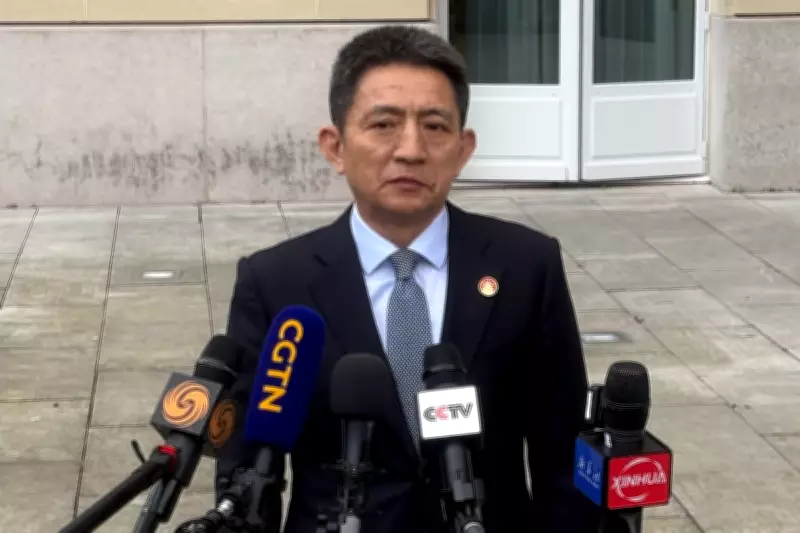
Li Chenggang, China's international trade representative, stated unequivocally that Beijing had conveyed serious apprehension regarding the Trump administration's manufacturing investigations in foreign nations. These probes were initiated after the U.S. Supreme Court overturned previous tariff measures, creating fresh uncertainty in international trade dynamics.
"We are concerned that the possible results of such investigations may interfere with or damage the hard-won and stable China-U.S. economic and trade relations," Li told assembled journalists in the French capital. His comments underscored the fragile nature of the bilateral relationship, which has experienced considerable turbulence in recent years.

Preparing for Presidential Diplomacy
The Paris meeting was specifically designed to prepare for President Trump's anticipated visit to China, scheduled to occur within approximately two weeks. However, the American leader has previously indicated that this diplomatic mission could face postponement, adding another layer of complexity to already tense negotiations.
Li declined to address questions regarding potential delays to Trump's visit, maintaining diplomatic discretion during his brief media appearance. The Chinese representative offered no further commentary and did not entertain additional queries from the press corps.
Iran Conflict Emerges as New Obstacle
Complicating matters further, the ongoing Iran war has emerged as a substantial stumbling block precisely as Washington and Beijing were working to mend their strained relationship. This development follows a previous tariff conflict that saw import taxes escalate dramatically to triple-digit percentages, creating significant economic disruption.
The two nations subsequently agreed to a one-year truce, providing temporary relief from trade hostilities. However, the new investigations threaten to undermine this fragile ceasefire and reignite economic tensions between the world's two largest economies.
Official Statements from US Delegation
Treasury Secretary Scott Bessent, who led the American delegation in Paris, sought to downplay concerns about diplomatic delays. He asserted that any potential postponement of President Trump's visit would not stem from disagreements regarding the Iran conflict or efforts to reopen the strategically vital Strait of Hormuz.
This crucial shipping channel remains essential for global maritime commerce, and its status has become increasingly contentious amid regional conflicts. Bessent's comments aimed to separate trade discussions from broader geopolitical tensions, though the interconnected nature of these issues makes complete separation challenging.
Historical Context of Presidential Visits
Should President Trump's visit proceed as planned, it would mark the first trip to China by a sitting U.S. president since his own visit during his initial term in 2017. This diplomatic mission would occur approximately five months after Trump's meeting with Chinese President Xi Jinping in Busan, South Korea.
The timing of these high-level engagements reflects the ongoing importance both nations place on maintaining functional diplomatic channels, even amid significant policy disagreements. The Paris discussions represent the latest chapter in this complex relationship, with trade remaining at the forefront of bilateral concerns.