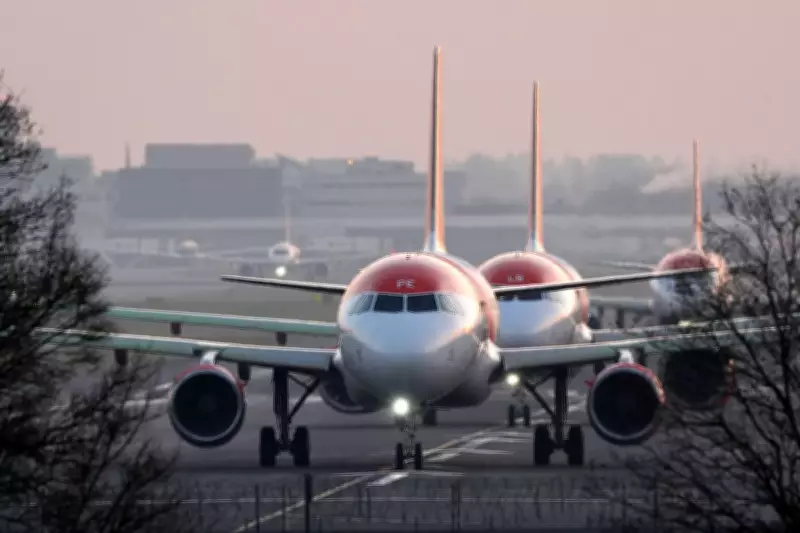
EasyJet’s chief executive, Kenton Jarvis, has assured passengers that the airline is “not seeing any disruption to fuel supply” and encouraged them to “book with confidence.” The comments come amid rising concerns that UK holidaymakers could face flight cancellations due to fuel shortages linked to the ongoing Iran oil crisis.
Fuel Supply Stable Despite Market Volatility
Some airlines have recently reduced their schedules following a spike in jet fuel prices, attributed to Iran’s influence on tanker traffic through the Strait of Hormuz. However, the impact on flights to and from the UK has been limited so far. EasyJet has stated its intention to “operate the full summer schedule on sale” and confirmed it has “normal supply visibility” for the next four weeks.
Speaking on BBC Radio 4’s Today programme, Mr Jarvis elaborated: “EasyJet is not seeing any disruption to fuel supply. We continue to operate normally and our customers should book with confidence, taking advantage of our great value fares.” He emphasised that the airline maintains close contact with fuel suppliers, airports, and governments, all of which have raised no issues regarding future supply.

Diversification Mitigates Gulf Oil Shortfall
Mr Jarvis acknowledged that less oil is coming from the Gulf region but noted that fuel suppliers have successfully diversified. “Production has increased in Norway, West Africa, and the Americas, and refining capacity for jet fuel has also increased substantially outside of the Gulf region,” he explained. He urged the public not to panic, reiterating EasyJet’s commitment to flying its full summer schedule and its promise not to impose fuel surcharges on booked tickets.
Booking Trends and Financial Impact
EasyJet reported that summer flight bookings are lower than the same period last year, partly due to uncertainty stemming from the Middle East conflict. The airline has sold 58% of its seats for the six months to the end of September, a drop of two percentage points year-on-year. However, short-notice bookings in the month of departure have increased compared to last year.
The group posted a half-year pre-tax loss of £552 million, consistent with its April trading update, compared to a loss of £401 million a year earlier. EasyJet warned that its financial results through September will be affected by the war, leading to higher fuel costs and “near-term uncertainty around customer demand.” Last month, the conflict cost the airline approximately £25 million in higher jet fuel prices in March alone.
Strong Balance Sheet Provides Resilience
Mr Jarvis concluded: “Despite conflict in the Middle East creating near-term uncertainty, easyJet is well placed to manage the current environment, supported by one of the strongest investment-grade balance sheets in European aviation.”