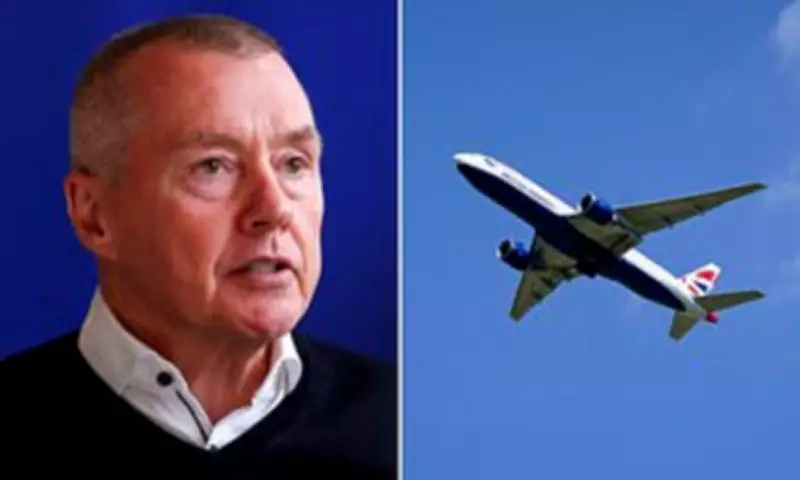
The director general of the International Air Transport Association (IATA), Willie Walsh, has stated that higher air fares are 'inevitable' as airlines face soaring jet fuel costs due to the ongoing conflict in the Middle East. Speaking to the BBC, Walsh explained that carriers can no longer absorb the additional expenses caused by the closure of the Strait of Hormuz, a critical waterway for global oil shipments.
Fuel Price Impact on Ticket Prices
Walsh noted that while there is no immediate need to panic over jet fuel shortages, rising fuel prices will inevitably lead to higher ticket prices. 'There's just no way airlines can absorb the additional costs they're experiencing,' he said. 'Over time, it's inevitable that the high price of oil will be reflected in higher ticket prices.' He added that some airlines might offer discounts to stimulate traffic, but the overall trend points to increased fares.
Flight Cancellations on the Rise
Data from aviation analytics company Cirium reveals that airlines have already cancelled 296 departures from UK airports in May, representing 0.75% of the total, up from 120 cancellations just six days prior. However, Walsh does not anticipate widespread cancellations, though he expressed concern about potential shortages during the peak summer period if alternative fuel supplies are not secured.

British Airways' parent company, IAG, has warned that its profits will be impacted, expecting to spend approximately two billion euros (£1.72 billion) more on fuel this year than planned. CEO Luis Gallego stated that he does not foresee any interruption in jet fuel supplies for the summer.
Government and Industry Response
Transport Secretary Heidi Alexander has assured the public that summer holiday plans will not face major disruption due to fuel shortages. She revealed that additional fuel has been imported from the United States, and UK refineries have increased production. The government has also introduced a temporary rule change allowing airlines to group passengers from different flights onto fewer planes to conserve fuel.
A government spokesperson said: 'UK airlines are clear that they are not currently seeing a shortage of jet fuel. Aviation fuel is typically bought in advance, and airports and suppliers keep stocks of bunkered fuel to support their resilience. We continue to work with fuel suppliers, airports, airlines, and international counterparts to keep flights operating.'
Industry Optimism Amidst Crisis
Despite the crisis, many European airlines and tour operators are expressing confidence in fuel supplies. TUI CEO Sebastian Ebel stated: 'There are always people who want to take a stand - we're running out of fuel. There's absolutely no indication of that. We think the discussion on fuel is a little bit artificial as we do see no shortages for the next weeks, and I would also see no impact in the summer at all, except prices.'
Wizz Air CEO Jozsef Varadi echoed similar sentiments, saying he is not concerned about jet fuel supplies for the next six months and that the carrier has not cancelled any flights due to a lack of fuel. 'Fuel is available in Europe. Looking at the next, I don't know, six, eight months, I think we just look fine. And we got the confirmations by suppliers for availability of fuel,' he added.
Ryanair CEO Michael O'Leary also noted in late April that 'the risk of a supply disruption is receding.'
Long-Term Concerns
However, not everyone shares this optimism. The International Energy Agency warned on Wednesday that global oil supply will not meet demand this year as the conflict disrupts Middle East production. In some European regions, such as the Amsterdam-Rotterdam-Antwerp area, jet fuel stocks are near record lows, according to LSEG Workspace data.
Lufthansa CEO Carsten Spohr stated that the company's fuel supplies are secured at least until early summer, but visibility decreases after mid-July. Around a quarter of the group's normal jet fuel came from the Gulf, with half of that replaced by fuel from other sources and the rest drawn from reserves.
EU energy commissioner Dan Jorgensen said: 'We don't expect a very serious security of supply issue on a very short term. But we cannot exclude that there will be security of supply issues on a longer term. This all depends, of course, on the situation in the Middle East.'

Increased Imports and Reserves
Airlines have been able to secure jet fuel from countries including the US and Nigeria by paying a premium. US companies have made $660 million (£488 million) from selling fuel to Britain, with 386,000 tonnes imported in April—ten times the amount compared to last year. Airport operators have also built up reserves, with a more than 60% increase in jet fuel stocks in April, according to aviation fuel tech firm i6 Group.
Private jet departures have soared, rising 10% in Europe in April compared to March, according to the Carbon Sky Index. There were 23,462 private jet flights in the continent last month.
Independent aviation analyst John Strickland noted: 'Summer is the key earnings season for airlines, and of course they want to reassure customers that it is safe to book.'