Mumbai's Historic Sassoon Dock Falls Silent as Iran War Fuels Diesel Crisis
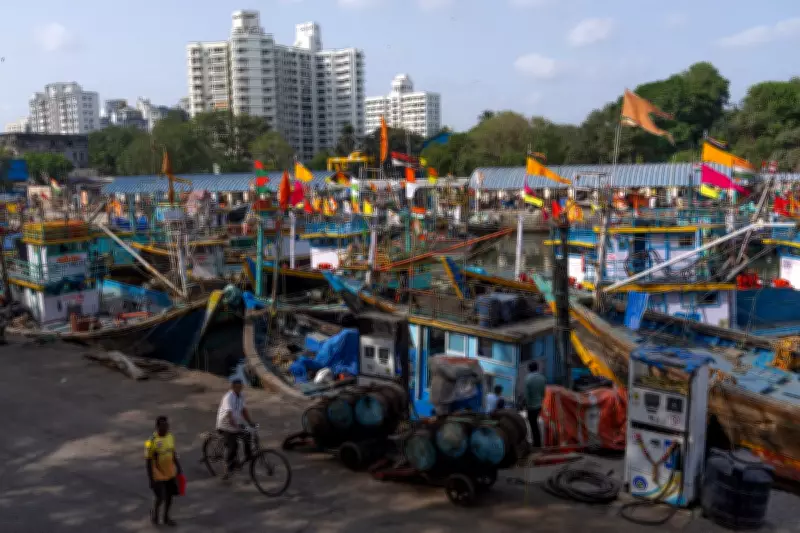
Since its construction in 1875, the Sassoon Dock in Mumbai, India's financial capital, has served as a vital gateway for trade with the Persian Gulf, a bustling hub for traders and laborers, and a center for commerce in textiles, spices, and opium. In recent decades, it has become a major focal point for the city's vibrant fish trade. However, the harbor now feels unusually muted, with boats sitting idle as the Iran war drives up fuel costs, creating a severe economic strain.
A Harbor Stilled by Soaring Diesel Prices
In the morning sun, boats are crowded together, their colorful flags fluttering against Mumbai's iconic high-rise skyline. Normally, the dock hums with activity: nets are unloaded, diesel engines rumble, ice is hauled, and fishmongers shout over the din. Today, that chaos has been replaced by widespread concern and inactivity.
Shekhar Chogle, a fishing boat owner with skin tanned a deep, warm brown from years at sea, has been forced to keep his vessel idle since the war began. His income has plummeted, labor costs persist, and rising diesel prices make fishing nearly impossible. "Our income has dropped significantly since we have not been able to take our boat out to sea," he lamented.

The Impact on Local Infrastructure and Communities
The diesel pump at the harbor appears forlorn, with a dry marigold garland hanging over it. One worker returned unsuccessfully from a gas station with six empty containers on his wood barrow. Bulk diesel prices have soared above $1.20 per liter (equivalent to $4.54 per U.S. gallon), severely hampering the groups that assist fishers with cheaper fuel, ice, and gear.
This crisis extends beyond Mumbai, affecting fishers across India and Asia who face an impossible choice: stay ashore or risk going out at a loss, putting their livelihoods and entire coastal communities on the brink of collapse. While news of a two-week ceasefire deal involving Iran, the U.S., and Israel offers some comfort, analysts warn that fuel flows will take time to normalize, leaving individuals like Chogle running out of time.
Struggles Persist Despite Limited Activity
Even with fuel prices soaring, a few boats still venture out, but the morning markets reflect the strain. The bustle continues, yet the haul is noticeably smaller. Women in colorful saris haggle over the limited supply, and one mother, balancing her baby on her hip, inspects each fish carefully, weighing the cost against her family's daily needs.
Chogle expressed deep anxiety about the future, stating, "If diesel prices don't come down soon, I don't know how we'll survive." The historic Sassoon Dock, once a symbol of trade and prosperity, now stands as a stark reminder of how global conflicts can disrupt local economies and threaten traditional ways of life.