Global Effort to Reopen Strait of Hormuz Faces Immense Challenges
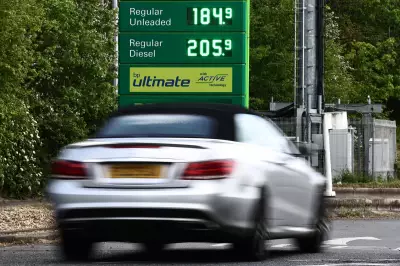
The ongoing conflict in Iran has effectively closed the Strait of Hormuz, a narrow waterway off Iran's coast that serves as a critical passage for oil and gas from the Persian Gulf. This closure has significantly contributed to rising fuel prices worldwide, causing economic strain at gasoline pumps across the globe. Given the strait's vital importance to the global economy, governments are urgently developing blueprints to swiftly reopen it to shipping once hostilities cease.
International Plans for Reopening
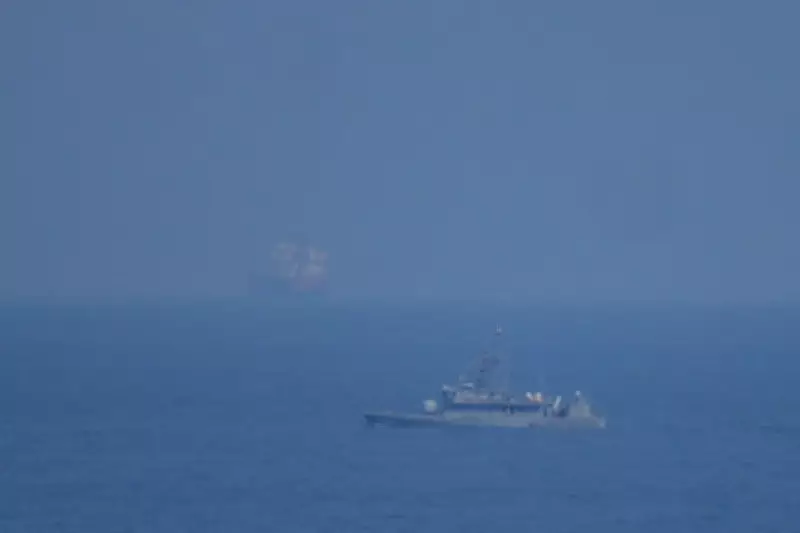
French President Emmanuel Macron is spearheading an international initiative to unblock this energy chokepoint, aiming to restore the free flow of oil, gas, and commercial goods "when circumstances permit." His strategy involves deploying warships to escort tankers and container vessels through the strait once fighting intensity diminishes. However, former naval officers with extensive experience in the Hormuz passage caution that such operations would be perilous if attempted before a full cessation of hostilities.
"In today's context, sending warships or civilian vessels into the Strait of Hormuz would be suicidal," stated retired French Vice Admiral Pascal Ausseur in an interview with The Associated Press. He emphasized that only a ceasefire agreement with Iran could shift the situation from "suicidal to dangerous," at which point military escorts might become feasible.

Lessons from Red Sea Operations
Naval forces from France, the United States, Britain, and other nations have gained valuable combat experience in the region, particularly from defending cargo ships against missile and drone attacks by Iran-backed Houthi rebels in the Red Sea. French frigates, for instance, utilized machine guns, cannons, and advanced air-defense systems to counter these threats. In 2024, the French frigate Alsace successfully intercepted three ballistic missiles while escorting a container ship.
Captain Jérôme Henry, who commanded the Alsace during these engagements, described the relentless nature of the attacks, noting that crew members endured significant fatigue due to constant alerts. "The crew didn't get much sleep," he recalled, highlighting the psychological and physical toll of such missions.
Retired Vice Admiral Michel Olhagaray, a former head of France's center for higher military studies, pointed out that navies have learned crucial lessons about coordination and escort tactics from both the Red Sea operations and Ukraine's defense against Russian missile barrages. "It would allow us to deploy to that region with fairly refined know-how and a high level of cooperation—and that is extremely important," he remarked, drawing on his own experience patrolling the Strait of Hormuz during the Iran-Iraq war in the 1980s.
Heightened Risks in Hormuz
The challenges in the Strait of Hormuz are substantially greater than those faced in the Red Sea. Iran possesses far superior military capabilities compared to its Houthi proxies, including anti-ship cruise missiles developed from Chinese designs, longer-range missiles, drones, fast attack craft, and naval mines. According to U.S. Defense Intelligence Agency mapping, Iran can target the entire strait and its approaches, making it a highly dangerous environment for shipping.
Olhagaray warned that the passage is "very, very dangerous" under current conditions, with risks "much greater" than in the Red Sea. He stressed that countering these threats would require more substantial and effective measures, including the elimination of most offensive installations on land in Iran, constant monitoring, patrols, and high-level intelligence. "That will not happen at all—not at all—in the near future," he concluded, underscoring the complexity of securing the waterway.
Insurance and Economic Hurdles
Beyond military concerns, reassuring shipping insurers and companies about the feasibility of navigating the strait again poses a significant challenge. Insurance premiums for vessels transiting Hormuz have skyrocketed to what France's transport minister described as "insane" levels, creating a major financial barrier for shippers.

Marcus Baker, global head of marine, cargo, and logistics at Marsh Risk, noted that insurance rates for oil tankers are now many times higher than pre-war levels, approaching the costs charged for ships carrying grain from Ukraine during the conflict with Russia. He suggested that potential naval escorts could provide some confidence to insurers, as similar measures have been used in past conflicts to enhance safety.
However, Ausseur, now a director at the Mediterranean Foundation for Strategic Studies, highlighted the economic reality: "Maritime traffic is a business. That business has to make money. If insurance costs are so high that you can't make a profit by sailing through a given area, then you don't sail through that area." This underscores the need for a comprehensive solution that addresses both security and financial viability to restore normal traffic through this crucial global artery.