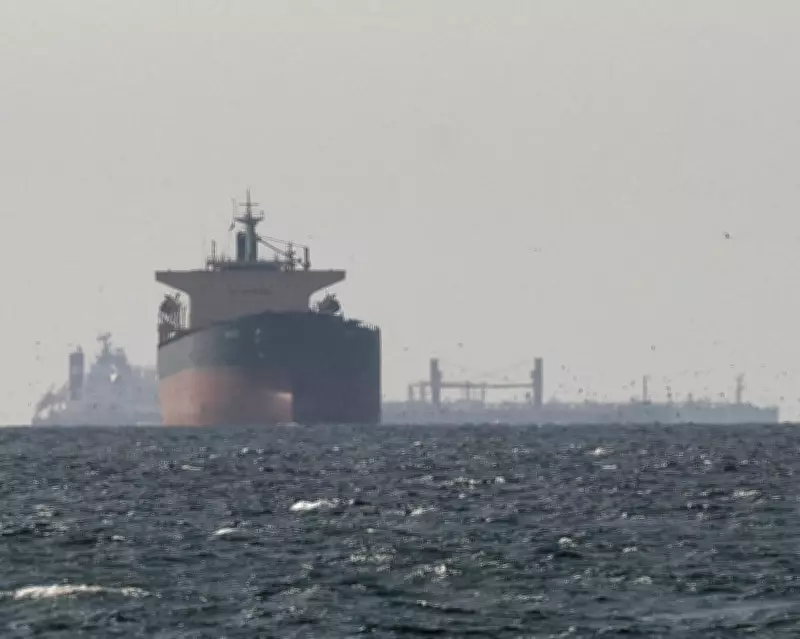
Trump Escalates Pressure on Europe Over Hormuz Crisis Amid Global Oil Disruption
Donald Trump has intensified demands for European allies to assist in safeguarding the Strait of Hormuz, cautioning that failure to comply could severely impact NATO's future. This development follows Iran's effective closure of the vital waterway in retaliation for airstrikes by the United States and Israel, which has triggered catastrophic disruptions to global energy and trade flows.
Global Energy Markets in Turmoil
The blockade has resulted in the largest oil supply disruption in history, sending global oil prices soaring above $104 per barrel. Trump's appeal for naval support to protect commercial shipping and restore oil supplies has been met with reluctance from key nations. Australia, France, Japan, and the United Kingdom have all indicated no immediate plans to deploy ships to the region.
In an interview with the Financial Times, Trump emphasized, "It's only appropriate that people who are the beneficiaries of the strait will help to make sure that nothing bad happens there. If there's no response or if it's a negative response, I think it will be very bad for the future of NATO." EU foreign ministers are set to discuss bolstering a small naval mission in the Middle East but are not expected to extend its role to the Strait of Hormuz.

International Responses and Diplomatic Maneuvers
Trump has also hinted at delaying a summit with China's Xi Jinping, pressuring Beijing, an ally of Iran, to help secure the strait. He noted that China relies heavily on the waterway for oil imports, stating, "I think China should help, too, because China gets 90% of its oil from the straits." Reports suggest China is in talks with Tehran to ensure safe passage for oil and gas.
On Sunday, Trump revealed that his administration had contacted seven countries for support, though he did not name them. He previously mentioned hoping for participation from China, France, Japan, South Korea, and Britain, asserting, "I'm demanding that these countries come in and protect their own territory because it is their territory. It's the place from which they get their energy."
Resistance from Key Allies
Japan's Prime Minister Sanae Takaichi confirmed that Japan has no current plans to dispatch naval vessels and noted the U.S. has not made a formal request. Prolonged restrictions in the Strait of Hormuz threaten Japan's energy security, as the country imports 90% of its oil from the Middle East, with 70% shipped via the waterway. In response, Japan has begun dipping into its oil reserves for the first time since Russia's invasion of Ukraine in 2022, releasing initial reserves to alleviate supply concerns.
Australia's Transport Minister Catherine King firmly rejected the request, stating, "We won't be sending a ship to the Strait of Hormuz. We know how incredibly important that is but that's not something we've been asked or we're contributing to." The UK is considering dispatching aerial minesweepers to clear mines, but officials warn that sending ships could exacerbate the volatile conflict. France emphasized its military posture aims at regional stability rather than escalation, while South Korea said it would review the matter closely with the U.S.
Ongoing Conflict and Regional Impacts
As the conflict enters its third week, Trump predicted oil prices would "come tumbling down as soon as it's over, and it's going to be over pretty quick," with U.S. Energy Secretary Chris Wright suggesting a resolution within weeks. However, Iran's Foreign Minister Abbas Araghchi denied any interest in negotiations, asserting, "We have never asked for a ceasefire, and we have never asked even for negotiations. We are ready to defend ourselves for as long as it takes."
Regional impacts continue, with missile and drone attacks hitting the United Arab Emirates, including a fuel tank fire near Dubai airport and a civilian death in Abu Dhabi. In Fujairah, a drone attack on oil infrastructure caused a large fire, though no injuries were reported. The situation remains fluid, with global markets closely monitoring developments in the Gulf.