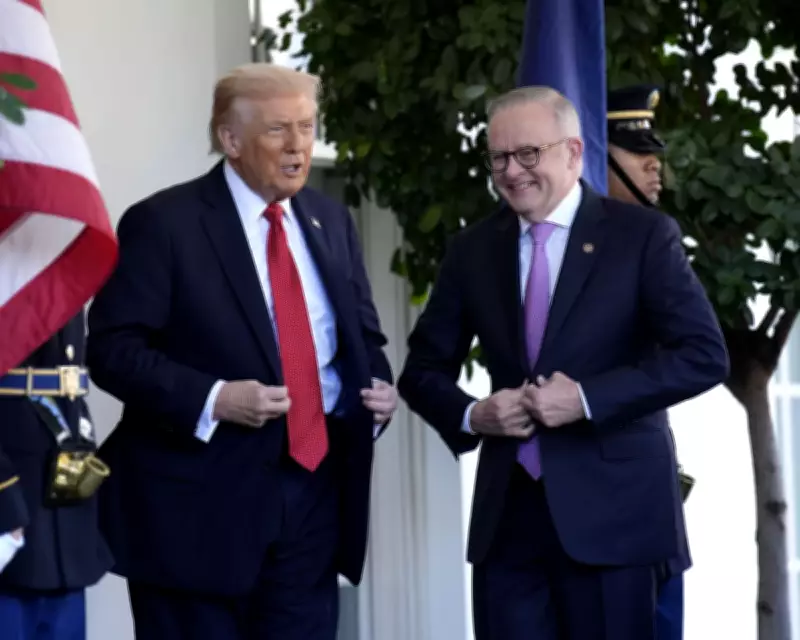
The Trump administration has labelled Australia’s proposed news bargaining incentive plan as 'foreign extortion,' sparking a sharp rebuke from Prime Minister Anthony Albanese, who insists the measure is about protecting the value of journalistic work.
Background of the Dispute
Australia’s Labor government is pushing forward with a plan to compel major technology companies such as Meta, Google, and TikTok to negotiate payment deals with Australian news publishers. If they fail to reach agreements, these firms would face a levy of 2.25% on their Australian revenue. The scheme has garnered tentative support from the Coalition and the Greens in parliament, but it has drawn fierce opposition from the United States.
White House Response
A spokesperson for the Trump administration, Kush Desai, stated that President Trump is committed to defending America’s leading technology sector from what he described as 'digital services taxes and other forms of foreign extortion.' The administration pledged to examine the details and continue addressing these issues with trading partners. Guardian Australia has sought further comment from the White House.

Tech Industry Lobbying
The Computer & Communications Industry Association (CCIA), a trade group representing Meta, Google, Apple, Amazon, and others, condemned the Australian proposal as 'discriminatory.' The CCIA argued that the levy functions as a coercive measure tied to linking and displaying local news content, which it claims constitutes an illegal performance requirement under trade rules. The group urged the U.S. government to challenge the draft measure publicly and forcefully, including through targeted trade remedies if the legislation passes.
Albanese’s Defense
Prime Minister Albanese responded to the White House criticism by emphasizing the importance of intellectual property rights. He stated that whether the content comes from Bloomberg, the Australian Financial Review, or other outlets, the work produced by journalists should be valued and not exploited without compensation. Albanese stressed that the government seeks no revenue gain from the levy and hopes tech companies will choose to make deals instead of paying the tax.
Domestic Political Reactions
While the Coalition’s shadow communications spokesperson, Sarah Henderson, has not fully endorsed the changes, Nationals leader Matt Canavan voiced support for making big tech pay for news, increasing the likelihood of bipartisan passage. The Greens’ communications spokesperson, Sarah Hanson-Young, called for more details on deal distribution to ensure smaller and regional publishers are not left behind, but indicated general support for bolstering news outlets.
Tech Giants’ Opposition
Google and Meta have strongly criticized the reform. Google rejected the need for the measure and lamented the exclusion of AI platforms, while Meta, which owns Facebook and Instagram, called the government’s position 'simply wrong.' The CCIA echoed these sentiments, warning of potential trade retaliation.
The proposed model aims to create a sustainable funding mechanism for Australian journalism, but its international implications continue to stir debate.