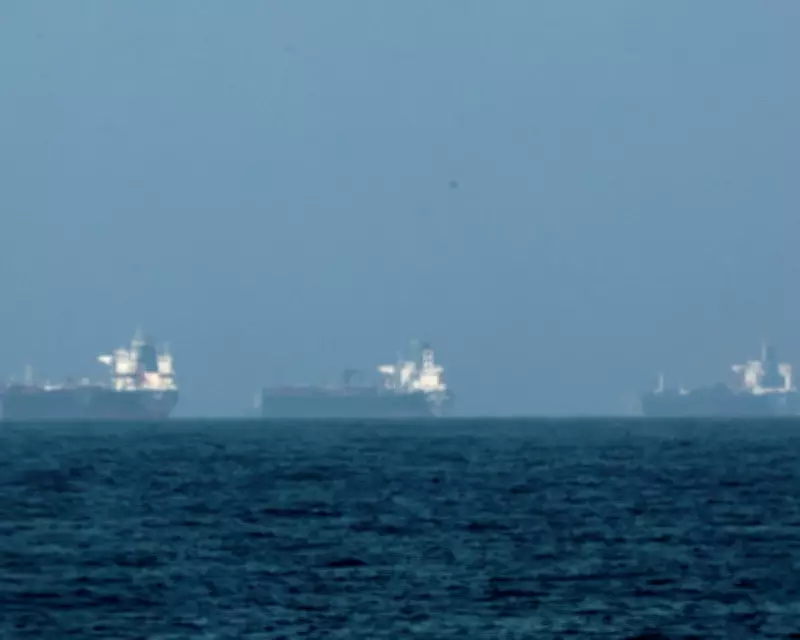
Trump's $20bn Reinsurance Scheme Fails to Revive Strait of Hormuz Shipping
Only two vessels not linked to Iran or Russia have dared to traverse the Strait of Hormuz since former US President Donald Trump pledged to "ensure the free flow of energy to the world" last Friday, according to detailed maritime records. This starkly contrasts with the normal daily traffic of approximately 100 vessels entering or exiting the Gulf through this critical choke point.
Emergency Measures and Limited Response
In response to escalating tensions following US and Israeli attacks, Iran has effectively shut down the strait, targeting at least 10 ships in the early days of the crisis. On Friday, Trump announced a $20bn (£14.85bn) reinsurance scheme intended to immediately revive shipping, urging shipowners to "show some guts" by sailing through the war zone. However, the initiative has seen minimal uptake.
The two vessels that attempted the crossing since Friday employed risky tactics to mitigate threats. The Shenlong, a Chinese-made tanker operated by Greece's Dynacom Tankers Management under a Liberian flag, switched off its transponder as it approached the strait, only resuming signals near India's coastline en route to Mumbai. A second vessel, the bulk carrier Sino Ocean, also under a Liberian flag, signalled it was "CHINA OWNER_ALL CREW" during its transit after loading cargo from the UAE's Mina Saqr port.

Iranian and Russian-Linked Traffic Dominates
Only eight other vessels are believed to have entered or exited the Gulf through the strait over the weekend, all with apparent links to Iran or Russia. These include the Iranian-flagged oil tanker Dalia and the tanker Parimal, identified by US authorities for transporting Iranian oil. On Monday, the tanker Cume, sanctioned by the US for shipping Iranian crude, also departed the Gulf. Two liquefied petroleum gas carriers, Danuta I and HH Glory, linked to Iranian and Russian energy industries respectively, also passed through.
Global Economic Impact and Security Concerns
Before the crisis, the Strait of Hormuz handled about 20% of global petroleum consumption and one-fifth of the world's liquefied natural gas daily. On Monday, oil prices surged to as high as $119 a barrel, the highest since 2022, before dropping below $90 after Trump suggested the war could end "very soon." Insurers have warned that naval escorts, another measure proposed by Trump, might make tankers more vulnerable to attacks.
Matthew Wright, lead freight analyst at Kpler, noted that even record-high freight rates have failed to break the deadlock. "Shipowners are primarily concerned with the risk of missile or drone attacks, and until there is a material improvement in the security environment, flows are likely to remain extremely limited," he said. Wright added that a diplomatic solution, potentially mediated by China due to Asian economies' high risk, could restore flows within weeks, but decentralized warfare by Iran could prolong the disruption for months.
International Response and Future Outlook
On Monday, G7 finance ministers stated readiness to take "necessary measures" to support global energy supply but ended their meeting without agreement on releasing strategic crude reserves, a move last seen in 2022 after Russia's invasion of Ukraine. The ongoing standoff highlights the severe impact on global trade and energy markets, with the trickle of activity underscoring the persistent threats in the region.