The United Arab Emirates' shock departure from the Organization of the Petroleum Exporting Countries (Opec) after six decades threatens to destabilise the global oil market, potentially igniting a price war with Saudi Arabia that could have far-reaching economic repercussions. The move, announced on Tuesday, weakens the cartel that has long helped stabilise oil prices under Saudi leadership.
Market Volatility and Postwar Risks
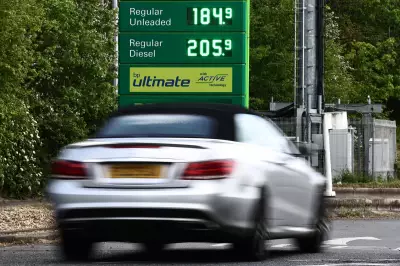
Global oil prices surged to a four-year high above $126 a barrel on Thursday amid ongoing conflict in the Middle East. However, analysts warn that a postwar standoff between the Gulf heavyweights could lead to greater market volatility for years to come. While the UAE's intention to ignore Opec production quotas is currently notional due to Iran's blockade of the Strait of Hormuz, the potential for a price war remains significant once flows resume.
Saudi Arabia's Likely Response
"Saudi Arabia will fight back with a vengeance," said Michael Tamvakis, a commodities professor at Bayes Business School in London. "This decision flies in the face of the kingdom's authority, and the Saudis will want to teach them a lesson." He predicted that Saudi Arabia would aggressively market its oil to Asian buyers by offering discounts, challenging the UAE's traditional edge in refined oil products to Europe.

Both countries boast some of the lowest production costs globally and face fiscal pressures to generate revenue for transitioning to low-carbon economies. The UAE, Opec's third-largest producer, held output below 3 million barrels per day in 2024 but could ramp up to between 4.5 million and 6 million barrels daily once the Strait of Hormuz reopens.
Historical Parallels and Economic Consequences
Dieter Helm, a professor of economic policy at the University of Oxford, likened the looming price war to the oil market crashes of the 1980s and 2014, which caused hundreds of thousands of job losses and political instability in oil-rich nations. "Oil prices are likely to fall further and faster as the war ends," Helm said. "Higher prices encourage more output, and the world is awash with both oil and gas reserves."
The surge in prices triggered by the Iran conflict is expected to boost new oil challengers in the Americas, including the US, Brazil, and Guyana, which could increase their market share at the Middle East's expense. Meanwhile, accelerating plans to reduce reliance on fossil fuels may hasten the market's decline.
Postwar Scenario and Opec's Weakened Credibility
A postwar market defined by new supplies and uncertain demand would be challenging for Gulf states. They are likely to pump maximum crude to repair war-ravaged economies and reclaim market share, leading to lower long-term prices. This scenario contradicts Opec's agenda of stabilising prices through collective action.
Signs of the alliance's fraying became apparent in recent years. In 2020, Opec executed deep production cuts after the Covid-19 pandemic, but only after Saudi Arabia waged a short-lived price war against Russia, causing prices to collapse to a 20-year low. Similarly, in 2014, Saudi Arabia increased production to drive out higher-cost rivals, triggering a prolonged price rout that hurt smaller Opec members.
Kim Fustier, a senior analyst at HSBC Investment, said: "The loss of a core Gulf member weakens Opec's credibility. If the remaining group is unable to compensate for UAE volumes through collective discipline, price management could become harder to enforce."