US Temporarily Lifts Sanctions on Russian Oil Amid Iran War Price Surge
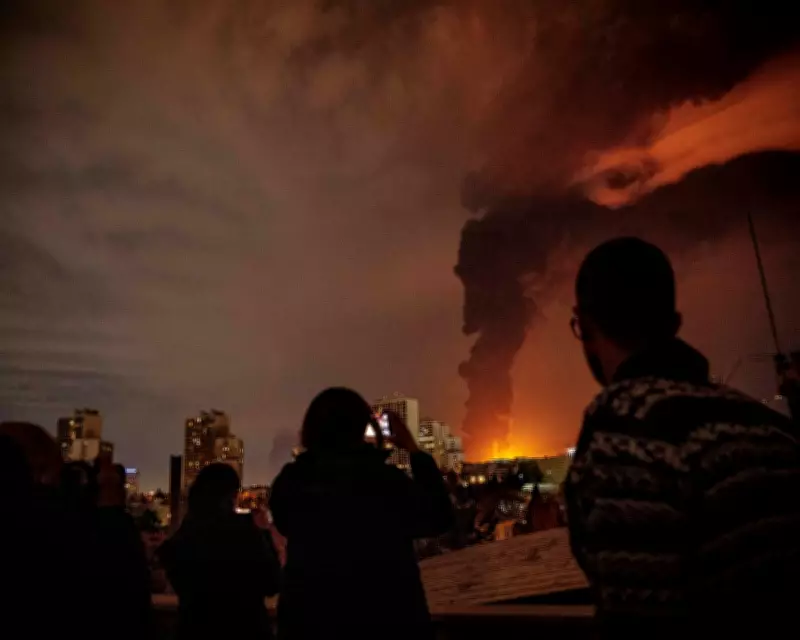
Residents in Tehran watched as flames and smoke billowed from an oil storage facility struck during the US–Israeli military campaign on Saturday, highlighting the escalating conflict that is now rippling through global energy markets. In response to mounting economic pressures, the Trump administration has announced a temporary waiver on sanctions for Russian oil stranded at sea, aiming to reverse a sharp surge in prices that has unsettled markets worldwide.
Sanctions Waiver and Market Impact
US Treasury Secretary Scott Bessent revealed a "temporary authorization" late on Thursday, permitting countries to purchase stranded Russian oil for 30 days. This move comes as average US fuel prices have jumped by 65 cents per gallon over the past month, prompting Bessent to assert that President Trump is "working to keep prices low." He emphasized that the measure is narrowly tailored, applying only to oil already in transit and not providing significant financial benefit to the Russian government, which relies heavily on extraction taxes for energy revenue.
Despite this intervention, Brent crude, the international benchmark, remained above $100 per barrel in early Friday trading. This marks the first time prices have breached this threshold since Russia's invasion of Ukraine four years ago, starting the year at around $60 per barrel. The ongoing US-Israel war on Iran has created what analysts describe as the largest supply disruption in the history of oil markets, largely due to the closure of the Strait of Hormuz.

Geopolitical Tensions and Supply Disruptions
The Strait of Hormuz, a critical artery for global trade through which about one-fifth of the world's oil and seaborne gas tankers pass, has been effectively shut down by the Middle East conflict. Although the Trump administration has pledged to escort vessels through the strait, activity has not recovered. The Iranian regime has declared it will not allow "one litre of oil" to be exported from the region while US and Israeli attacks persist, exacerbating supply shortages.
In a related development, the Trump administration last week permitted Indian refiners to temporarily buy Russian oil for 30 days, a shift from earlier claims that India had agreed to halt such purchases. This decision was framed as part of efforts to "help END THE WAR in Ukraine" by cutting off funds to Russia. As of Thursday, approximately 124 million barrels of Russian-origin oil were reported to be stranded on water globally, according to Fox News.
International Reactions and Further Measures
Moscow responded to the US waiver by stating it was "increasingly inevitable" that Washington would lift sanctions, with Russia's economic envoy Kirill Dmitriev arguing on Telegram that the US is acknowledging the global energy market's dependence on Russian oil for stability. However, some US allies have pushed back against the move. French President Emmanuel Macron, after a call with G7 leaders, asserted that the paralysis of the Strait of Hormuz "in no way" justifies lifting sanctions on Russia.
To address the crisis, the International Energy Agency orchestrated the largest release of government reserves in its history on Wednesday, with its 32 members unanimously agreeing to release 400 million barrels of emergency crude. Yet, these efforts have been overshadowed by ongoing strikes across the Middle East, as Iran has intensified retaliatory attacks on economic targets and goaded the US to "get ready for oil to be $200 a barrel." Reports from the New York Times indicate that Iran began laying mines in the Strait of Hormuz on Thursday, further complicating navigation.
Political and Economic Ramifications
President Trump has sought to downplay concerns about high oil prices, highlighting on social media that the US is the world's largest oil producer and benefits financially from price increases. However, he stressed that his primary focus is on preventing Iran from obtaining nuclear weapons. As November's midterm elections approach, rising fuel prices could pose a significant challenge for Trump and his Republican allies, who are defending narrow majorities in Congress, with voters likely to feel the pinch at the pump.