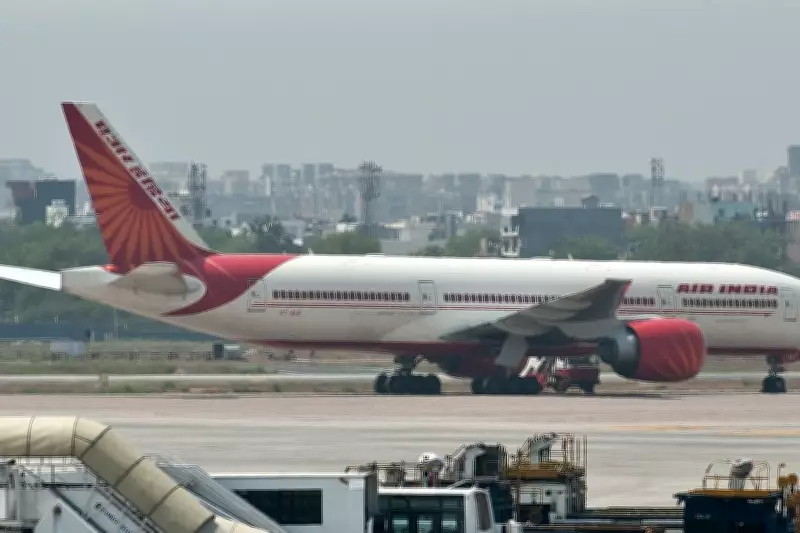
Air India Grounds Dreamliner After Pilot Discovers Fuel Switch Fault at Heathrow
Air India has taken a Boeing 787-8 Dreamliner out of service following a pilot's report of a potential defect in a crucial fuel control switch. This incident, which occurred at London Heathrow Airport, has reignited scrutiny of the very aircraft component that is central to the ongoing investigation into last June's catastrophic Ahmedabad crash.
Incident Details and Immediate Response
The airline has not publicly disclosed the specific nature of the defect or identified the exact flight involved. However, sources speaking to local media have revealed that the issue was flagged after the aircraft completed a journey from London to Bengaluru. Upon landing, the pilot conducted checks that revealed the concerning malfunction.
In an official statement, Air India confirmed the action: "We are aware that one of our pilots has reported a possible defect on the fuel control switch of a Boeing 787-8 aircraft. After receiving this initial information, we have grounded the said aircraft and are involving the Original Equipment Manufacturers to get the pilot's concerns checked on a priority basis." The matter has been formally communicated to India's aviation regulator, the Directorate General of Civil Aviation (DGCA).

Understanding the Critical Component
The Dreamliner is equipped with two fuel control switches, one for each engine. These are prominently positioned on the critical cockpit control panel between the pilot seats, located just behind the throttle levers. Pilots use these switches to start or shut down engines on the ground by moving them between the "run" and "cutoff" positions. They also serve a vital function during flight, allowing manual shutdown or restart of an engine in the event of a failure.
These switches on the Boeing 787 operate via a specific two-step safety mechanism. They must first be lifted before they can be moved between positions, a design intended to prevent accidental operation.
The Heathrow Malfunction Sequence
According to sources cited by The Times of India, the incident unfolded during engine start procedures at London Heathrow. The pilot lightly pushed the left fuel control switch to test if its locking feature was functioning correctly. The test revealed a failure: the switch moved from "run" to "cutoff" without being lifted first, bypassing the required safety action. A second check yielded the same result. It was only on a third attempt that the switch operated as designed, remaining locked until lifted.
Fleet-Wide Inspection and Broader Context
In response, Air India has launched a precautionary inspection of fuel control switches across its entire fleet of 33 Boeing 787 aircraft. Manish Uppal, Air India's Senior Vice President for Flight Operations, informed pilots via email that "our engineers – out of an abundance of caution – have initiated precautionary fleet-wide re-inspection of the fuel control switch latch to verify normal operations" while awaiting further guidance from Boeing.
This incident casts a long shadow, directly challenging assumptions from the Ahmedabad crash investigation. That disaster, which killed 260 people on a London-bound flight, saw a preliminary report from the Aircraft Accident Investigation Bureau cite cockpit confusion over the fuel switches just before the crash. The bureau initially found no technical or design fault, implying pilot error. The malfunction at Heathrow now raises serious doubts about that conclusion.
Notably, soon after the Ahmedabad tragedy, Air India stated it had checked the switches on all its 787s and "found no issues." The recurrence of a switch problem has prompted sharp criticism. Air safety expert Amit Singh highlighted that the US aviation regulator had cautioned as far back as 2018 that these switches on Boeing 787s could malfunction and lead to inadvertent engine shutdown. He stated this latest event "raises serious questions about inspection adequacy and demands the highest level of regulatory scrutiny."

Industry Reaction and Ongoing Scrutiny
In the wake of the February 1st incident, Boeing confirmed it is in contact with Air India and "supporting their review of this matter." The Federation of Indian Pilots has renewed its call for all Boeing 787 aircraft to be grounded for thorough inspections of their electrical systems.
The specific aircraft involved was operating as Air India flight AI 132 from London to Bengaluru. According to reports, its scheduled 9:05 PM departure from Heathrow was delayed, with the flight eventually taking off at 9:40 PM local time following the checks. The incident underscores persistent safety questions that continue to surround this critical component as investigations into both past and present events proceed.