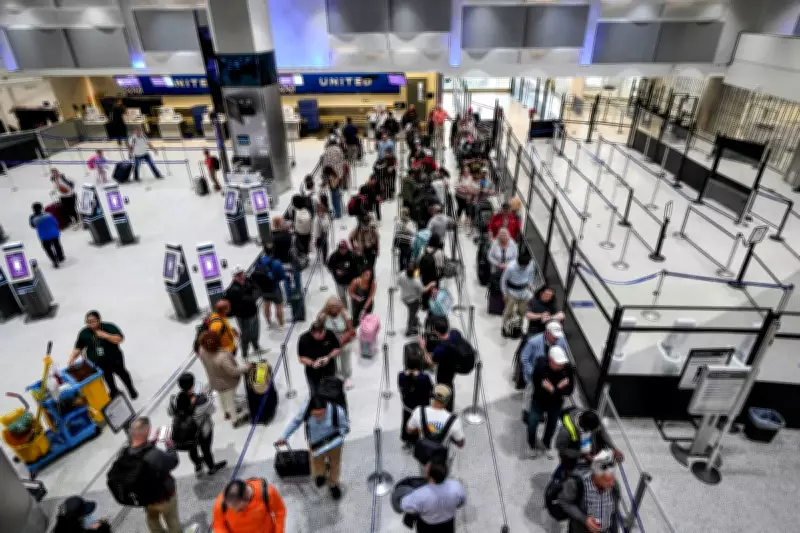
Airports are issuing urgent pleas to passengers, requesting they refrain from arriving at terminals a full four hours before their scheduled flights. This well-intentioned but excessive caution is ironically creating longer wait times and significant congestion, according to recent reports.
The Recommended Arrival 'Sweet Spot'
John Glenn Columbus International Airport in Ohio has been particularly vocal, releasing a public service announcement that identifies arriving 90 minutes prior to departure as the ideal "sweet spot." This timeframe, the airport asserts, provides ample opportunity to navigate security checkpoints without contributing to overcrowding that slows the entire process.
"Showing up too early creates those first-wave lines," explained a representative from the airport, who appealed to travellers to "help us keep things moving." The guidance was accompanied by a chart illustrating optimal arrival times aligned with various flight departures.

Mixed Messaging from Airports
While the advice from Columbus is clear, messaging from other hubs has been inconsistent. Austin-Bergstrom International Airport in Texas, for instance, maintains its standard recommendation of two hours for domestic flights and three for international travel. However, officials there concur that appearing more than four hours early is unnecessary and problematic.
"There is no need to line up more than 4 hours before your flight, as this causes congestion in the lines for those flying out sooner," the airport stated in a communication obtained by the Washington Post.
In contrast, some airports like Baltimore-Washington International Thurgood Marshall Airport have, at times during the recent partial government shutdown, advised travellers to arrive as early as four hours in advance, highlighting the confusing signals passengers receive.
Impact of the Government Shutdown on Travel
The backdrop to these requests is a partial federal shutdown that not only threatened widespread flight delays but also risked the complete closure of some airports. Transportation Security Administration (TSA) agents, who went without pay during the shutdown, staged callouts, severely straining operations.
Lauren Bis, acting assistant secretary of the Department of Homeland Security, provided a positive update, noting, "Since President Trump’s issued an order to pay TSA officers on March 28, TSA officer call outs have dropped by roughly 30%." This executive order has been pivotal in stabilising airport staffing levels.
The financial strain on TSA personnel was not new; many of the same agents had their paychecks withheld during the previous record-long government shutdown in the fall. According to a PBS News report, callout rates reached 40 percent during that period, with nearly 500 of the agency's 50,000 agents resigning.
Return to Normal Operations
With pay restored, airports are reporting a swift return to routine operations. Baltimore-Washington International confirmed to the Post that it had resumed normal functions by Tuesday. Wait times have plummeted at major hubs: LaGuardia Airport's Terminal B recorded a mere four-minute security line wait on Wednesday morning.
Data from Delta News Hub indicates average security waits of around ten minutes at John F. Kennedy International Airport and approximately four minutes at Los Angeles International Airport. These figures, however, are subject to increase during peak travel periods, such as early mornings.
Expert Advice for Anxious Travellers
Travel expert Zach Griff commented on the situation, noting that he has not encountered the feared four-hour lines since the shutdown began. He emphasised the importance of staying informed. "You really have to stay on your game," Griff advised, urging passengers to monitor news related to their specific flights and airports to avoid unnecessary complications.
Griff also suggested that anxiety is a primary driver behind the trend of ultra-early arrivals. "It is causing a lot of folks who end up deciding, ‘I don’t really care; I’ll just get there three hours early,’" he observed, acknowledging the psychological impact of travel uncertainties on passenger behaviour.

As the aviation sector recovers from the disruptions of the shutdown, the collective message from many airports is becoming clearer: while preparedness is wise, excessive earliness is counterproductive, and adhering to recommended arrival windows benefits all travellers by ensuring smoother, more efficient airport experiences.