

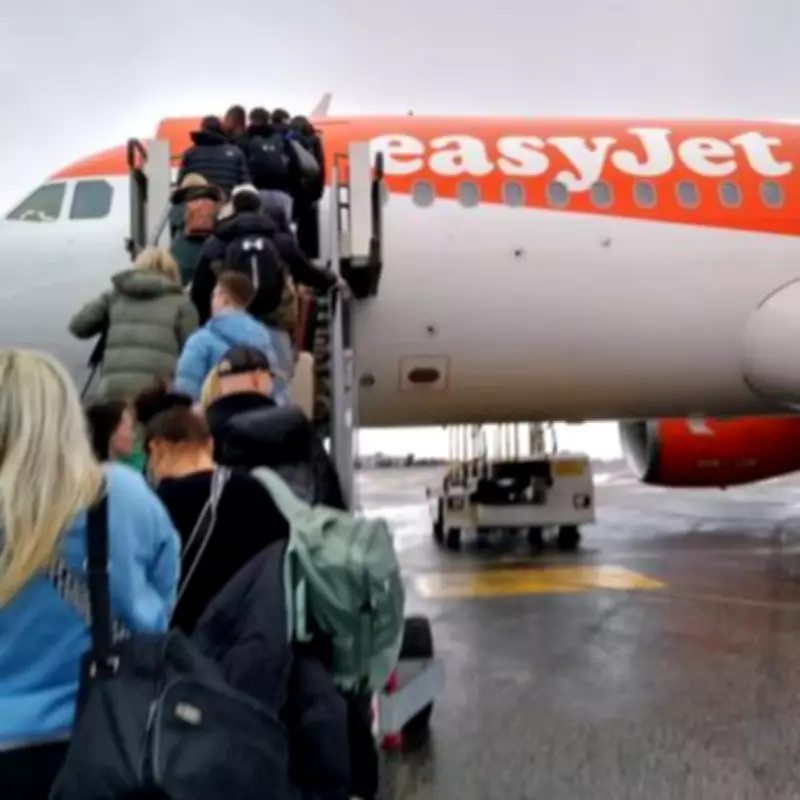
An EasyJet flight was forced to make an emergency landing in Rome over the weekend after a passenger's luggage containing a power bank raised a potential fire risk. The captain informed all 180 passengers that a restricted item in the cargo hold posed a serious danger and needed to be dealt with on the ground.
Incident Details
The emergency occurred on Saturday, May 23, at approximately 11:30 PM. Reports indicate that a passenger had left their phone charging in checked baggage using a power bank. A woman reportedly informed a flight attendant about the location of her power bank, prompting the diversion. Passengers were provided hotel rooms, though some chose to sleep at the airport terminal, as the next EasyJet flight to the UK was not available until 2 PM the following day.
EasyJet's Power Bank Regulations
On its website, EasyJet outlines strict rules for lithium batteries. Power banks with a watt-hour rating not exceeding 160Wh are accepted but must be carried in carry-on baggage only. They are prohibited from use on the aircraft and must not be used to charge other devices. EasyJet recommends keeping power banks where they can be monitored, such as on your person. Passengers are limited to two power banks per person, and each must be individually protected, for example, in original packaging or a plastic bag.

Why Power Banks Are Considered Risky
Power banks contain lithium-ion batteries, which are highly combustible and can suffer thermal runaway, a chain reaction causing overheating or ignition. Storing them in hand luggage allows cabin crew to quickly respond if a battery overheats. Charging devices generates additional heat, increasing fire risk. Some airlines require power banks to remain visible, not in overhead lockers, so smoke or flames can be immediately noticed.
These regulations apply to most major airlines, including Ryanair, Jet2, TUI, and British Airways. Travellers should check specific rules with their airline.
Passenger Entitlements After Emergency Landing
If a flight makes an emergency landing or diversion, entitlements to compensation, refunds, or alternative bookings depend on the cause. Airlines are legally required to provide care during delays, including reasonable meals, beverages, hotel accommodation, and transport if delayed overnight. For substantial delays or cancellations, passengers can choose between alternative travel at the earliest opportunity or a refund. Specific refund policies vary by airline.






