Europe's Border Lottery: The Inconsistent Reality of the EES Rollout
Six months ago, travel expert Simon Calder anticipated celebrating a milestone: the full operation of the EU Entry-Exit System across all Schengen frontiers by Friday 10 April 2026. He envisioned reporting that 100 percent of third-country nationals, including British travellers, were being processed by what was touted as "the most modern digital border management system in the world." Instead, the reality is a chaotic and inconsistent implementation that has left many travellers frustrated and confused.
How the System Is Supposed to Work
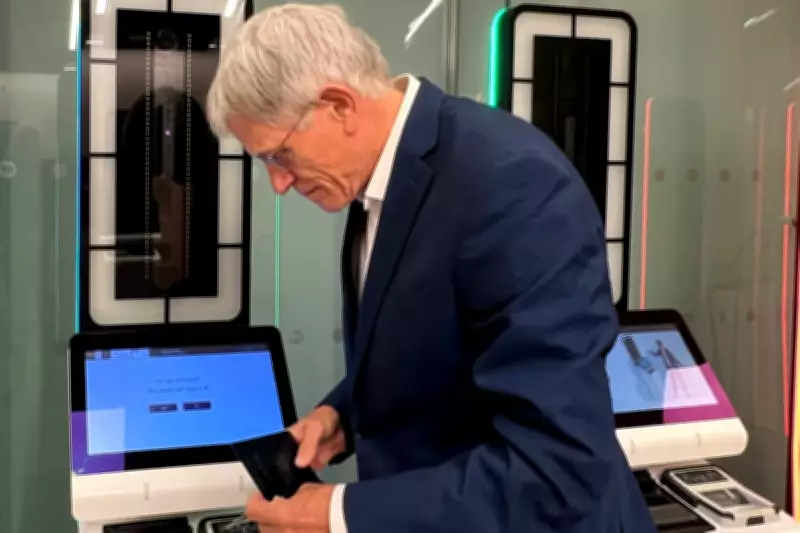
The intended process is straightforward. Upon arrival at a foreign airport or ferry port, travellers encounter an array of kiosks. They submit their passport, and the system checks whether they are already registered in the database. If not, they provide fingerprints from their right hand and a facial biometric. If previously registered, only one biometric—typically facial—is required. After this, they proceed to a human border official or an eGate.
The Stuttering Start and Current Disarray
Since the shaky launch witnessed at Prague airport on 12 October 2025, the EES has become a lottery for travellers. The question on many minds is: will they need to provide fingerprints and facial biometrics, or not? Calder hoped this uncertainty would end, especially with "wet stamping" of passports phasing out as planned. However, on the day the system was supposed to be fully operational, it remains in disarray.

Some Schengen nations are diligently processing UK and other third-country nationals according to Brussels' rules, installing ranks of EES kiosks equipped for biometrics at each frontier. Yet, in other countries—notably France, the world's most popular destination for overseas visitors—readiness is far from complete. At three UK locations with "juxtaposed" frontier formalities, where French Police aux Frontières conduct checks on British soil, kiosks stand unused due to connectivity issues on the French side. This includes the Eurotunnel LeShuttle terminal at Folkestone, the Port of Dover, and the Eurostar hub at London St Pancras International. Instead of using the machines, officers simply skim passport details—a scenario Calder dubs "EES minus."
From 'EES Plus' to 'What EES?'
Beyond this, many travellers report providing required facial biometrics and fingerprints upon entry into a Schengen country, only to have to repeat the process on exit or subsequent entry. Calder labels this "EES plus." There is even a third category: "What EES?" where passports continue to be stamped as before. This fiasco is expected to persist for 150 more days, until Monday 7 September—conveniently, at the end of the main summer holidays. Until then, travellers must follow local instructions, adding to the unpredictability.
The Appeal of Europe Beyond the EU
Amid this chaos, Calder highlights the allure of destinations outside the European Union, such as Kosovo and Albania. These Balkan states, not yet part of the EU, offer a respite from the Schengen border lottery. Time spent here does not count toward the 90-day limit in any 180 days that UK travellers face in the EU post-Brexit. Spring is an ideal time to explore south-east Europe, with snow still gracing mountain ranges and cultural gems like the Decani Monastery in Kosovo providing rich experiences.
Calder's journey through "Europe Beyond" underscores a growing trend: as the EES rollout stumbles, travellers may increasingly seek solace in non-EU European destinations to avoid border frustrations and enjoy smoother, more predictable travel experiences.