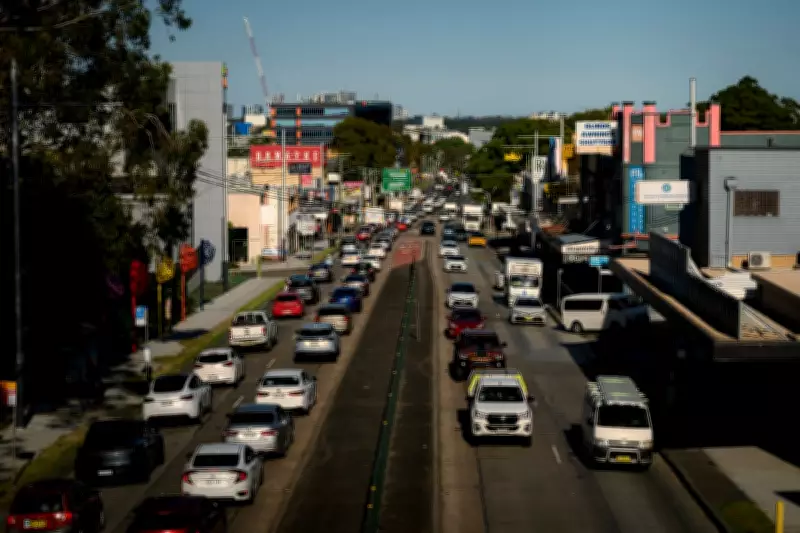
Fuel Crisis Triggers Sharp Drop in Australian Road Traffic
Exclusive government data reveals a significant reduction in road traffic across Australia's east coast, driven by a fuel crisis stemming from the US-Israel war on Iran. Many Australians are cutting back on driving, opting for trains, cycling, or remote work as petrol and diesel prices soar.
Sydney Sees Thousands Fewer Daily Trips
In Sydney, traffic on major thoroughfares has fallen by thousands of trips per day. According to New South Wales government data, between the week ending 1 March and the week ending 5 April, traffic decreased by 7% on the cross-city tunnel and over 6% on the M2, eastern distributor, and Sydney Harbour Bridge.
The harbour bridge experienced a drop from 144,000 average weekday trips in early March to under 135,000 by late March, with weekend trips plunging to just 89,000 daily. All 23 main roads monitored by Transport NSW lost one in 10 weekend trips, with 14 roads seeing at least two in 10 disappear.

Even with seasonal factors like the Easter long weekend, 17 of 23 roads recorded lower traffic compared to 2025. Sydney airport traffic fell 9% on Airport Drive and 7% on Qantas Drive amid flight cancellations and rising airfares.
Melbourne Highways Hit Hard by Fuel Prices
In Melbourne, the Tullamarine Freeway saw traffic fall by 20% from early to late March, with an almost 50% drop by early April. The M1 and M80 highways experienced a 15% decline in traffic from early to late March, and a 30% drop by early April, equating to an estimated 30,000 fewer daily trips.
Other roads like the Princes, Burwood, and Nepean highways recorded slight declines, while the West Gate Tunnel saw small decreases. Melbourne's CityLink toll road lost an average of 7,000 trips daily in the March quarter compared to the previous year.
Analysts Warn of Prolonged Impact
Owen Birrell, an RBC analyst, noted that underlying traffic fell by 3.4% in March alone, suggesting about 20,000 fewer daily trips than in March 2025. He expressed concern over accelerating weakness, stating, "We are concerned by the soft underlying Australian network results and weakness accelerating into March ... which bodes poorly for April and possibly May if the conflict in the Middle East is drawn out."
Transurban reported that six of its Sydney toll roads lost a combined 6,000 trips daily in the March quarter year-on-year, though WestConnex and the M5 saw increases. Overall, Sydney traffic growth slowed to 0.6% year-on-year, down from previous rates.
Public Transport Usage Surges
As driving declines, public transport patronage has boomed. In south-east Queensland, daily usage rose 7% by late March since early March, with weekend jumps of 16% and nearly 20%. Rail trips led the gains, up 12.6%, followed by light rail, ferry, and bus increases.
This shift highlights how the fuel crisis is reshaping travel habits, with Australians increasingly turning to alternatives amid rising costs.