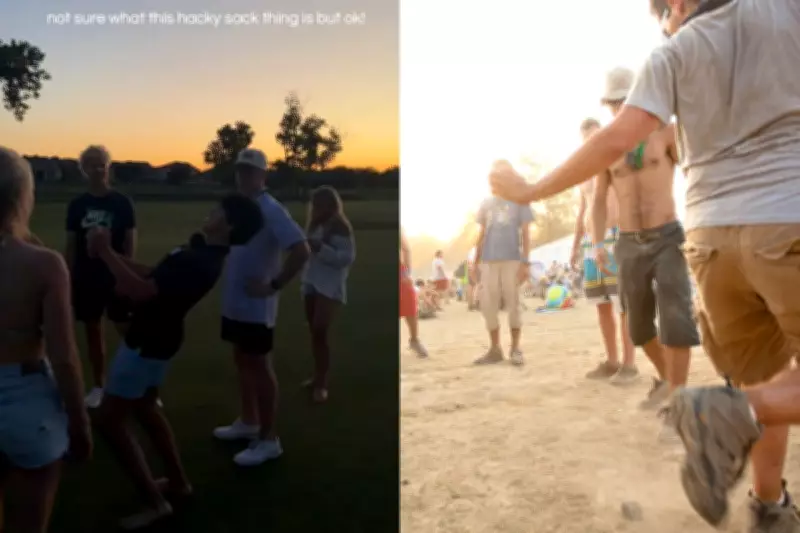
The 1990s nostalgic playground trend of hacky sack is experiencing a remarkable revival among Generation Z teenagers, causing supply shortages and overwhelming online retailers. The resurgence, dubbed the “hacky sack epidemic” on TikTok, has caught even industry insiders off guard.
Retailers Overwhelmed by Sudden Demand
World Footbag, the largest online retailer for the bead-filled sacks synonymous with 1980s and 1990s schoolyards, saw a sudden surge in visitors three weeks ago. Within days, the influx crashed the company’s servers. Co-owner Greyson Herdman described the situation as unprecedented: “It got to the point where it crashed our website. It took off to a level that I’ve certainly never seen before.”
Technically a brand name, “Hacky Sack” is known to purists as footbag. The unofficial pastime of the 1980s and 1990s was a staple of suburban driveways and college quads before fading into a dedicated niche for decades. Now, suppliers are scrambling to restock empty shelves.

TikTok Drives the Revival
On TikTok, the game has become an inescapable obsession. In the first week of May alone, U.S. posts featuring hacky sack hashtags jumped by more than 330 percent, according to figures reported by Good Housekeeping. During the same period, searches for the term on the platform increased sixfold.
For Herdman, the revival stems from a desire for tangible, face-to-face connection that a digital world often lacks: “I think that it’s the camaraderie. It’s simple play. It’s fun, but it’s meaningful, because you all get to celebrate in this simple, simple achievement.”
Rationing and Limited Drops
The craze has been so relentless that World Footbag is now rationing its inventory, releasing only what its small team can realistically ship. On the company’s voicemail, a recording from Herdman’s wife, Kayla Geuttich, greets a constant stream of callers with gratitude and a plea for patience. She explains that the footbag boom has forced them to pivot to limited daily drops to keep the business from being overwhelmed by demand.
Gen Z Organizes into Squads
Online, students are self-organizing into elaborate JV and varsity squads based on performance, where a “full hack” is the gold standard for video commitment. With standard bags retailing from $5 to $15, the sport offers an affordable, highly portable alternative to typical modern youth sports.
Veterans Welcome the Revival
For longtime players Chris Dean and Jasper Shults, the game is a lifelong discipline. As organizers for the U.S. Open Footbag Championships, set to take over a Portland park in June, they have watched the sport ebb and flow for decades. Shults, 29, sees the revival as a matter of family legacy—his parents met at a footbag event, and his father, Kenny Shults, is a Guinness World Record holder regarded by the Footbag Hall of Fame as the greatest ever to play. Despite his pedigree, Shults spent years as a lonely torchbearer: “I was the only person playing throughout all high school and college.” Seeing the game trend among a younger generation feels like long-awaited “vindication.”
Dean, 42, who began kicking as a high school freshman in the late 1990s, sees the craze as a return to the sport’s social roots. He recalls a time when the bag was a staple at track meets and bus stops—a portable community requiring nothing more than a few square feet of pavement: “It’s the perfect happy medium between hanging out and being social and also being active. And with young people just being away from their screens? I feel like that’s something people crave a lot these days.”
Accessibility and Community
For the veterans, the goal isn’t necessarily to turn every TikToker into a professional athlete. As Shults put it: “As long as you have a hacky sack in your pocket, you can find people everywhere, anywhere, at any time, in almost any space. It’s a pretty amazing little thing you can have access to.” That is, if you can get your hands on one.