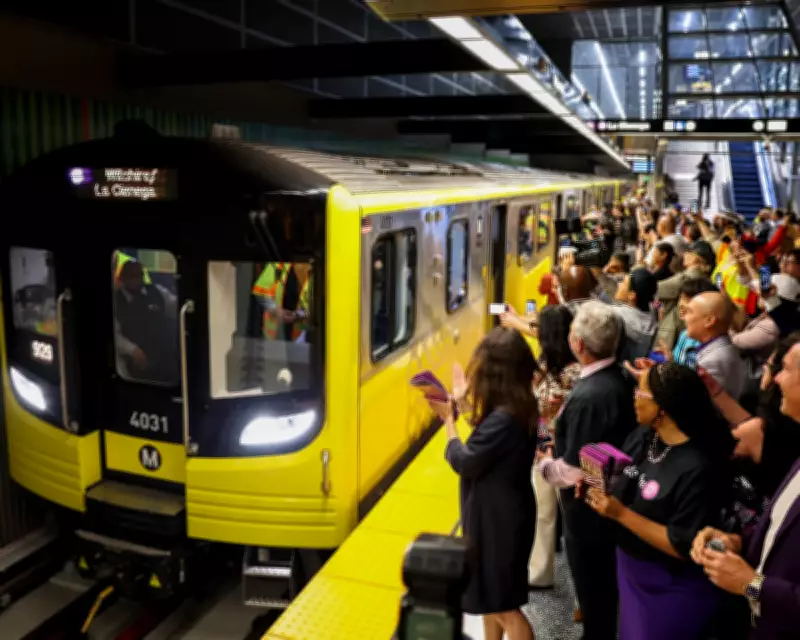
Los Angeles, a city long synonymous with car culture, is experiencing a notable shift as subway ridership has surged in recent months. According to transit officials, the number of daily passengers on the Metro system has increased by over 20% compared to the same period last year, marking a significant milestone for public transportation in the sprawling metropolis.
Growing Popularity of the Metro
The rise in ridership can be attributed to several factors, including expanded service lines, improved reliability, and growing awareness of environmental benefits. The Metro's expansion projects, such as the Purple Line extension and the Crenshaw/LAX Line, have made it more convenient for residents to travel across the city without relying on cars. Additionally, the system has seen investments in modernizing stations and increasing train frequency, which has enhanced the commuter experience.
Impact on Traffic and Environment
The shift towards public transit is having a tangible impact on Los Angeles' notorious traffic congestion. Early data suggests that average commute times have decreased by 10% during peak hours, and carbon emissions from transportation have dropped by an estimated 5%. Environmental advocates have praised the trend, noting that it aligns with the city's ambitious climate goals to reduce greenhouse gas emissions by 50% by 2030.

"Los Angeles is finally breaking free from its dependence on cars," said Maria Lopez, a transportation policy analyst at UCLA. "The surge in subway ridership shows that when you provide reliable and accessible public transit, people will use it."
Challenges Remain
Despite the positive trends, challenges persist. The Metro system still faces issues with overcrowding during peak hours, and some stations require upgrades to accommodate the growing number of passengers. Safety concerns, particularly regarding homelessness and crime on trains, have also been raised by riders. Transit authorities are working to address these issues through increased police presence and social service outreach programs.
Funding for future expansions remains a topic of debate. While state and federal grants have supported recent projects, securing long-term financing for planned lines will require continued political will and public support.
Looking Ahead
Transportation officials are optimistic about the future of public transit in Los Angeles. Plans are underway to further extend rail lines to underserved neighborhoods and integrate bike-sharing and ride-hailing services with Metro stations. The goal is to create a seamless, multi-modal transportation network that offers a viable alternative to driving.
"We are witnessing a cultural shift in Los Angeles," said Metro CEO Stephanie Wiggins. "More people are recognizing the benefits of public transit, and we are committed to building a system that serves everyone."
As the city prepares to host major events in the coming years, including the 2028 Olympics, the expansion and improvement of public transportation will be crucial. The current surge in subway ridership provides a strong foundation for a more sustainable and efficient urban mobility future.