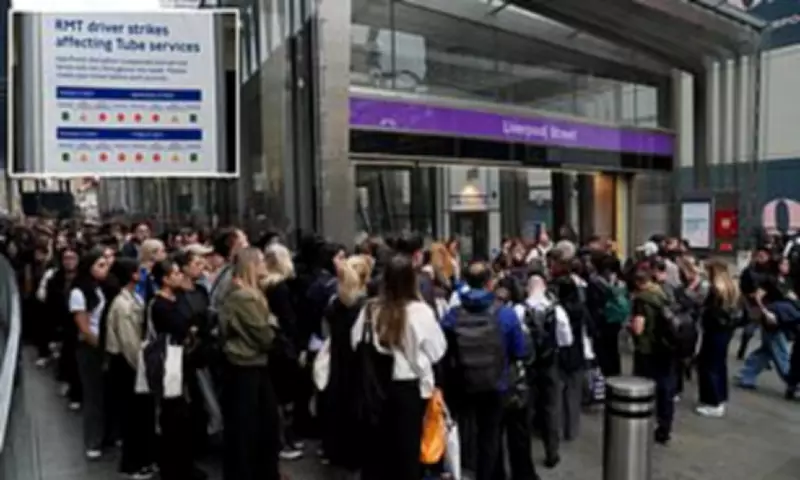
London Braces for Major Tube Strike with £250 Million Economic Impact
London is set to face severe disruption today as a 24-hour Tube strike commences at noon, with economists estimating the cost to the capital's economy at a staggering £250 million. The Rail, Maritime and Transport union (RMT) has confirmed that its members will walk out, with a second strike planned for Thursday, plunging the city into chaos for hundreds of thousands of commuters.
Green Party Backs Striking Drivers Amid Safety Concerns
The strike has gained political backing from the Green Party, with London Assembly leader Caroline Russell expressing support for the drivers, who earn an average base salary of £72,000 per year. Russell emphasized that the drivers are raising critical issues about working conditions that could affect safety, urging Transport for London (TfL) to engage in dialogue to address their concerns.
However, TfL has defended its proposals, stating that the introduction of a voluntary four-day working week is designed to align with other train operating companies, improving reliability without reducing contractual hours. The transport authority has labeled the strikes as "absolutely unnecessary," calling on the RMT to call off the action.

Service Disruption and Alternative Travel Options
The strike will cause significant service reductions across the Tube network for at least four days. Key disruptions include:
- No service on the Piccadilly and Circle lines.
- No service on the Metropolitan line between Baker Street and Aldgate.
- No service on the Central line between White City and Liverpool Street.
- Reduced frequency on other lines, with very busy conditions expected.
Services will run normally this morning but will reduce from mid-morning onwards, with significant disruption from midday. The strike will continue until midday tomorrow, after which services will begin to recover, though disruption will persist into the evening. The same pattern will repeat on Thursday into Friday.
Alternative travel options include the Elizabeth line, Docklands Light Railway, London Overground, Trams, and most bus routes, although these are likely to be extremely busy. Additionally, a separate 24-hour bus strike will affect seven Stagecoach routes in East London from 5am on Friday.
Political Reactions and Union Divisions
The strike has sparked sharp political criticism. Conservative transport spokesman Richard Holden accused the Greens of bringing "chaos" to Britain through strikes and disruption, while Reform UK's London mayoral candidate Laila Cunningham labeled the Green Party a "danger to London" for backing the strikers.
Susan Hall, head of the Conservative group at the London Assembly, called on Labour Mayor Sadiq Khan to take action to avert the walkout, criticizing his perceived inaction. Meanwhile, the drivers' union Aslef, which has accepted TfL's changes, described the RMT strike as the first in trade union history "designed to stop people having a shorter working week and more time off."
Economic and Hospitality Sector Impact
The economic fallout is substantial, with independent economist Simon French estimating the cost at £210 million, noting that many workers cannot adjust their commutes or work from home. Hospitality businesses are bracing for a significant drop in bookings, with Access Hospitality predicting a 67% decline in reservations and a nearly 70% fall in walk-ins, based on data from the last RMT strike in September 2025.
Emma McClarkin, chief executive of the British Beer and Pub Association, warned that London's pubs generate approximately £80 million in gross value added between Tuesday and Friday alone, and disruption could severely impact jobs and community spirit.
Union Negotiations and Future Outlook
RMT boss Eddie Dempsey expressed disappointment with TfL's unwillingness to make concessions, stating that the union had approached negotiations in good faith. He emphasized that TfL's stance risks infuriating members and hindering a negotiated settlement.
Claire Mann, TfL's chief operating officer, reiterated that the four-day week proposals are voluntary and aim to enhance flexibility without additional cost. She urged the RMT to continue engagement and avoid further disruption to Londoners.

As the strike unfolds, passengers are advised to check service updates before traveling, with TfL warning of varying service levels across the network. The ongoing dispute highlights broader tensions over working conditions, safety, and economic resilience in the capital.