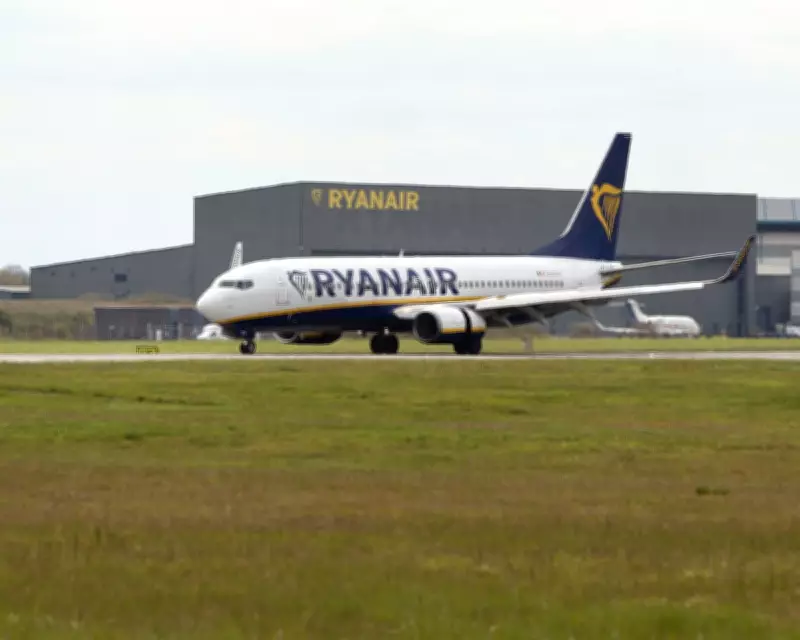
Ryanair CEO Highlights UK's Critical Vulnerability to Jet Fuel Supply Disruptions
Michael O'Leary, the outspoken chief executive of Ryanair, has issued a stark warning that the United Kingdom is the most vulnerable country in Europe to potential jet fuel shortages this summer. This heightened risk stems directly from the ongoing war in Iran and its disruptive impact on global fuel supply chains.
Kuwaiti Dependence Creates Unique Exposure for Britain
O'Leary pinpointed the UK's specific reliance on Kuwait for approximately 25% of its jet fuel as the primary factor for this precarious position. "Of all the European countries at the moment, the one that is most vulnerable is the UK because of the market share that the Kuwaitis have here," he stated. He elaborated that even if a surplus of jet A-1 fuel exists in the Middle East, the logistical challenge of shipping it to Europe remains a significant and unresolved question.
The conflict has already triggered a dramatic surge in jet fuel prices globally, forcing airlines to cancel some flights. Data from the International Air Transport Association shows jet fuel averaged $195 a barrel last week, more than double the average from the previous year. This spike is largely attributed to the effective closure of the Strait of Hormuz, a critical chokepoint through which over a fifth of the world's oil normally transits.

Supply, Not Just Price, Poses the Greatest Threat
While Ryanair has hedged 80% of its fuel costs until March of next year at a favourable $67 a barrel, O'Leary emphasised that the larger concern is physical supply disruption, not merely cost. "Nobody is willing to give us any assurances into June or July," he revealed, highlighting the uncertainty clouding the peak summer travel season.
He outlined a dire contingency plan, stating that a risk to just 10% or 20% of the fuel supply in the summer months would compel Ryanair and other carriers to "start looking at cancelling some flights or taking some capacity out." On fares, O'Leary declined to rule out increases, noting the company is "never in control of pricing," especially given fierce competition on European short-haul routes.
Broader Industry and Policy Context
The warning comes alongside Ryanair's renewed criticism of UK aviation policy. The airline repeated its call for the government to abolish Air Passenger Duty (APD), a tax which increased on Wednesday, adding £2 to the cost of a short-haul economy ticket. O'Leary argued this hike makes UK travel less competitive compared to European nations reducing environmental taxes.
In a note of contrast, O'Leary mentioned Ryanair's expansion, with 29 new aircraft joining its fleet this summer, though only one is destined for London. The Dublin-headquartered airline, Europe's largest, employs over 26,000 people worldwide.
The situation remains fluid. Oil prices, including the Brent crude benchmark, experienced a slight retreat midweek following comments from former US President Donald Trump about a desire to end the Iran conflict. However, the fundamental vulnerability of the UK's jet fuel supply line, as underscored by O'Leary, presents a clear and present danger to summer air travel stability.