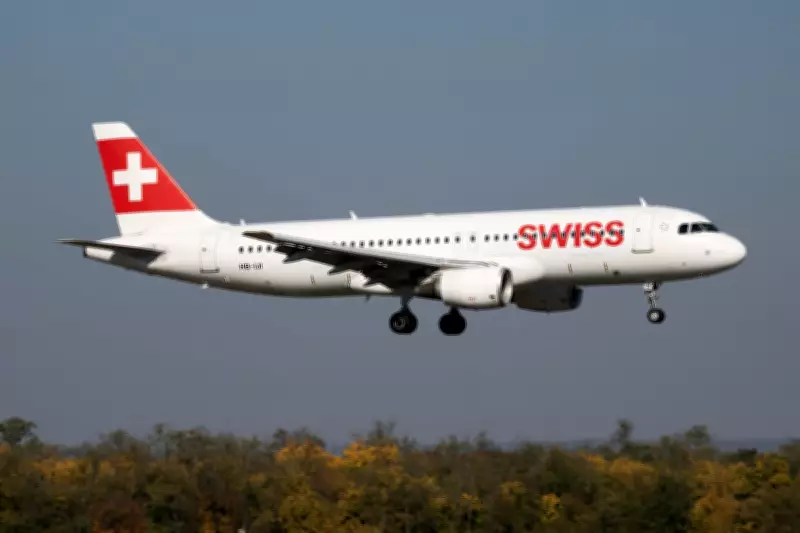
A Swiss International Air Lines flight from London to Zurich was forced to make an unscheduled landing in Brussels after the crew detected an unusual smell in the cabin's kitchen area, triggering a general emergency alert. The incident occurred on Monday, 6 April, highlighting the swift response protocols in aviation safety.
Emergency Diversion Over Belgium
Swiss International Air Lines flight LX325 departed London Heathrow airport at 5.42pm for a scheduled journey to Zurich, Switzerland, expected to last nearly an hour and a half. However, just half an hour into the flight while traversing Belgian airspace, the flight crew transmitted a Squawk 7700 code. This universal transponder code signals to air traffic control that an aircraft requires immediate assistance due to a general emergency, prompting airports to clear runways and prepare emergency services.
Following the alert, the Airbus A320 executed a U-turn and diverted its course northward to Brussels. Approximately an hour after leaving London, the plane landed safely at Brussels airport. A spokesperson for Swiss confirmed to The Standard that an "unusual smell" was detected in the forward gallery, which serves as the kitchen area where crew prepare snacks and drinks for passengers.

Precautionary Measures and Passenger Care
"The crew of flight LX325 decided to carry out an unscheduled landing in Brussels," the spokesperson stated. "The landing was uneventful, and passengers disembarked the aircraft via the regular procedures. As a precautionary measure, airport fire services were called to the scene, which is standard protocol in such situations."
The airline did not specify the source of the unusual smell, but a Swiss spokesperson informed The Independent that specialists inspected the aircraft and found no technical faults. After the inspection, the plane returned to Zurich and resumed service on 8 April.
In terms of passenger welfare, all travellers were accommodated overnight in suitable hotels in Brussels. "Our staff did their utmost to rebook them onto the best alternative connections for each individual," the spokesperson added. "We sincerely regret the inconvenience caused to our passengers by this unscheduled landing. We fully understand that such a situation causes uncertainty, delays and additional effort for the travellers. We would like to thank our passengers very much for their understanding and patience in this exceptional situation."
This incident underscores the rigorous safety protocols in place within the aviation industry, where even minor anomalies like unusual odours can lead to precautionary diversions to ensure passenger and crew safety. It also reflects the operational challenges airlines face in managing such disruptions while maintaining high standards of customer care.