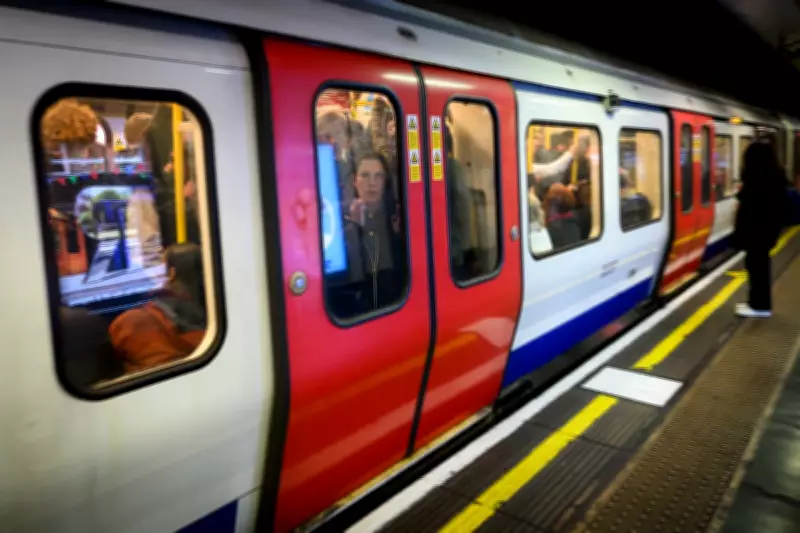
Frustrated business owners across London are warning of substantial financial losses as ongoing Tube strikes force workers to stay home, dramatically reducing footfall in the capital's hospitality sector. The industrial action, organized by the Rail, Maritime and Transport union, has already led to significant declines in customer numbers, with some establishments reporting sales drops of up to 50 percent.
Empty Seats and Quiet Streets
On what would typically be a bustling Wednesday lunchtime in the City of London, many restaurants and cafes are experiencing unusual quiet. The usual queues of office workers seeking quick meals have vanished as commuters opt to work from home rather than navigate disrupted transport networks.
"It's dramatically dropped a lot," reported the manager of MuMu Street Food, an Asian restaurant near Moorgate. "We normally have constant queues and non-stop service, but now I'm just sitting and waiting for customers."

Struggling to Survive the Disruption
The RMT union's 24-hour strikes began at midday on Tuesday, with another scheduled for Thursday, creating major commuting challenges for those attempting to reach their workplaces. Those who made the journey faced overcrowded buses, expensive taxis, or lengthy bicycle rides instead of their usual Underground routes.
MuMu's manager, who requested anonymity, revealed their daily commute has extended from 55 minutes to nearly two hours each way due to the transport chaos. "It's not only about customers, it's about us as well for travelling to work," they explained, highlighting how the strikes affect both business owners and their employees.
Financial Impact Mounting
Paul Salter, managing director of Birley's sandwich shops, reported footfall reductions of 15 to 20 percent across their City and Canary Wharf locations. "It will cost us tens of thousands of pounds this week," he stated. "Very frustrating and another hit to the hospitality sector, especially the retail sector. We can only hope that they solve this before next month's planned strikes."
Other establishments are experiencing similar declines. Mesi, owner of Mesi's Caffe near Finsbury Circus, estimated a 30 percent drop in customers, noting that regular patrons appear to be working from home instead of visiting their usual lunch spots.
Supply Chain Ripple Effects
The disruption extends beyond frontline hospitality businesses to their suppliers. George Edwards, managing director of London Wagu Company, which supplies premium meat to 60 high-end restaurants and 20 butchers nationwide, reported an 18 percent volume decrease this week compared to the previous week.
"Restaurants are cancelling orders due to significantly reduced walk-in traffic and reservation cancellations," Edwards explained, illustrating how the strike's impact ripples through the entire food service ecosystem.
Historical Context and Future Concerns
Hospitality sector analysis reveals troubling precedents. During 31 days of Tube strikes across 2023 and 2024, Zone 1 hospitality businesses experienced average sales declines of 32 percent. Coffee and sandwich shops suffered a 34 percent drop, pubs and bars saw 38 percent reductions, while restaurants faced 29 percent fewer customers.
Kate Nicholls, Chair of UKHospitality, emphasized the severity: "Tube strikes have a devastating impact on London's hospitality businesses, with sales falling by up to 40% on strike days. Commuter footfall is almost non-existent and families cancel plans to visit the capital."
She added that the financial consequences extend beyond immediate lost sales to affect hospitality staff who cannot reach their workplaces, urging all parties to continue negotiations toward a resolution.
Broader Economic Consequences
Michael Kill, CEO of the Night Time Industries Association, warned that the strikes create unacceptable uncertainty for businesses already facing rising energy and operating costs. "Margins are being squeezed from every direction, and confidence is increasingly fragile," he stated.
"Without reliable late-night transport, staff struggle to get to work, customers stay away, and businesses lose critical trade," Kill continued. "Many venues are already under intense financial pressure, continued disruption only compounds that risk."

Ongoing Dispute and Future Action
The current strikes follow RMT's accusation that Transport for London is attempting to impose a new four-day working week without proper negotiation. General secretary Eddie Dempsey has expressed frustration over stalled talks, citing concerns about fatigue, safety, and work-life balance implications of the proposed changes.
With additional strikes planned for May and June, business owners fear prolonged disruption could have lasting consequences for London's economy. The hospitality sector, still recovering from pandemic-related challenges, now faces what industry leaders describe as an unnecessary and damaging blow to their fragile recovery.
As negotiations continue, London's business community watches anxiously, hoping for resolution before further scheduled industrial action compounds their financial losses and threatens the viability of establishments across the capital.