Waymo has been compelled to recall thousands of its robotaxis across the United States following an incident where one of its self-driving cars was swept into a creek. The company announced a 'voluntary recall' in a notice posted on the National Highway Traffic Safety Administration (NHTSA) website on Tuesday.
Recall Details
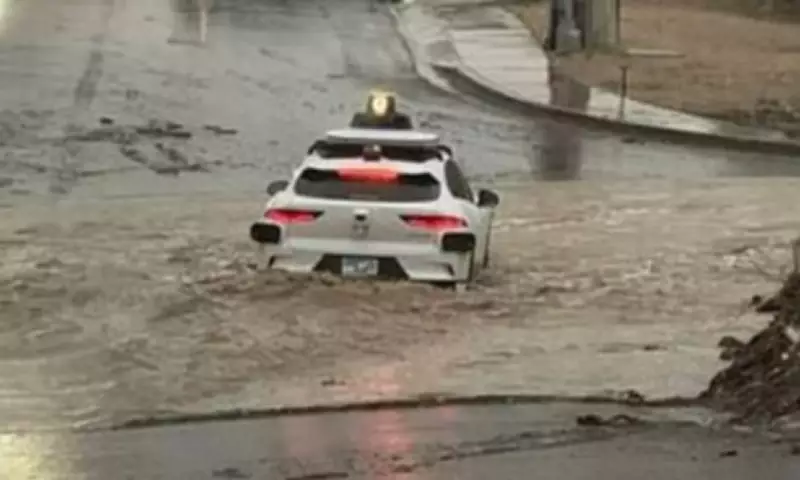
The recall affects nearly 3,800 robotaxis equipped with Waymo's fifth and sixth generation self-driving systems. According to Waymo, the affected vehicles have a software glitch that permits them to drive onto flooded roads. This issue came to light after an incident on April 20 in San Antonio, Texas, where a Waymo vehicle drove into a flooded road and was carried away by the water. Although no one was inside the vehicle at the time and no injuries were reported, the company warned that such unexpected behaviour could lead to 'a loss of vehicle control, increasing the risk of a crash or injury'.
Software Fix Under Development
Waymo, owned by Google's parent company Alphabet, stated that a solution is 'under development' to prevent self-driving cars from accessing waterlogged areas. It remains uncertain whether this recall will affect Waymo's plans to launch its robotaxi service in London this autumn.

Waymo's robotaxis currently operate in several US cities, including San Francisco, Austin, and Miami, providing over 500,000 trips per week. However, the company has ambitions to expand internationally. Following a trial period, Waymo intends to launch the first-ever robotaxi service in London starting in September. Dozens of driverless cabs are already mapping routes in the capital, with safety drivers behind the wheel, but they will become fully autonomous once the service begins.
Expert Concerns on Public Trust
With the September deadline approaching, experts warn that high-profile safety failures could undermine public trust in autonomous vehicle technology. Professor Jack Stilgoe, an expert on emerging technologies from University College London, told the Daily Mail: 'Companies need to show that they aren't reckless. How they respond to mishaps and crises is absolutely vital.'
In addition to the recall, Waymo has temporarily suspended its San Antonio service following the incident. The company plans to resume public rides once the software causing the crash has been fixed.
Previous Incidents
This is not the first time Waymo's self-driving taxis have caused public disruption. In December last year, a power outage in San Francisco caused hundreds of Waymo vehicles to freeze in place, leading to significant traffic chaos. In London, residents of a Spitalfields cul-de-sac have been repeatedly woken up at 04:00 on most weekdays by Waymo taxis getting trapped in their street. Last month, a Waymo crashed through a police cordon set up for a double stabbing incident in Harlesden, northwest London.
Injuries from such incidents are rare, and none have occurred in the UK. However, experts stress the urgent need for more regulation governing robotaxis. In the UK, legal responsibility after an autonomous vehicle crash is governed by the 2024 Automated Vehicles Act, but rules elsewhere are less clear.
Professor Stilgoe added: 'Even though we've seen lots of these things moving around US and Chinese cities, responsibility is still a grey area. No technology will ever be perfectly safe. Self-driving vehicles have to operate in unpredictable public spaces with other road users, surrounded by all of the complexity of everyday life. Things will go wrong. But regulators can help minimise the risks and put in place processes so that, when mistakes happen, everyone can learn from them.'
Professor Siddartha Khastgir, head of Safe Autonomy at the University of Warwick, emphasised the importance of transparency: 'Public trust is underpinned by transparent, honest and responsible communications. Like any technology, the concept of absolute safety is a myth. But we can still have safe autonomous vehicles if we can accurately establish and communicate their capabilities and limitations to the users – we call this "informed safety".'
The Daily Mail has approached Waymo for comment.