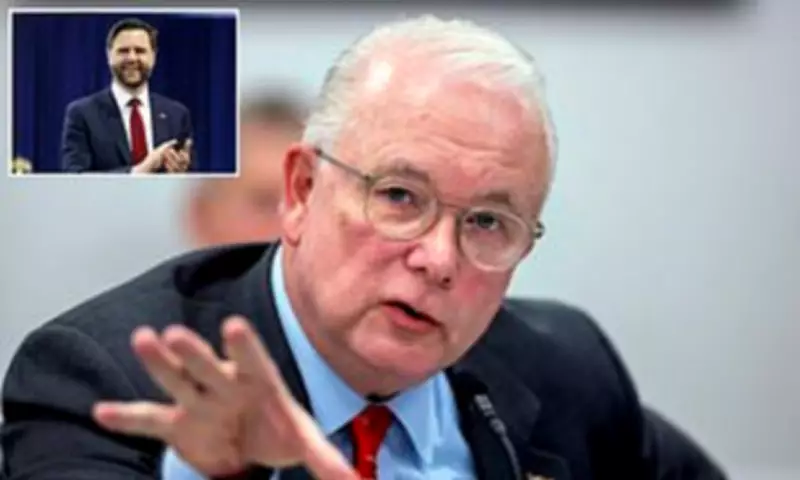
The elected state auditor of North Carolina, Dave Boliek, has revealed that the value of autism therapy billings to the state’s Medicaid program has increased by roughly 47,000 percent over a five-year period, raising concerns about possible waste, fraud or abuse. Boliek, who took office last year and oversees the finances of all state agencies, disclosed that in 2020, providers billed Health and Human Services about $1.4 million annually for autism therapy services. According to Boliek, that figure has since ballooned to $660 million on an annual basis.
Audit Underway
“Those are vital services to folks and individuals that need that therapy,” Boliek said in an interview. “That begs an audit from the state auditor… we are the top watchdog agency for taxpayer waste, fraud, and abuse prevention. So we’ve dug down into that.” It is unclear which data set Boliek is referring to, but a March report from the North Carolina Department of Health and Human Services (NCDHHS) states that about $544 million in Medicaid funds were spent on “Research Based Behavioral Health Therapy” in fiscal year 2025. This therapy is defined as a “suite of evidence-based interventions that prevents or minimizes the behavioral challenges associated with Autism Spectrum Disorder,” according to the report.
Projected Expenditures
By fiscal year 2026, the state’s projected expenditures on these services will reach $842 million, and in 2027, it is expected to rise to $1.1 billion. The report also shows that there were just 3,844 users of these therapies in 2022, compared to 13,447 in 2025. “Utilization growth far outpaces increases in Autism Spectrum Disorder (ASD) diagnosis,” the report said, adding that it is “unlikely that this level of growth can be explained by increased access alone.”

Collaboration with Vice President Vance
Boliek said he is working with Vice President JD Vance, who has become the Trump administration’s point person on fraud investigations, to figure out why costs have ballooned so high. Boliek emphasized he is working “hand in glove” with Vance on figuring out how these costs are rising so quickly. Vance has been leading the administration’s crackdown on fraud in Minnesota and other states suspected of having faulty programs. Federal prosecutors have charged dozens of people in Minnesota with stealing roughly $250 million from a pandemic food-aid program, while separate investigations have alleged fraud involving the state’s autism therapy system. In response, Vance announced in February that the Trump administration froze nearly $260 million in Medicaid funding for Minnesota. The White House has since launched a task force to investigate similar potential fraud schemes in California, Illinois, New York, Maine and Colorado.
Potential Causes
In North Carolina, Boliek believes the potential fraud is due to a general lack of understanding about who is supposed to submit invoices to Health and Human Services. He also said some instances of duplicative billing are likely illegal. “We’ve seen examples where there might be three different clinical providers billing during the same tranche of time on an autism therapy client and that is because of poor rulemaking,” he said. “Some of it is possibly illegal and probably illegal, and we’re going to point that out, and we’re going to try to put people in cuffs because of it.” Boliek added that some of the blame lies with “lax oversight” from the NCDHHS, which is led by Dr. Devdutta “Dev” Sangvai, appointed last January by Governor Josh Stein, a Democrat.

Efforts to Strengthen Oversight
Boliek emphasized that the murky rules on billing either confuse providers or allow people to take advantage of the complicated system. “It really is minutiae… We still have some services that are delivered on a fee-for-service basis, and they lack transparency and lack accountability with respect to who can bill and how much can be billed for particular services,” he said. “That’s why we’ve taken a deep dive into some particular fee-for-service areas in North Carolina and are looking at provider data on exactly how those services are billed. That’s where the flaws are.” Boliek said his office is working with lawmakers to strengthen enforcement mechanisms by increasing financial penalties and expanding investigative resources. One asset Boliek plans to use to uncover fraud is artificial intelligence. “Look, we’ve got to pour jet fuel on artificial intelligence in the area of state auditing because the fraudsters are using AI and if we’re not using AI to combat the fraud, then we’re going to be on our heels and the taxpayer isn’t going to be protected,” he said. These moves, he said, are being made so the right people get the services they need. “Every wasted dollar is a dollar that can’t be spent on a person who actually needs services,” Boliek concluded.