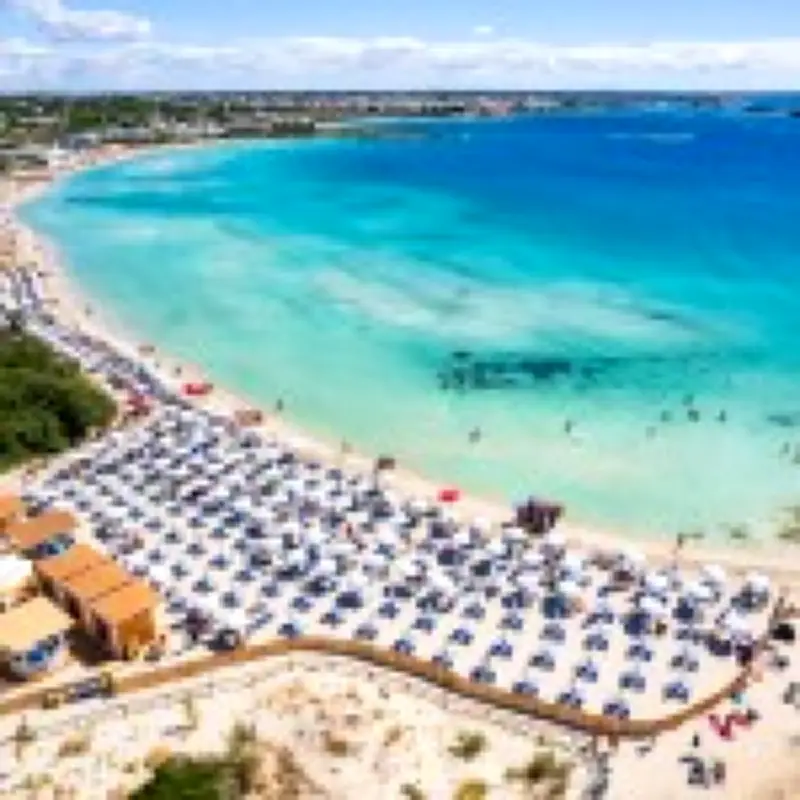
Puglia Governor Antonio Decaro has ignited a fierce debate by calling for tourists and locals to be permitted to bring their own food and drinks to the region's beaches. The move has created division between the governor, residents, and Puglia's exclusive beach clubs, which have increasingly privatised the coastline.
Background of Beach Privatisation
Over the past few years, Italians have protested the mass privatisation of the country's beaches. Private beach clubs, bars, and restaurants have taken over large stretches of coastline, leaving locals with fewer free public spaces. The number of such clubs has risen by 12% in recent years. Known as 'stabilimento,' these establishments charge customers for sunbeds, umbrellas, food, drink, and facilities.
Governor's Stance
In a Facebook video on July 4, Decaro said: 'We are working to make the sea, more and more, an experience of freedom, for Apulians and for those who come from outside to discover this region.' He added: 'The sea is a common commodity; it cannot become a luxury. No one can stop you from eating food on the beach that you've brought from home.' Decaro hinted that the expansion of registered beach clubs prompted his statement.

Last year, consumer group Altroconsumo reported that renting a sunlounger in Italy now costs, on average, 17% more than four years ago. In Gallipoli, a popular Puglia resort, daily prices reach around €90 (£78) during peak season. Decaro argues that locals should not be priced out of their own public spaces.
Public Opinion
Italian travel influencer Maritia Mazzini supports Decaro, calling the idea a 'positive decision.' She says: 'If I'm already paying to access a beach club, I don't think I should feel obliged to buy food or drinks there as well.' As long as people are respectful and clean up, she believes they should be free to bring their own food. Maritia stresses the importance of maintaining public beaches: 'While beach clubs offer great services... in many parts of Italy they now occupy such a large portion of the coastline that it can become difficult for locals and families to simply enjoy the sea without spending a significant amount of money.' She advocates for balance: 'Beach clubs should absolutely exist for those who enjoy them, but public beaches should never disappear.'
Expert Views
Alexandra Dubakova, travel expert at FreeTour, notes that the problem is not tourists bringing lunch but Italian families running out of options. 'In popular parts of Puglia, spending €70 to €90 for an umbrella and two loungers during August is normal, and once food and parking are added, a simple beach day can cost well over €100,' she says. 'For many locals, especially younger families, it becomes an occasional luxury.' She adds that Italian beaches are public property, and concessions were never intended to turn them into fully paid experiences. 'If people rent a beach chair and want to eat the sandwich they prepared... then I don't see this as threatening the business model.'
About 33% of the Italian coastline has been leased out, with many leaseholders enjoying automatic renewal for decades at low prices. Due to EU pressure, Italy must switch to competitive tenders by 2027. Paradoxically, Alexandra suggests that allowing outside food might help beach clubs: 'When individuals don't feel forced to purchase every meal, they could be willing to rent the facilities out of respect rather than exploitation.' She poses the central question: 'Is Italy's coastline an asset that it shares with all of its citizens, or is access to it now a premium service?'
Opposition from Beach Clubs
Beach club operators argue that Decaro's decision will destroy Puglia's 'image of excellence.' Although Italian law permits picnics, clubs often deny entry with outside food and drink, posting signs saying 'No outside food or drink allowed.' Assoturismo, the Italian Federation of Tourism Enterprises, claims that picnicking has led to littering and will inconvenience other beachgoers, accusing the governor of 'encouraged behaviour that lowers quality standards.'

Nicola Ragno, president of Assoturismo in Vieste, told The Times: 'It's not about just a sandwich: some people think they can bring all sorts of food with them, starter, main, fruit — whole meals. These situations can't be tolerated because there are lots of other customers who don't appreciate it.'