Secretive Circumcision Rituals Claim 500 Lives in South Africa Over Five Years
At least 48 boys and young men perished during the most recent round of initiation ceremonies in South Africa, according to official reports. These traditional circumcisions, held twice annually with the next season scheduled for June, have resulted in a staggering 476 fatalities over a five-year period. The deaths highlight the dangers of a deeply entrenched cultural practice shrouded in secrecy and often abused.
The Tragic Story of Lamkelo Mtyho
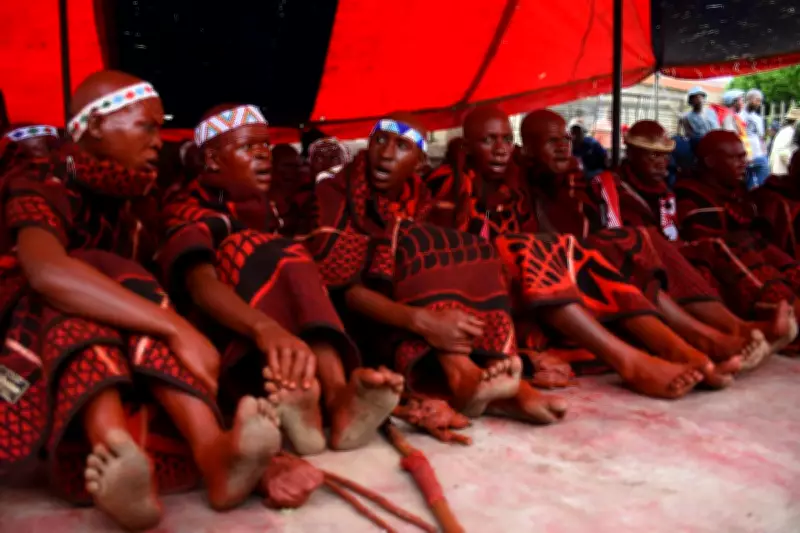
Lamkelo Mtyho, a 22-year-old with no known health issues, joined his peers for what was meant to be the most significant ritual of his young life. Wrapped in blankets and smeared in clay, he entered a registered initiation school outside Ngqeleni village in Eastern Cape province with his family's blessing. They anticipated his triumphant return, full of cultural knowledge and officially recognized as a man. Instead, three weeks later, they received news of his death.
His grandmother, Nozinzile, recounted the heartbreaking details. "They were walking to the river to go and bathe, and along the way he started losing strength and collapsed. That is what we were told," she said, speaking between long pauses outside the hut where Mtyho used to help with chores. "It is said that it was an emergency situation, that the others ran to get water and tried to resuscitate him. When other people arrived there to help, it was too late." She refused to assign blame, and no attempt was made to verify the exact cause of death.

Risks and Challenges of Traditional Circumcisions
The secrecy surrounding these rituals makes it difficult for families and authorities to understand and regulate the practice. Participants often remain silent, and few former initiates are willing to speak out. This opacity, combined with the remote settings of many schools—often mud huts or shacks shared by dozens of young men—means help is usually far away when complications arise.
Fatal risks include poorly trained practitioners, unsanitary cutting tools that may be reused, dehydration, and badly managed septic wounds. Former health minister Zwelini Mkhize emphasized the gravity of the situation in parliament last year, stating, "Imagine this number: 476 young people died in a five-year period and yet they were well before going into initiation. These deaths are unacceptable and should never have happened."
Despite these dangers, hundreds of thousands of South Africans continue to participate, driven by cultural pressures. Traditional leader Morena Mpembe, who oversees a registered school in Phuthaditjhaba, Free State province, explained, "Initiation is a culture left behind to us by our elders. We grew up practicing it, as it teaches a young man to respect everyone, including those who are not initiates in society."
The Spread of Illegal Initiation Schools
High unemployment and economic inequality have fueled the rise of illegal initiation schools, which attract those who cannot afford government-regulated institutions. Some boys, eager to "become men," slip away to these schools before reaching the legal age of 16. Mluleki Ngomane, an official with the Gauteng provincial oversight body, noted, "It is very difficult for the government to monitor initiation schools which are not registered. They are not known until there is a tragedy of some sort."
A 2022 visit by lawmakers to the Eastern Cape revealed more illegal schools than legal ones in the OR Tambo municipality alone—68 compared to 66. Investigations over the years have uncovered abuse of participants, violence between initiates, drug and alcohol abuse, and even kidnappings. Motlalepule Mantsha, a leader at an initiation school in Phuthaditjhaba, warned, "We are seeing a rise in gangs because they want to grow their initiation schools, and we see that as a wrong way of practicing initiation. This is damaging the initiation's image."

Government Regulations and Enforcement Efforts
Since 2021, South African law has required initiation schools to meet strict health and safety standards for registration. Over 5,000 registered schools exist, with requirements including registration three months before each season, sufficient surgical tools to prevent reuse, and training for traditional "surgeons" and "nurses" in hygiene, infection prevention, wound care, and HIV awareness.
Enforcement has led to dozens of arrests. In January and February alone, at least 46 people were arrested for links to illegal schools, including traditional surgeons, nurses, and parents accused of falsifying ages. In a rare conviction in February, a 26-year-old man was sentenced to two years in prison for unlawfully circumcising two boys aged 17 and 18.
However, monitoring remains challenging. A 2017 report by the Cultural, Religious and Linguistic Rights Commission cited "clear confusion" about local authorities' roles and noted that the sacredness and secrecy of the practice, compounded by rural inaccessibility, make oversight difficult. The report emphasized that by the time complications arise, it is often too late for medical treatment, and it recommended pre-initiation medical exams to address preexisting illnesses.
Community Perspectives and Safeguarding Efforts
For many families, initiation is a source of community pride. A successful ceremony concludes with participants returning to present themselves through traditional hymns and clan name recitals, celebrated with songs and dance. Completing the ritual confers higher status for marriage and participation in cultural activities, key considerations for South Africa's ethnic groups.
Makhanya Vangile, a mother of two initiates, expressed concern about illegal schools but affirmed the practice's cultural importance. "Here, we have guardsmen from our chief who go and check up on how the boys are being fed, their living conditions and safety," she said. "They are able to stop things like boys bringing harmful stuff like alcohol, knives and guns instead of traditional sticks."
As the next initiation season approaches in June, the balance between preserving cultural heritage and ensuring safety remains a critical issue. The deaths of hundreds of young men underscore the urgent need for continued regulation, community vigilance, and broader awareness to prevent further tragedies in this secretive tradition.