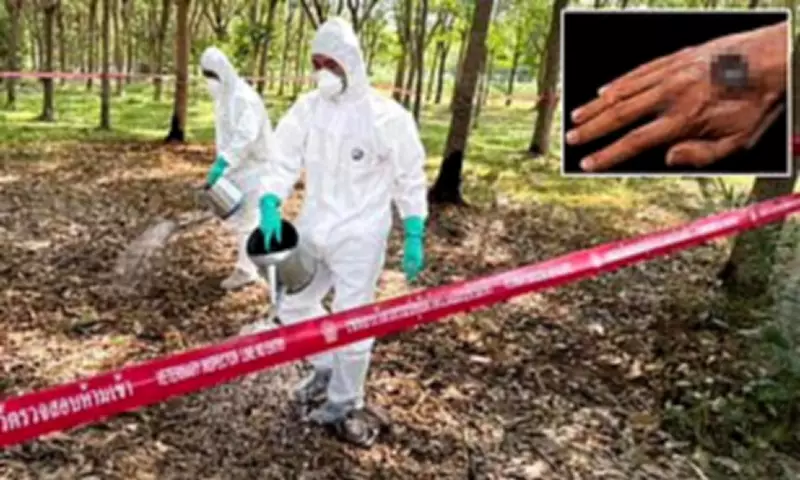
Anthrax Bacteria Lurk in US Soil, Scientists Warn of Hidden Threat
Most Americans assume they will never encounter anthrax, but new scientific insights reveal that this deadly bacteria may be silently present beneath their homes, hidden within local soil. Anthrax, caused by the bacterium Bacillus anthracis, can lead to severe symptoms such as blisters and dark sores, and is almost always fatal if left untreated. Researchers are now emphasizing that the organism is widespread across much of the United States, typically residing in the top six inches of soil.
Understanding Anthrax in the Environment
Hannah Kinzer, a PhD candidate in public health at Washington University in St. Louis, has highlighted that anthrax bacteria persist in the earth, forming communities around plant roots and interacting with other microorganisms. She explains, 'The bacteria that cause deadly anthrax disease persist in the earth. In the soil, they hang out and can form communities around plant roots. They also interact with neighboring micro-organisms.' This challenges the common perception of anthrax as a white powder, reminiscent of the 2001 bioterrorism attacks in the US that resulted in five deaths and 17 illnesses.
In reality, anthrax bacteria are invisible to the naked eye and often remain undetected in soil, particularly in pastures and historical burial sites. Kinzer notes in The Conversation that once spores transform into bacteria, they can launch aggressive attacks, using toxins to cleave vital proteins and disrupt cellular functions.

Transmission and Lifecycle of Anthrax
Anthrax primarily affects large herbivores such as cattle and deer, which disturb the bacteria while grazing and inadvertently ingest spores or are exposed through cuts. In animals, infection occurs after consuming a significant number of spores, leading to severe internal bleeding and often death within 48 hours. Upon decomposition, the animals' bodies return anthrax spores to the soil, completing the typical lifecycle.
Human infections are accidental and not part of this natural cycle. The risk of soil anthrax causing human infection is low, as noted by health officials. Researchers in Nebraska indicate that a high number of virulent spores must enter the body through one of three routes: skin cuts or scrapes, inhalation, or ingestion. Most human cases are linked to handling contaminated materials like leather or wool, inhaling spores, or consuming undercooked meat from infected animals.
Human Infection Risks and Symptoms
In the US, only nine human cases have been confirmed since 2006, with no outbreaks since the 2001 bioterrorism incident. There are no recorded instances of anthrax spreading from person to person. Warning signs of infection can appear from one day to two months after exposure, including symptoms such as:
- Small, itchy blisters
- Painless sores on the face, neck, arms, or hands
- Heavy sweats and chest pain
- Red face and eyes
Within weeks, severe complications like sepsis or swelling of the brain and spinal cord membranes can occur, leading to fatal internal bleeding. Treatment involves a 60-day antibiotic course or a three-dose anthrax vaccine, but success rates vary. For inhaled spores, survival is about 55%, while for ingested cases, it is 60%. Skin infections have a near-perfect treatment clearance rate.
Persistence and Environmental Factors
Kinzer warns that anthrax bacteria thrive in soils rich in alkalines, calcium, and nitrogen, common in the western US. However, even without ideal conditions, spores can persist in soil for over 50 years, awaiting favorable circumstances. The bacteria are notoriously resilient, surviving dehydration, radiation, and toxic chemicals, making eradication challenging.
This hidden presence underscores the importance of public awareness and preventive measures, especially for those in high-risk areas or occupations involving animal contact. While the threat remains low for the general population, understanding these risks is crucial for health and safety.