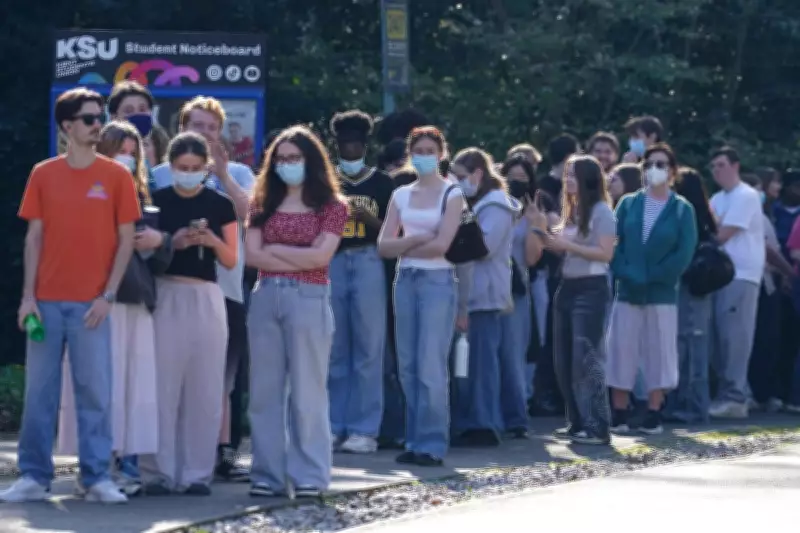
Meningitis Outbreak in Kent: Vaccine Queue Closure Leaves Students Turned Away
Two students have tragically died, and numerous others are receiving hospital treatment as health officials urgently investigate the rapid spread of meningitis in Kent. The situation has escalated, prompting a significant public health response across the county.
Vaccine Queue Closure Sparks Frustration
More than one hundred students were turned away while attempting to obtain meningitis vaccines after officials closed the queue at the University of Kent's Canterbury campus. The university cited capacity constraints, explaining that nursing staff needed to conclude the clinic by 5pm. Press Association estimates, based on queue size, confirmed the number of individuals denied access.
In a Facebook post, the university stated, "The queue has been closed as nursing staff are unable to see any more people within the clinic's remaining opening hours today. The team have been working incredibly hard to vaccinate as many people as possible." The vaccination clinic is scheduled to reopen on Friday from 9am to 5pm, with advice for people to join the queue by 2pm to secure a spot.

Outbreak Details and Official Response
As of Wednesday at 5pm, the UK Health Security Agency reported 15 confirmed cases of meningitis, with an additional 12 under investigation, bringing the total to 27 confirmed or suspected cases. This marks an increase from 20 cases reported the previous day. Among the confirmed cases, nine are known to be caused by the menB strain.
Health Secretary Wes Streeting announced expanded vaccination efforts during a visit to the University of Kent. He urged anyone who attended Club Chemistry from March 5 until March 15 to come forward for both antibiotics and vaccination. The initiative also includes sixth-formers at four schools and students at Canterbury Christ Church University.
Mr Streeting emphasised, "We are now encouraging anyone who attended Club Chemistry from March 5 until it voluntarily closed to come forward for both antibiotics and vaccination. Furthermore, we're expanding vaccination to anyone who's previously been offered the prophylactic antibiotic. These are proportionate steps to help us contain spread and we're keeping that situation under review."
Student Experiences and Broader Impact
Hayden Taylor, a 19-year-old radiography student at Canterbury Christ Church, arrived at the campus vaccine clinic around 3pm on Thursday after visiting Club Chemistry on March 12. He was turned away, noting, "I had the antibiotics already. We already knew it was going to be busy."
Isobel, a 21-year-old English literature student at the University of Kent, faced similar disappointment after her mother drove 80 minutes to the centre. She expressed frustration, saying, "My mum has had to drive me an hour and 20 minutes to get the vaccine. It is very inconvenient. I'm coming back tomorrow and hope that they have got some."
Additional Developments and Expert Analysis
In related updates, Morrisons confirmed an employee at its Sittingbourne distribution centre, who attended Club Chemistry, has contracted meningitis. Olivia Parkins, an 18-year-old member of the University of Kent's cheerleading society, revealed three confirmed cases within the group, all currently hospitalised.
The UKHSA noted four schools in Kent have confirmed meningitis cases, while Escape Studios in London reported a student with links to the county contracting the illness. To address demand, 20,000 vaccines from the NHS supply will be made available to the private market, easing pressure on pharmacies.
Professor Robin May, UKHSA chief scientific officer, described the outbreak as "very unusual," highlighting that experts are examining why meningitis may have become more transmissible. He explained, "Typically, you would expect to see sporadic cases of meningitis, typically individual patients. Most days, actually, we would see one in the UK. What is particularly remarkable about this case, and unexpected about this case, is the large number of cases all originating from what seems to be a single event."

Professor May identified two potential reasons: behavioural factors, such as sharing utensils, cups, and vapes, or possible evolution of the bacteria to enhance transmission. More than 8,500 antibiotics have been administered to eligible individuals in Kent as part of containment efforts.