Tragic Toll of South Africa's Secretive Circumcision Rituals
Lamkelo Mtyho, a healthy 22-year-old with no known medical conditions, joined his peers for the most significant ritual of his young life. Wrapped in blankets and smeared in clay, he entered the highly secretive process of traditional circumcision, expecting to emerge as a man full of cultural knowledge. Three weeks later, his family received devastating news: Mtyho was dead.
He became one of at least 48 boys and young men who perished during the latest round of initiation ceremonies across South Africa. These deaths represent a tragic pattern in a deeply traditional practice that continues despite mounting fatalities.
Silence and Secrecy Surround Fatalities
The story of an initiate who dies is rarely heard publicly. Participants maintain strict silence around the ritual, creating significant challenges for families and authorities attempting to understand and regulate this culturally important but often abused practice. At least a half-dozen former initiates declined to speak with journalists about their experiences.

Meanwhile, hundreds of illegal initiation schools attract those who cannot afford registered institutions. Police and government officials typically announce deaths only when significant numbers accumulate, resulting in few court cases or autopsies to determine precise causes.
Deadly Risks in Remote Settings
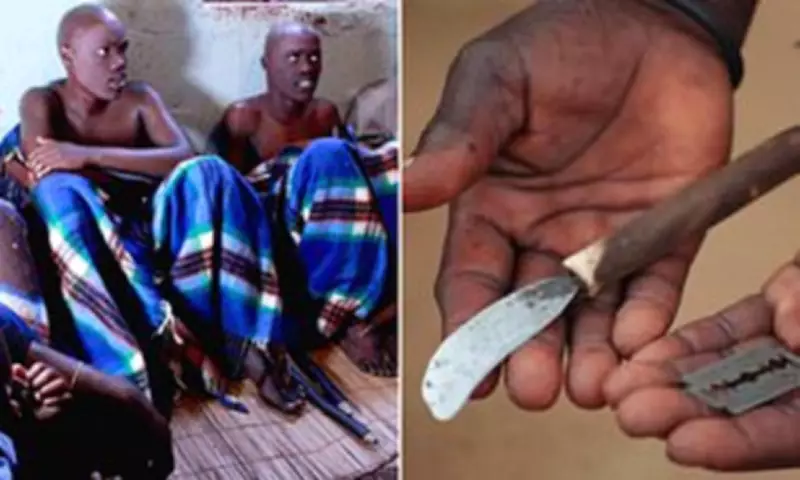
Traditional circumcisions carry multiple fatal risks. These include poorly trained practitioners using unsanitary cutting tools that may be reused on multiple initiates. Dehydration and badly managed septic wounds rank among the primary causes of death, compounded by the remote locations where ceremonies typically occur, far from medical assistance.
Former health minister Zwelini Mkhize highlighted the scale of the tragedy to parliament last year, stating: 'Imagine this number: 476 young people died in a five-year period and yet they were well before going into initiation. These deaths are unacceptable and should never have happened.'
Despite these dangers, hundreds of thousands of South Africans continue to participate in these biannual rituals, with the next season beginning in June.
A Grandmother's Heartbreaking Account
Mtyho attended a registered initiation school outside Ngqeleni village in Eastern Cape province with his parents' blessing. Most such schools operate in mud huts or shacks shared by dozens of young men, removed from public view.
His grandmother, Nozinzile, recounted the tragic sequence. A relative working as a guard at the school delivered the news that Mtyho collapsed while walking to the river to bathe. 'They were walking to the river to go and bathe, and along the way he started losing strength and collapsed. That is what we were told,' she said. 'It is said that it was an emergency situation, that the others ran to get water and tried to resuscitate him. When other people arrived there to help, it was too late.'
Speaking outside the hut where Mtyho used to help with chores like carrying wood, she refused to assign blame. No attempt was made to verify the exact cause of death. 'Initiation is not an easy thing,' she reflected, noting that the possibility of his death had never crossed her mind. Mtyho was her eldest grandchild who had planned to find employment in town to become 'the man of the house.'
Cultural Significance and Economic Pressures
For South African families, a successful initiation concludes with participants returning to present themselves to the community through traditional hymns and recitation of clan names. Villagers join in songs, chanting, and dance to celebrate.
Those who complete initiation gain higher status for marriage and the right to participate in specific cultural activities—important considerations for many of South Africa's ethnic groups. While medical circumcision is available early in life, cultural pressures lead many to prefer the traditional path.
Traditional leader Morena Mpembe, who oversees a registered school in Phuthaditjhaba in Free State province, explained: 'Initiation is a culture left behind to us by our elders. We grew up practicing it, as it teaches a young man to respect everyone, including those who are not initiates in society.'

High unemployment and economic inequality mean government-regulated initiation school fees remain out of reach for many, driving demand for illegal alternatives. Some boys slip away to unregistered schools before reaching the legal age of 16, eager to 'become men.'
Illegal Schools and Government Challenges
Mluleki Ngomane, an official with the Gauteng provincial body overseeing initiation schools, acknowledged the monitoring difficulties: 'It is very difficult for the government to monitor initiation schools which are not registered. They are not known until there is a tragedy of some sort.'
A 2022 parliamentary visit to the Eastern Cape discovered more illegal than legal schools—68 versus 66—in the OR Tambo municipality alone. Government and independent investigations over years have uncovered participant abuse, violence between initiates, drug and alcohol consumption at illegal schools, and even boy kidnappings for forced participation.
Motlalepule Mantsha, a leader at an initiation school in Phuthaditjhaba, expressed concern: 'We are seeing a rise in gangs because they want to grow their initiation schools, and we see that as a wrong way of practicing initiation. This is damaging the initiation's image.'
Regulatory Framework and Enforcement Efforts
Since 2021, South African law requires initiation schools to meet strict health and safety standards for registration, admitting boys aged 16 and above with parental consent. Over 5,000 registered schools currently operate.
Registration requirements include applying three months before each initiation season, maintaining sufficient surgical tools to prevent reuse between circumcisions, and providing hygiene, infection prevention, wound care, and HIV awareness training for traditional 'surgeons' and 'nurses.'
In January and February alone, authorities arrested at least 46 people linked to illegal schools, including 16 traditional surgeons, 28 traditional nurses, and two parents accused of colluding to falsify younger boys' ages. Separately in February, a 26-year-old man received a two-year prison sentence for unlawfully circumcising two boys aged 17 and 18—a rare conviction in such cases.
Systemic Challenges and Cultural Preservation
A 2017 investigation by the Cultural, Religious and Linguistic Rights Commission reported that 'due to the principles of sacredness and secrecy of this practice, also compounded by the inaccessibility of rural locations,' monitoring remains extremely difficult, with 'clear confusion' about local authorities' roles. The report noted that by the time circumcision complications arise, medical intervention often comes too late, suggesting pre-initiation medical examinations for all participants.
Traditional Affairs Minister Velenkosini Hlabisa highlighted dangerous practices during December's death announcements, noting some participants receive unproven advice to avoid drinking water to accelerate healing—a potentially deadly recommendation.
Makhanya Vangile, mother of two initiates, expressed the complex balance many families face: 'Here, we have guardsmen from our chief who go and check up on how the boys are being fed, their living conditions and safety. They are able to stop things like boys bringing harmful stuff like alcohol, knives and guns instead of traditional sticks.' She regards initiations as culturally important but worries about reports from illegal schools.
As South Africa prepares for the next initiation season, the tension between cultural preservation and safety continues, with families hoping their sons will return as men rather than becoming statistics in a growing death toll.