Health officials believe the Ebola outbreak in Congo began weeks ago. The World Health Organization has declared it a public health emergency of international concern, with the death toll exceeding 100. Two cases, including one death, have been reported in neighbouring Uganda. Here is a timeline of what we know so far, after authorities initially struggled to identify the outbreak due to a rarer virus not typically associated with Ebola in Congo.
April 24-27: First Suspected Case
A health worker, the first suspected case known to authorities, fell ill and died in Bunia, the capital of Ituri Province in northeastern Congo. The body was later transported to the nearby mining town of Mongbwalu, according to Congo's health minister. The minister stated the person died on April 24, while the Africa Centres for Disease Control and Prevention reported the death on April 27 after severe bleeding symptoms.
April 28: Second Death
A close contact of the first victim died after presenting with similar symptoms, as per the Africa CDC.

April 30: Initial Tests Negative
Field tests on samples in Bunia were negative for the Ebola virus type (Zaire virus), the most common virus in previous Congo outbreaks. Ebola disease is caused by a group of viruses, including Ebola virus, Sudan virus, and Bundibugyo virus. It took two more weeks to identify the rarer Bundibugyo virus as the cause.
May 5: WHO Alerted
The WHO was alerted to a high-mortality outbreak of an unknown illness in Mongbwalu, with health workers among the fatalities. Local reports indicated around 50 deaths. The Congolese health minister later said authorities believe the body of the first victim may have sparked the outbreak there, as bodies of Ebola victims can be highly contagious.
May 11: Cross-Border Case
A 59-year-old Congolese man with fever and body aches was admitted to a hospital in Kampala, Uganda, about 700 kilometres from Ituri. He had travelled across the border from Congo.
May 13: WHO Investigation
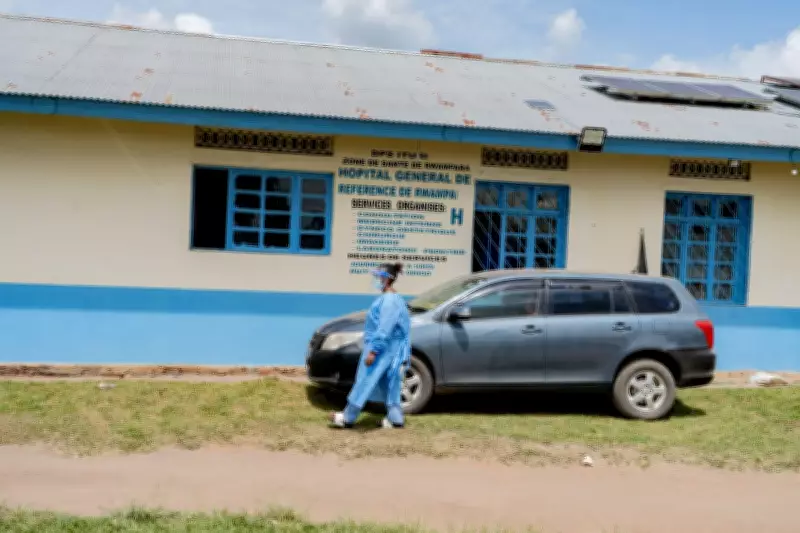
A WHO rapid response team visited the Mongbwalu and Rwampara health zones in Ituri as the outbreak spread.
May 14: Samples Sent for Analysis
Thirteen blood samples from suspected Ebola cases in Rwampara were analysed in Kinshasa. The same day, the Congolese man died in Uganda, and his body was repatriated.
May 15: Bundibugyo Virus Confirmed
Laboratory analysis confirmed Bundibugyo virus in eight of the 13 samples. Ugandan authorities tested a posthumous sample from the man who died there, which also tested positive for Bundibugyo virus, which has no approved treatment or vaccine. Congo's Health Ministry declared an Ebola outbreak. The Africa CDC reported 246 suspected cases and 65 deaths, figures that soon rose to over 300 cases and more than 100 deaths. Uganda reported only two cases, both travellers from Congo. This is the 17th significant Ebola outbreak in Congo since 1976.
May 17: WHO Declares Emergency
The WHO declared the Ebola outbreak in Congo and Uganda a public health emergency of international concern. The UN health agency stated the outbreak does not meet criteria for a pandemic like COVID-19 and advised against border closures. However, it urged countries sharing land borders with Congo or Uganda to enhance surveillance and train health workers on Ebola management.
May 18: American Doctor Infected
An American doctor in Congo was among the confirmed cases, according to Congolese officials. Dr. Jean-Jacques Muyembe, medical director of the National Institute of Bio-Medical Research, said the doctor was among cases in Bunia. The doctor had been treating patients at a hospital there, according to his organisation.