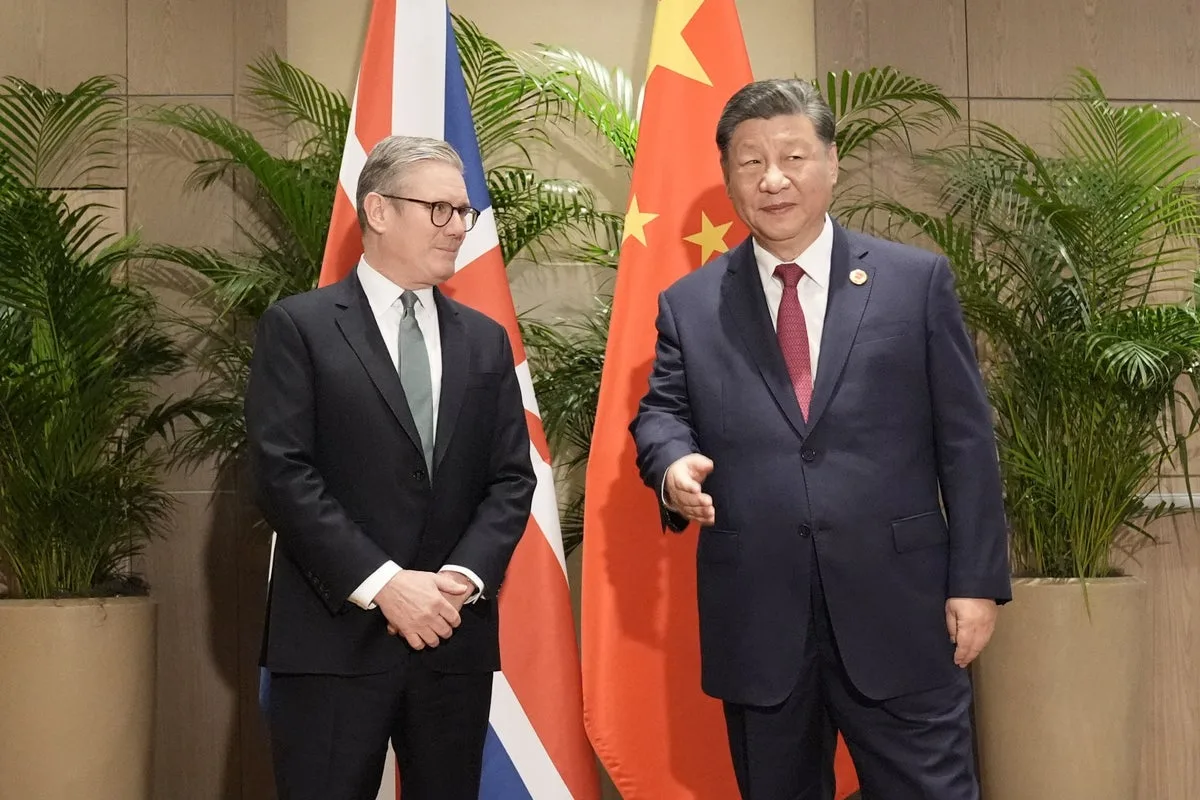
Sir Keir Starmer’s trip to China comes at a time of relative economic and diplomatic isolation for the UK, following Brexit and the impact of Donald Trump’s tariff wars. While Britain can never be an equal partner with China, given the latter’s status as the world’s largest economy and pre-eminent industrial power, the visit is crucial for securing investment and cooperation.
The prime minister has sought to limit damage from US tariffs, reset relations with the EU, and sign a trade deal with India, but China represents the biggest single overseas opportunity for economic growth. As Sir Keir noted, “sticking your head in the sand and ignoring China … wouldn’t be sensible.”
However, the relationship is fraught with challenges. Since David Cameron’s 2013 trade mission, which aimed for a “golden age” in relations, China has become more aggressive in its territorial ambitions, forged a “limitless friendship” with Russia, and cracked down on Hong Kong and the Uyghur Muslim population. Allegations of Chinese hacking of British officials’ phones further strain ties.

Sir Keir will be accompanied by a strong team of officials and dozens of businesspeople, but there will be no talk of a “golden age” this time. Instead, he must balance economic cooperation with protecting British interests. The opening of China’s new “super embassy” in London and permission for a new British embassy in Beijing could set a positive tone.
The prime minister should stress that the UK poses no threat to China, while expecting a scaling back of spying, release of political prisoners, and increased trade volumes. Though differences remain, the visit is a necessary step to boost Britain’s economic prospects.