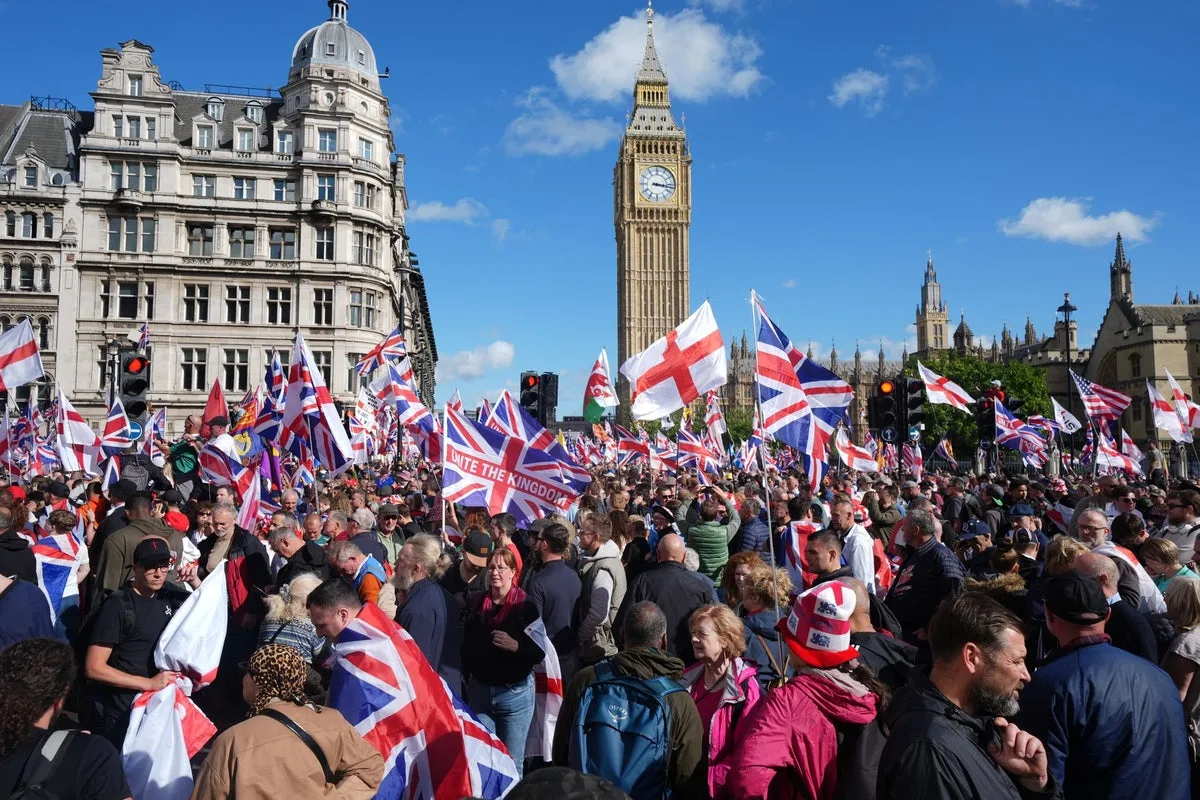
Prime Minister Sir Keir Starmer has told allies that the 'Unite the Kingdom' march in London earlier this month was the moment he realised he needed to publicly fight back against Reform UK and the growing anti-immigration rhetoric in Britain. The march, which attracted an estimated 150,000 people, featured far-right activist Tommy Robinson and amplified anti-Muslim conspiracy theories.
According to sources, Sir Keir was shocked by the size of the event and that 'that many people follow a far-right figure like Tommy Robinson'. The prime minister was also spurred on by Reform UK leader Nigel Farage's threat to deport legal migrants and withdraw benefits from them, which he described as 'racist' and 'immoral'.
A cabinet minister said: 'I think Keir was fed up of always being on the defensive and needed to go on the offensive.' Another senior minister noted that intelligence agencies had detected Russian and Chinese political interference associated with the march through social media bots, but added that thousands of ordinary people from across the country also took part.

Allies said the march was the turning point when Sir Keir decided to launch a fightback against rhetoric that 'has become too commonplace' in Britain. The prime minister is understood to have received thousands of messages from people reacting with anger and fear to the march and to Mr Farage's plans on migrants. One communication from a man of Pakistani heritage born and raised in the UK describing his fear of walking through Euston station struck a chord with the PM.
In an interview with the BBC on Sunday, Sir Keir accused Mr Farage of peddling a 'racist' policy after the Reform UK leader pledged to scrap settled status for all non-EU migrants. Speaking at the Labour Party conference on Monday, Chancellor Rachel Reeves doubled down on the prime minister's claims, saying Mr Farage's agenda is the 'single greatest threat to our way of life'.
It is understood Sir Keir will continue his new lines of attack on Reform in his conference speech on Tuesday. 'You are going to hear a lot more on this line,' a minister noted.