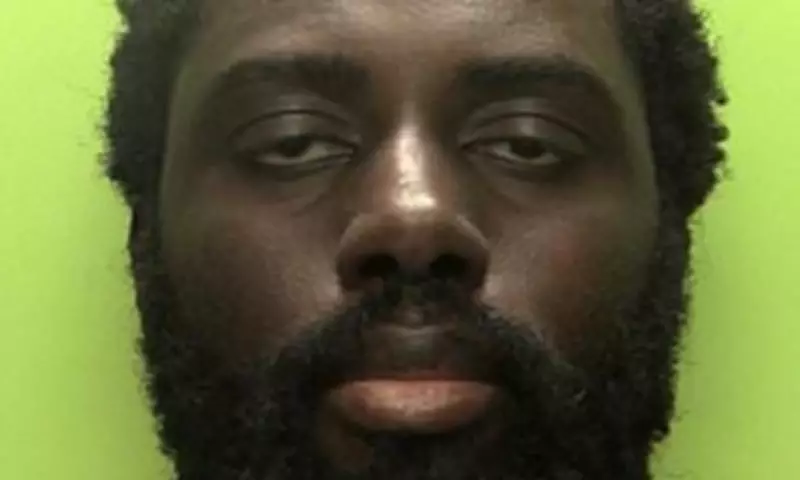
An attack similar to the triple killings by Valdo Calocane could happen again tomorrow as there is a ‘lack of consequences’ for police and mental health service failures, experts warned today.
Valdo Calocane, who was diagnosed with paranoid schizophrenia in 2020, fatally stabbed Barnaby Webber, Grace O’Malley-Kumar and Ian Coates, and tried to kill three others, in Nottingham on June 13, 2023, after a series of ‘red flags’ about his behaviour were missed.
Now some psychiatrists have called for a reform of a system in which mental health patients’ ‘rights and freedoms predominate’, despite the risk they pose.

Calocane was sectioned four times between 2020 and 2022, and he once took a hammer into a hospital ward. This was ‘missed as an incident’ before he was eventually discharged nine months before the attacks, a public inquiry has heard.
Today, David Spencer, head of crime and justice at the Policy Exchange, called for police and NHS bosses to be held accountable for the attack.
He said the three victims were ‘visited by evil’, adding: ‘There was a complete failure of leadership at so many different levels and there is almost a lack of consequences for that failure.’
In a debate by the think tank on policies that could prevent future killings by psychiatric patients, he said: ‘There are two organisations, primarily Nottinghamshire Police and [Nottinghamshire Healthcare NHS Foundation Trust]. Should people have lost their jobs over it? Yes.
‘Could it happen again tomorrow? Yes, I have no doubt whatsoever that a similar case could happen again tomorrow.’
‘This isn’t just a Nottingham issue. It is cities across the country.’
He suggested the ongoing inquiry had been a showcase of blame-dodging: ‘They’re trying to justify who is going to be the person who holds the hot potato, where is the blame going to be? So rather than taking accountability and personal responsibility, they’re desperately trying to move the blame onto the other agency.
‘I simply don’t believe the reassurances. I think the accountability system is a complete failure. I think part of the reason why these people died that morning is because of that failure of accountability.’
Former Old Bailey judge Wendy Joseph, KC, asked: ‘How could police not have seen it coming?
‘There was a clear link between mental illness, refusal to have treatment, violence against the police, a route that would take him before the courts. And then nothing [happened]. If the bereaved are angry, if we are all, there’s a good reason for it.’
Professor Jeremy Coid, emeritus professor of forensic psychiatry at Queen Mary University of London, told the debate that mental health patients’ rights were being given too much weight when it comes to decision-making, saying: ‘It’s a system which has totally changed – patients’ rights and freedoms predominate.’
He said it was ‘astounding’ that Calocane had been allowed to keep the hammer as it was considered his ‘personal property’, after he told staff he needed to hang items in a new home. Professor Coid told the debate it was ‘an example of how crazy [the system] is’.
Professor Swaran Singh, professor of social and community psychiatry at the University of Warwick, added: ‘Cannabis is a huge problem. There’s a wonderful study [which shows that] if you took cannabis off the streets of Europe the rates of schizophrenia would fall by about 10 per cent.
‘In London, it would be 40 per cent. In Amsterdam, it would be 50 per cent because of the number of people who use cannabis, and the type of cannabis that is being used.’