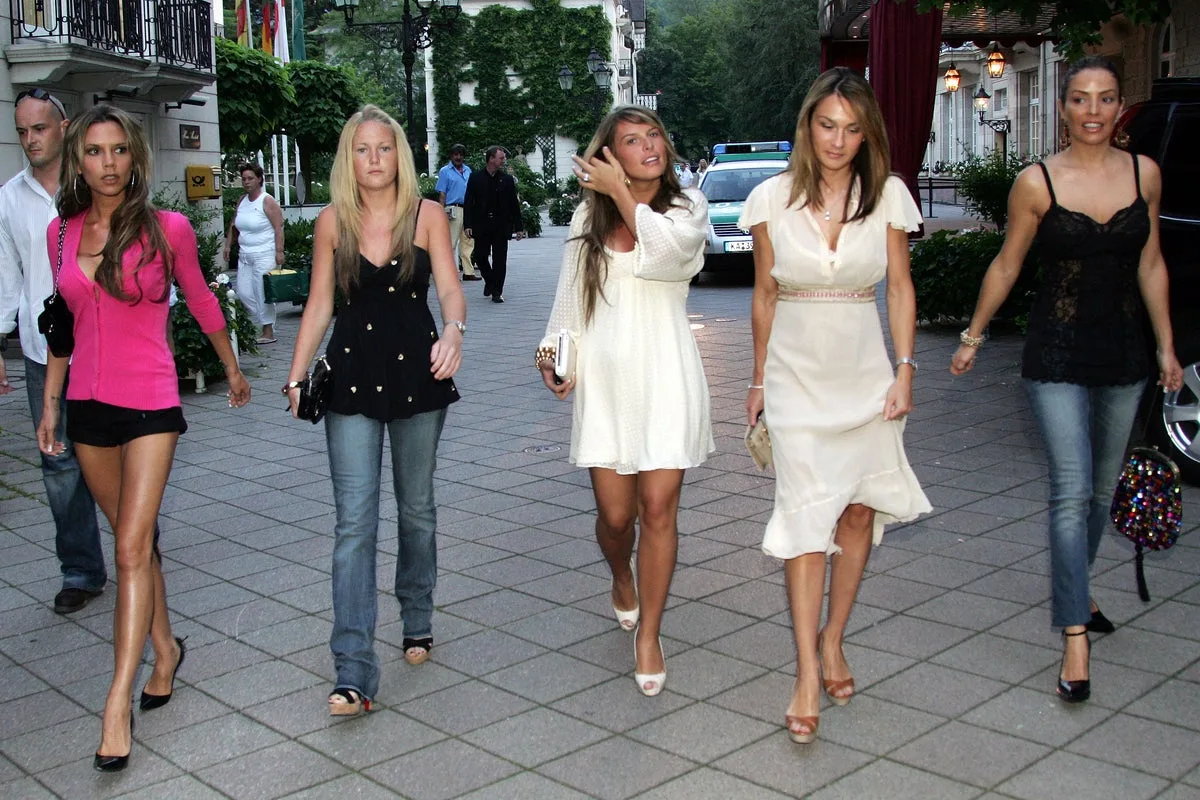
It is lunchtime, and I’m standing outside a luxury spa hotel in Baden-Baden with 100 other journalists. Paparazzi are jostling for a position at the front; all of us have eyes anxiously fixed on the revolving door at the entrance, with three security guards standing by.
It is June 2006, and the world’s press have descended on Germany for the World Cup, but while the players are holed up in a remote hotel in the Black Forest, the main event is being played out here at the Brenners Park Hotel, where the wives and girlfriends of the England team are staying.
Like thousands of other journalists, I’d been dispatched here to report on their every move. At the time, I was news and features director at Grazia – the UK’s biggest weekly glossy news and fashion magazine. My usual beat was interviewing victims of serious crime or survivors of tragic events, but the thinking was that my investigative and persuasion skills could be useful in Baden-Baden to get to the real story behind the scenes.

Excitement had been building for a while; this was an age of designer logos and bags, and this group of women perfectly aligned with everything Grazia was known for at the time. If Loaded’s heroes were the players, these women were our tribe, and back at HQ, a decision was made to dub them the WAGs. Strange to think this shorthand for wives and girlfriends was hardly known before we thrust it onto the public, but here we are.
Two decades on, Baden-Baden is the antithesis of today’s quiet luxury. This was conspicuous consumption at its loudest: the It-bag; the Chloé Paddington, Balenciaga City and Louis Vuitton monogram, all designed to flaunt wealth rather than hide it. Looking back, the sheer volume of coverage devoted to a handful of women’s daily habits, restaurant visits and handbag choices seems absurd.
As millions prepare for the 2026 World Cup in North America, this period 20 years ago feels like a different age, a pivotal moment in time for British celebrity culture. Hugely marketable players like David Beckham, Ashley Cole and Rio Ferdinand had completed their transformation of football from a working-class sport to an entertainment juggernaut, with players now regularly fronting multimillion-pound fashion campaigns.