Chris Packham, known for his preference for beetles and bugs over iconic 'T-shirt' animals like elephants and lions, has put aside that bias for his ambitious new BBC series, Evolution. The five-part science program examines the history of all living creatures over 4 billion years, focusing on five key species: elephant (size), ostrich (reproduction), horse (movement), bat (feeding), and dolphin (intelligence). These were chosen to illustrate how every plant and animal evolved from a single-celled organism called LUCA (Last Universal Common Ancestor).
Packham's Reluctance and Constructive Use of Iconic Species
Packham acknowledges the tension between his personal preferences and television's need for charismatic species. 'TV likes an iconic species, something to put on the T-shirt,' he says. 'On Springwatch we're always keen to champion the underdog... But had we picked, I don't know, some innocuous little bug, it wouldn't have looked great. I'm not a great fan of T-shirt animals, but I am a fan of using them constructively.'
A Personal Highlight: Diving with Dolphins in the Bahamas
Filming the series brought Packham one of the best moments of his life while diving with a pod of dolphins in the Bahamas. 'It was absolutely extraordinary,' he recalls. 'I dived down about four metres and I looked down and I had a dolphin right underneath me... I had a couple on one side... and then I looked up and they were above me. And I was like in the middle of a pod of dolphins.' He describes the experience as 'one of the most remarkable moments in my entire life. To be in that environment with these astonishing animals. I thought 'blimey, I'm Flipper.''

Comparison to Attenborough's Life on Earth
Evolution draws clear comparisons to Sir David Attenborough's 1979 series Life on Earth, but Packham emphasizes the modern narrative structure. 'I'd say it was more modern in its narrative structure,' he explains. 'We're catering for an audience that we know we need to surprise. We want to feed them short snippets... Those twenty-second things that get people to prick up their ears.' He contrasts this with Life on Earth, which 'felt very 1970s' and less focused on quick, engaging facts.
Carbon Footprint and Filming Locations
The BBC team made a concerted effort to limit the carbon footprint by filming each episode primarily in one location. The elephants were filmed in Kenya, ostriches in South Africa, horses in the UK (with three days in France reached by train), dolphins in the Bahamas, and bats in Borneo. 'Ten or 15 years ago, we would have gone to multiple locations to make a series like this,' Packham notes. 'But I'm pleased to say that each of our programmes was essentially made in one location.'
Emotional Moments and Scientific Rigor
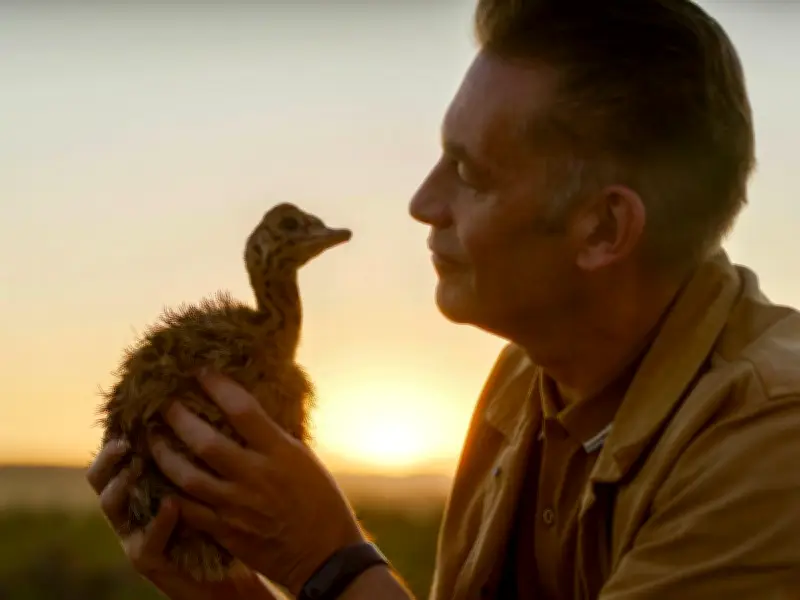
Packham describes emotional moments during filming, such as when a baby ostrich hatched into his hands. 'You're peering into it, it's not even in the world yet, and it's like you've had a sneak preview into a life which is going to unfold,' he marvels. 'It was really very emotional, that formation of new life.' The series does not shy away from technical concepts like DNA, but Packham insists it is woven into an engaging narrative. 'There's no dumbing down, but we are conscious constantly of building a narrative which will keep our audience engaged.'
Evolution airs on BBC2 on Monday 13 July at 9pm.