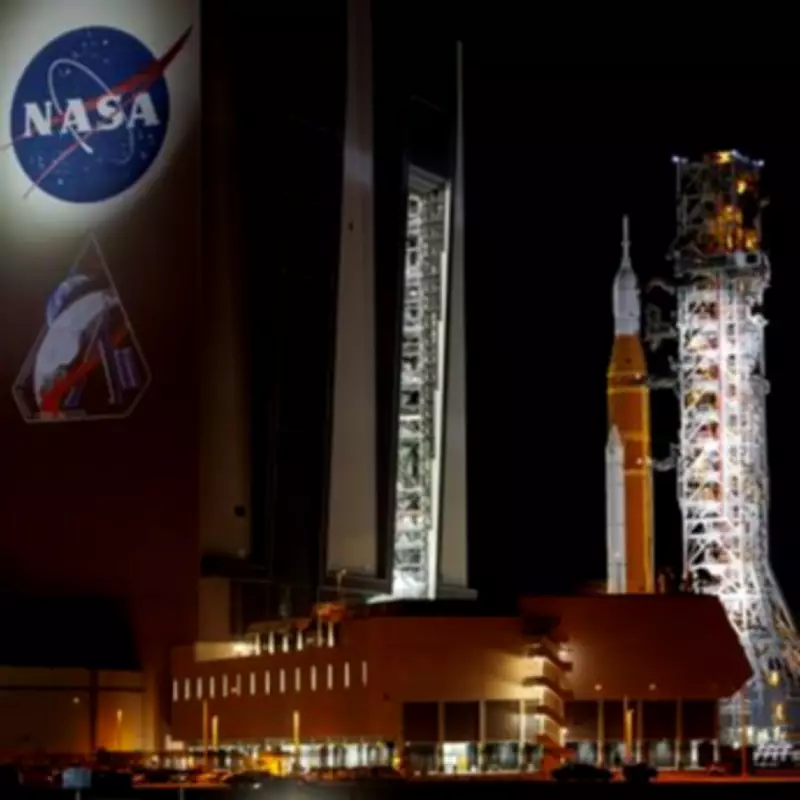
The highly anticipated Artemis 2 mission, NASA's first crewed voyage to the Moon in 54 years, is poised for launch tonight, marking a monumental step in humanity's return to lunar exploration. This historic event will see four astronauts travel farther from Earth than any humans before, but for observers in the United Kingdom, witnessing the spectacle directly will not be possible.
Mission Details and Launch Schedule
The Artemis 2 launch is scheduled for 11:24 PM UK time tonight, April 1, 2026, from the Kennedy Space Center on Florida's east coast. However, this is contingent on favourable weather conditions, with NASA reporting an 80% chance of acceptable weather. The mission was originally planned for February but faced delays due to testing issues, now targeting a six-day launch window in April.
Commander Reid Wiseman, Victor Glover, and Christina Koch from NASA, along with Jeremy Hansen of the Canadian Space Agency, have bid farewell and entered the Orion capsule atop the Space Launch System (SLS) rocket. Their journey will cover approximately 685,000 miles, venturing about 4,500 miles beyond the Moon.

Visibility and Viewing Options
While residents in and around Florida may catch a glimpse of the Artemis 2 rocket as it ascends through the sky, those in the UK will not be able to see the launch with the naked eye. NASA has provided graphics indicating visibility zones, which exclude the UK. Nonetheless, the launch can be viewed live through official streams, offering a front-row seat to this groundbreaking event.
The trajectory is meticulously planned to ensure the Orion capsule is not in darkness for more than 90 minutes at a time, allowing its solar arrays to generate electricity and maintain optimal temperatures. This precision underscores the mission's complexity and the critical timing required for success.
Historical Significance and Future Goals
Artemis 2 represents the first astronaut flight to the Moon since 1972, setting the stage for Artemis 3, which aims to land a crew on the Moon's south pole as early as 2028. The mission paves the way for sustained lunar exploration and future Mars missions.
At a recent press conference, launch director Ms. Blackwell-Thompson emphasized the team's dedication, stating, "Our team has worked extremely hard to get us to this moment and I am so very proud of the work that they have done." This sentiment echoes the global excitement surrounding humanity's renewed push into deep space.