NASA's Artemis 2 Moon Mission Encounters Toilet Trouble Shortly After Historic Launch
Just hours into NASA's groundbreaking Artemis 2 mission to the Moon, the crew reported a critical malfunction with an essential but often overlooked component of the Orion spacecraft: its onboard toilet. The issue emerged shortly after the spacecraft lifted off from Launch Pad 39B at the Kennedy Space Center in Cape Canaveral, Florida, at 6:35 PM EDT on Wednesday, April 1, 2026.
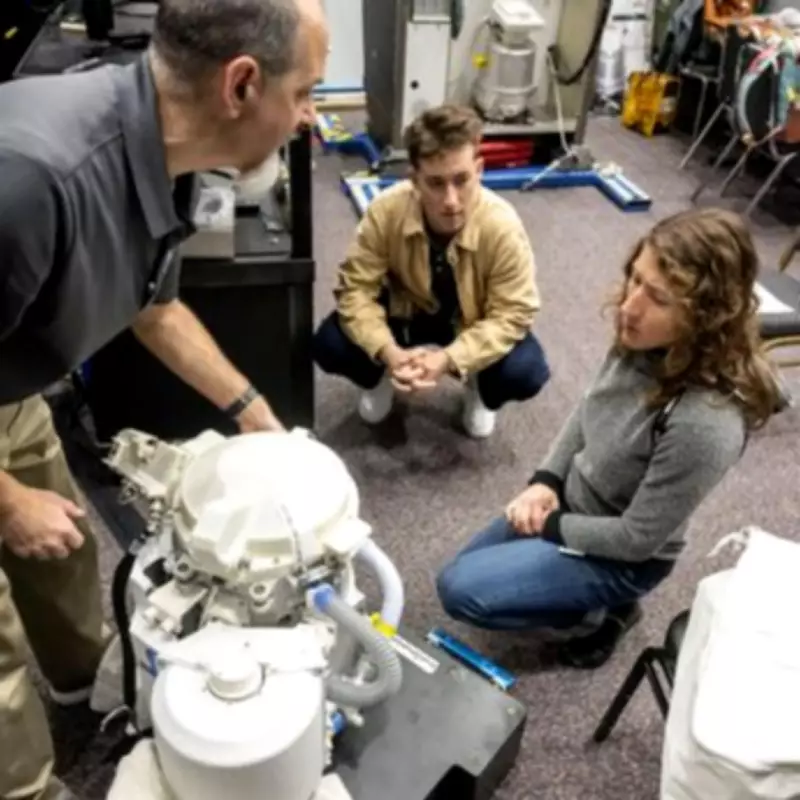
Mission specialist Christina Koch alerted Mission Control to a blinking fault light associated with the Universal Waste Management System, NASA's official name for the spacecraft's toilet. According to live mission commentary, the toilet shut down seconds after activation, with NASA spokesperson Gary Jordan confirming that the fan had jammed. Ground teams immediately began developing instructions to access and clear the fan, aiming to restore the system for the remainder of the mission.
Contingency Measures and Crew Adaptations
In response to the malfunction, Koch was advised to use a handheld Collapsible Contingency Urinal, a bag-and-funnel system, as a temporary solution. This contingency measure allowed the crew to continue their mission while engineers worked on a fix for the so-called "lunar loo." NASA confirmed that mission controllers reviewed data and successfully guided the crew through troubleshooting steps, ultimately resolving the issue.

The Orion capsule's toilet, water dispenser, and other life-support equipment are making their space debut on this mission, as they were not required during the uncrewed Artemis 1 test flight in November 2022. Artemis 2 marks the first crewed lunar mission since 1972, with the Orion spacecraft serving as home for commander Reid Wiseman, pilot Victor Glover, and mission specialists Christina Koch and Jeremy Hansen during their 10-day, 600,000-mile journey around the Moon and back.
Mission Details and Future Implications
The Artemis 2 astronauts will spend the initial 25 hours of their mission in a high, lopsided orbit around Earth, using the separated upper stage of the rocket as a docking practice target for future Moon missions. They will visually judge distances, maintaining a minimum separation of 33 feet from the stage. If all proceeds according to plan, Orion's main engine will propel the crew toward the Moon, approximately 244,000 miles away, utilizing a free-return trajectory that leverages the gravity of both the Moon and Earth to conserve fuel.
On flight day six, Orion is expected to reach its farthest point from Earth, sailing 5,000 miles beyond the Moon and surpassing the distance record set by Apollo 13. After emerging from behind the Moon, the crew will head directly home, with a scheduled splashdown on flight day 10, precisely nine days, one hour, and 46 minutes after liftoff. This incident highlights the challenges of long-duration space travel and the importance of reliable systems for crew comfort and mission success.