Artemis II Astronauts Confront Health Hazards on 10-Day Lunar Voyage
Four astronauts are set to embark on a 10-day journey to the moon and back, covering a staggering 685,000 miles (1.1 million km). However, spending 240 hours in space poses significant health challenges, from motion sickness to muscle deterioration, as revealed by an expert.
Short-Term Mission, Notable Risks
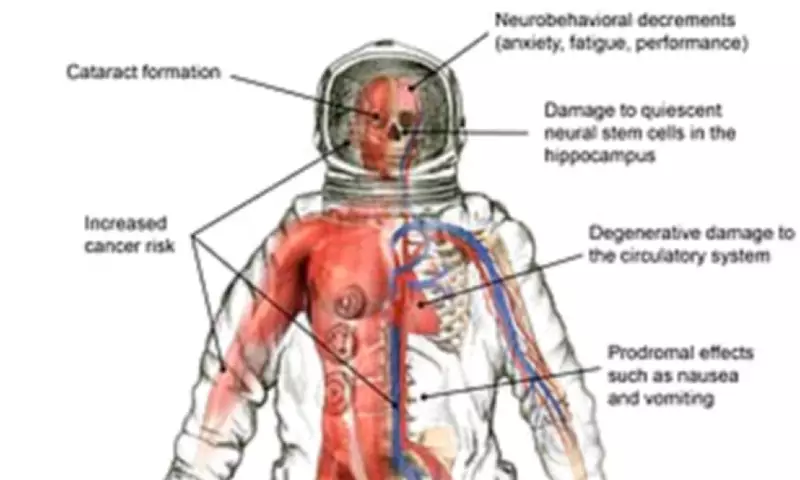
While Artemis II is considered a short-term mission, astronauts Reid Wiseman, Victor Glover, Jeremy Hansen, and Christina Koch will still face a series of physiological issues. Dr Irene Di Giulio from the Centre for Human and Applied Physiological Sciences at King's College London notes that long-term health risks are significantly reduced compared to those on the International Space Station (ISS), but hazards remain.
Key health concerns include:

- High radiation exposure, which can trigger nausea.
- Space motion sickness as the body adapts to microgravity.
- Acute fluid shifts from the lower body to the head, causing discomfort and swelling, often termed chicken legs.
- Sleep disturbances due to altered light-dark cycles and artificial lighting.
- Mental stress and isolation from mission demands and enclosed environments.
Lessons from Past Missions
Last year, shocking before-and-after images of astronauts Butch Wilmore and Suni Williams highlighted the toll of nine months in space, including weight loss, muscle atrophy, and accelerated aging. However, Dr Di Giulio explains that Artemis II astronauts are unlikely to experience such severe declines in muscle and bone health, as these effects typically require longer exposure to altered gravity.
Nevertheless, bone loss and muscle deconditioning can begin within days, as seen in NASA Space Shuttle missions lasting 7 to 14 days. In-flight exercise is crucial to counteract these losses, with activities before, during, and after the mission helping mitigate impacts.
Mitigation Strategies and Mission Goals
To address these risks, astronauts use training, medication for motion sickness, on-board exercise for muscle maintenance, and structured schedules with controlled lighting to reduce sleep issues. During Artemis II, the crew will test systems on the Orion spacecraft and collect biological data to understand deep-space travel's health effects, informing future missions like those to Mars.
Dr Di Giulio emphasizes that this mission is a first step towards establishing a long-term presence on the moon, with challenges including radiation, isolation, and lunar dust. Medical autonomy will be vital for habitats, requiring diagnostic tools, supplies, and crew training.
Artemis II Key Facts
Launch Date: Targeting April window, with possible dates from April 1 to April 6.
Mission Objective: Complete a lunar flyby, test systems for future landings, and collect health data.
Total Distance: 685,000 miles (1.1 million km).
Duration: 10 days.
Estimated Cost: $44 billion (£32.5 billion), including $23.8 billion for the Space Launch System rocket and $20.4 billion for the Orion spacecraft.
Crew: Commander Reid Wiseman, Pilot Victor Glover, Mission Specialist Christina Koch, and Mission Specialist Jeremy Hansen.
Mission Stages: Launch from Kennedy Space Centre, orbital manoeuvres, translunar injection, lunar flyby at 5,523 miles altitude, return to Earth, and splashdown in the Pacific Ocean.