NASA's Artemis II Crew Successfully Breaks Earth Orbit on Historic Moon Mission
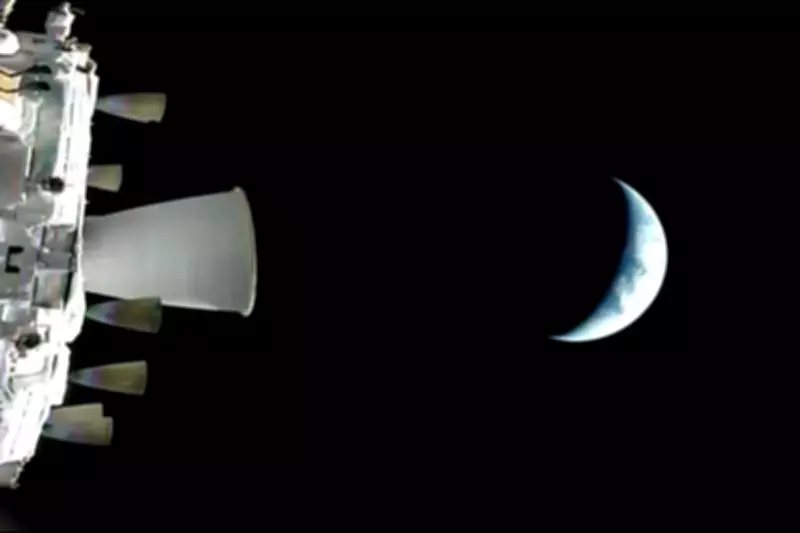
In a landmark moment for space exploration, NASA's first manned mission to the Moon in more than five decades has successfully fired its rockets to break free from Earth's orbit. The historic event occurred early on Friday, 3 April 2026, marking a significant milestone for the Artemis II mission.
A New Era of Lunar Exploration Begins
NASA deputy associate administrator Lori Glaze expressed profound excitement during a news conference, stating: "Ladies and gentlemen, I am so, so excited to be able to tell you that for the first time since 1972 during Apollo 17, human beings have left Earth orbit." This declaration underscores the monumental nature of the achievement, which comes after the Artemis II spacecraft launched from Cape Canaveral in Florida on Wednesday evening.
The four astronauts aboard—Commander Reid Wiseman, pilot Victor Glover, mission specialist Christina Koch, and Canadian astronaut Jeremy Hansen—spent the initial 25 hours of their flight circling Earth before executing the critical maneuver. Known officially as a translunar injection burn, this rocket firing propels the Orion spacecraft toward the Moon, where the crew will conduct a lunar flyby before returning to Earth.

Crew Experiences and Technical Triumphs
Canadian astronaut Jeremy Hansen described the crew's awe-inspiring view from the spacecraft windows as "phenomenal." He reflected on the broader significance of the mission, saying: "Humanity has once again shown what we are capable of, and it's your hopes for the future that carry us now on this journey around the moon."
NASA confirmed that the engine firing has placed the crew on a free return trajectory, allowing them to utilize the Moon's gravity for their journey back to Earth. NASA administrator Jared Isaacman announced on social media: "Nominal translunar injection burn complete. The Artemis II crew is officially on the way to the Moon. America is back in the business of sending astronauts to the Moon. This time, farther than ever before."
Preliminary reports indicate the engine firing proceeded smoothly, with Orion's main engine burning for five minutes and 49 seconds. This engine generates up to 6,000 pounds of thrust—sufficient to accelerate a car from 0 to 60 mph in approximately 2.7 seconds. Additionally, the crew successfully addressed minor issues, including fixing toilet malfunctions and adjusting cabin temperature for optimal comfort.
Mission Details and Historical Context
The Artemis II mission involves several key milestones:
- Orion will travel approximately 4,000 miles beyond the Moon during its lunar flyby on Monday.
- This journey will send the crew about 252,000 miles (406,000 kilometers) into space, surpassing the current record of 248,000 miles set by the Apollo 13 mission in 1970.
- While the astronauts will not land on the lunar surface, this mission paves the way for future lunar landings and establishes a foundation for eventual crewed missions to Mars.
The mission faced previous delays of two months due to technical challenges, such as hydrogen fuel leaks and clogged helium lines. However, these setbacks have been overcome, demonstrating NASA's resilience and commitment to advancing space exploration.
Global Collaboration and Future Ambitions
International cooperation plays a role in this mission, with the Goonhilly Earth Station in Cornwall, England, assisting in tracking the flight. NASA's broader goals include returning astronauts to the lunar surface by 2028, aiming to achieve this milestone before China's planned lunar landing around 2030. This competitive timeline highlights the renewed global interest in lunar exploration and the strategic importance of establishing a sustained human presence beyond Earth.
As the Artemis II crew continues their journey, their mission symbolizes a bold step forward in human spaceflight, reigniting public fascination with the cosmos and setting the stage for future discoveries. The successful break from Earth orbit not only honors the legacy of past Apollo missions but also opens new chapters in our quest to explore the Moon and beyond.