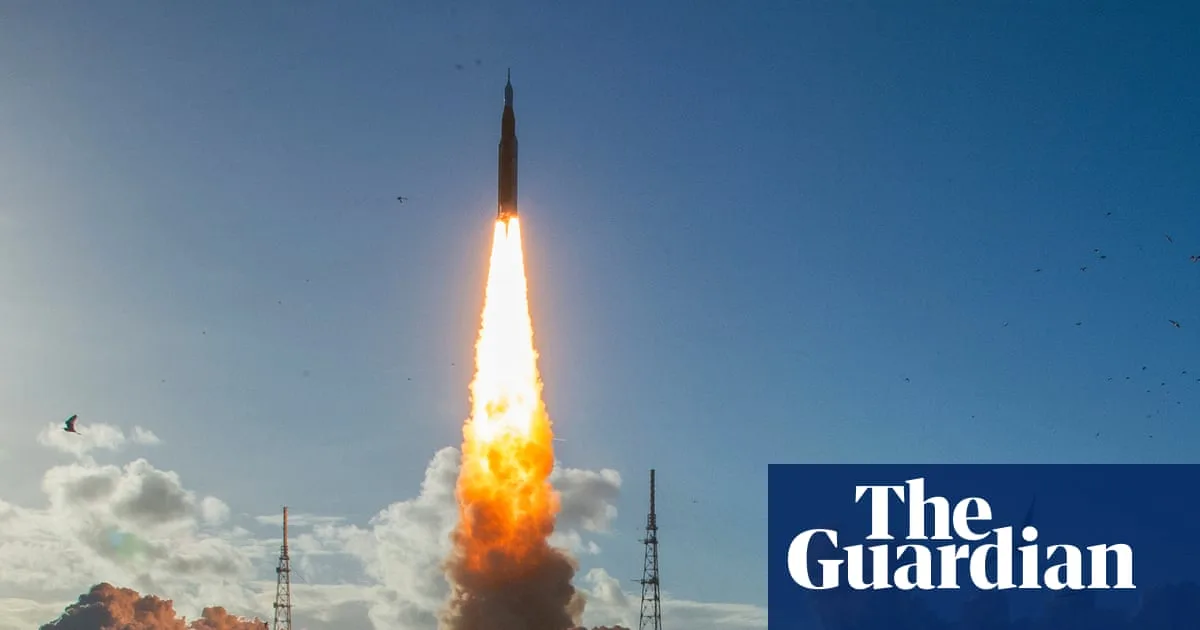
Artemis II Achieves Historic Milestone: First Humans Leave Earth Orbit Since 1972
NASA's Artemis II mission has marked a monumental achievement in space exploration, as its crew of four astronauts successfully fired their engines to depart Earth's orbit for the first time since the Apollo 17 mission in 1972. This critical trans-lunar ignition occurred precisely 25 hours after liftoff, propelling the Orion capsule onto a trajectory toward the moon, nearly 250,000 miles (400,000 kilometers) distant.
"Humanity's Lunar Homecoming Arc" Begins
At a news conference, NASA's Lori Glaze announced with palpable excitement, "Ladies and gentleman, I am so, so excited to be able to tell you that for the first time since 1972 during Apollo 17, human beings have left Earth orbit." The engine firing was described as flawless, setting the stage for what Mission Control termed "humanity's lunar homecoming arc" to bring the astronauts back to Earth.
The crew—Commander Reid Wiseman, pilot Victor Glover, Christina Koch, and Canadian astronaut Jeremy Hansen—spent their first day in space testing the capsule's life-support systems close to Earth before receiving clearance for lunar departure. Hansen recounted being "glued to the capsule's windows" as Earth receded, marveling at the "phenomenal" views. Koch noted they could discern entire continental coastlines and even the South Pole from tens of thousands of miles high.
Breaking Records and Making History
Artemis II is not just a test flight; it's a historic journey that will see the astronauts break the Apollo 13 distance record set in 1970, becoming the farthest humans have ever traveled from Earth. They are also poised to achieve the fastest reentry speed upon their return on April 10. The mission represents a significant step toward NASA's ambitious plans for a moon base and sustained lunar living, with a moon landing targeted for 2028.
This crew is already making history: Victor Glover is the first Black astronaut, Christina Koch the first woman, and Jeremy Hansen the first non-U.S. citizen to launch to the moon, contrasting sharply with Apollo's 24 all-white male lunar travelers. Hansen reflected, "Humanity has once again shown what we are capable of, and it’s your hopes for the future that carry us now on this journey around the moon."
Technical Challenges and Upcoming Milestones
The mission has not been without its hiccups. Shortly after reaching orbit, the capsule's toilet malfunctioned, requiring Koch to perform plumbing tricks under Mission Control's guidance, with contingency urine storage bags used as a backup. Additionally, cabin temperatures dropped so low that astronauts had to retrieve long-sleeved clothes from their suitcases. A valve issue with the water dispenser prompted the crew to fill empty urine bags with over 2 gallons (7 liters) of drinking water as a precaution.
Despite these challenges, the crew remains focused on the journey ahead. The next major milestone is Monday's lunar flyby, where Orion will zoom 4,000 miles (6,400 kilometers) beyond the moon, offering unprecedented views of the lunar far side. The astronauts will also witness a total solar eclipse from their unique perspective as the moon blocks the sun.
To set the mood for the engine firing, Mission Control woke the crew with John Legend's "Green Light" featuring Andre 3000 and a medley of cheers from NASA teams. Glover affirmed, "We are ready to go," encapsulating the mission's spirit of resilience and exploration. As Koch poignantly stated, "With this burn to the moon, we do not leave Earth. We choose it."