Scientists Voice Alarming Safety Fears Over Orion Heat Shield for NASA's Artemis II Moon Mission
As NASA prepares for the highly anticipated Artemis II mission, scheduled to launch as early as 1 April, significant safety concerns have emerged regarding the Orion capsule's heat shield. This critical component is designed to protect astronauts during the perilous re-entry through Earth's atmosphere, but experts warn that issues observed in previous tests could pose grave risks.
Unprecedented Damage from Artemis I Test Raises Red Flags
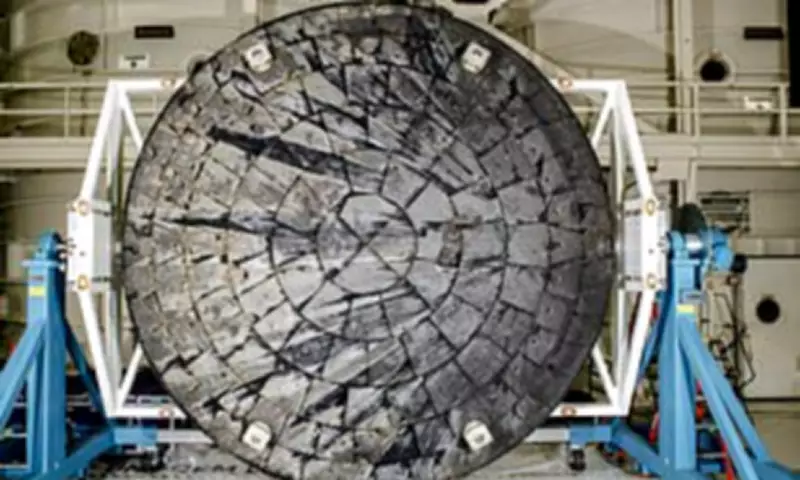
During the unmanned Artemis I test in 2022, NASA discovered that Orion's heat shield suffered unexpected and severe damage. The shield, made of a material called Avcoat, is intended to burn away evenly to dissipate heat. However, large chunks of material were lost unevenly, leaving it cracked and cratered. Dr. Ed Macaulay, a lecturer in Physics and Data Science at Queen Mary University of London, highlighted this in an article for The Conversation, noting that such uneven ablation makes predicting thermal loads during re-entry highly unpredictable.
Further investigation revealed that the Avcoat layer was not permeable enough, causing gases to accumulate in pockets and blast off entire sections. Dr. Danny Olivas, a former NASA astronaut who served on the review team, told CNN, 'There's no doubt about it: This is not the heat shield that NASA would want to give its astronauts.' This damage could expose the crew to dangerously high temperatures, approaching half that of the Sun's surface, during re-entry.

NASA's Response: Trajectory Adjustments Instead of Shield Replacement
Surprisingly, NASA has opted not to replace or redesign the heat shield for Artemis II. Instead, the agency has made crucial adjustments to the mission's trajectory. Originally planned to use a 'skip' re-entry technique, where the capsule bounces on the atmosphere like a stone on water, NASA will now employ a more direct re-entry model. This change aims to reduce uncertainty in heating profiles and minimize the time the shield is exposed to peak temperatures, thereby lowering the risk of gas buildup and further damage.
However, Dr. Macaulay cautions that this adjustment comes with its own challenges. '[It] also means that the crew will be subjected to increased deceleration on re-entry,' he explained. The four astronauts—Commander Reid Wiseman, Pilot Victor Glover, and Mission Specialists Christina Koch and Jeremy Hansen—will rely solely on this heat shield for protection during their 10-day mission to orbit the moon, covering 620,000 miles.
Mission Details and Broader Implications
Artemis II represents a pivotal step in NASA's lunar exploration program, with an estimated total cost of $44 billion. The mission will test systems for future lunar landings and mark the first time in over 50 years that humans observe Earth from deep space. Dr. Macaulay emphasized the human element, stating, 'Human spaceflight has always brought with it calculated risks, but it has also provided a uniquely human perspective on our place in the cosmos.'
The crew's safety hinges on the meticulous work of thousands of scientists and engineers. As they embark on this historic journey, carrying the hopes of a new generation, the success of Artemis II could redefine our understanding of space exploration and our planetary home.