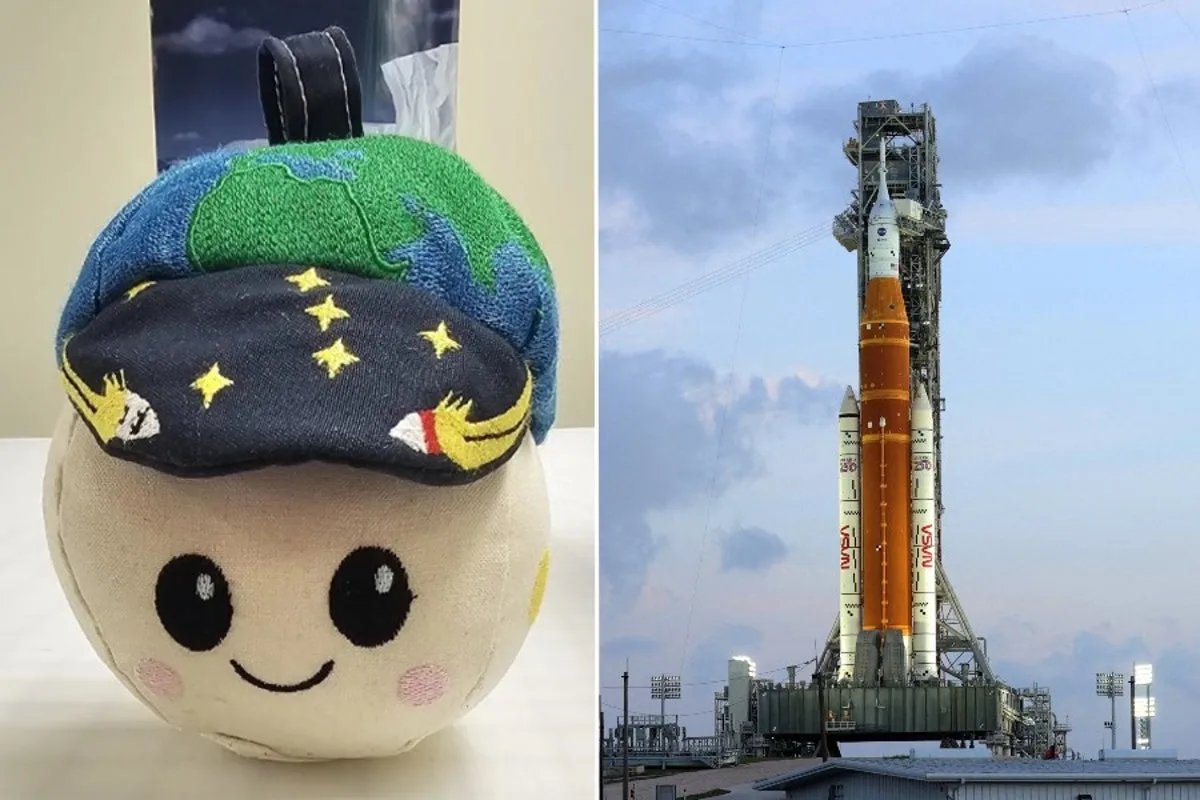
NASA's Artemis II mission is set to launch four astronauts around the moon later this evening, marking the first such attempt in over 50 years. Accompanying the crew will be a special plush toy named 'Rise', a softball-sized moon mascot wearing a baseball cap inspired by the iconic Earthrise photo from the Apollo 8 mission in 1968.
Rise serves as a zero gravity indicator, providing astronauts with visual confirmation that they have reached zero gravity in space. Additionally, the plush carries a MicroSD card containing the names of 5.6 million people from around the world, making it a symbolic participant in the historic flight.
The mascot was designed by Lucas Ye, a second-grader from northern California, and selected from over 2,600 submissions in NASA's Moon Mascot contest. 'The theme of the mission is the Earth Rise photo taken on Apollo 8, which is inspirational to all of us,' said NASA mission specialist Christina Koch.

Rise is the second zero-gravity indicator for NASA's Artemis program, following Snoopy, which flew on the successful Artemis I test flight in 2022. The tradition of using small objects as indicators dates back to 1961, when Russian cosmonaut Yuri Gagarin brought a small doll on the first human spaceflight.
The Artemis II crew includes NASA commander Reid Wiseman, pilot Victor Glover, mission specialist Christina Koch, and Canadian Space Agency astronaut Jeremy Hansen. Koch and Glover are expected to become the first woman and first Black man to journey to the moon, while Hansen will be the first non-U.S. citizen to accomplish the feat.
Artemis II is the second of five planned flights in NASA's Artemis program, which aims to land astronauts on the moon and eventually establish a base there. If successful, the next phase is anticipated in 2027.