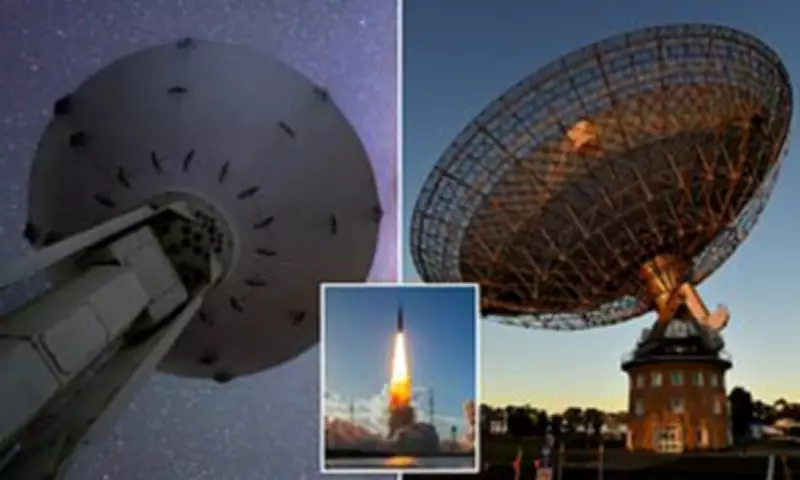
Australia's Space Legacy Reaches New Heights with NASA's Artemis II Mission
Nearly six decades after playing a crucial role in humanity's first moon landing, Australia has once again extended its reach toward the stars. NASA's latest lunar mission, Artemis II, has launched with significant Australian support, marking a new chapter in the nation's space exploration history.
Southern Launch's Critical Tracking Role
South Australian aerospace company Southern Launch is providing essential tracking services for the Orion crew capsule using its TALON telemetry dish at the remote Koonibba Test Range in the state's far west. The four-astronaut mission launched from Cape Canaveral in Florida early Thursday Australian time, beginning a 10-day journey that will see humans travel around the moon for the first time since 1972.
This represents a direct continuation of Australia's space legacy, which began in 1969 when the Parkes radio telescope in New South Wales - famously depicted in the 2000 film The Dish - supported the Apollo 11 mission by tracking the spacecraft and gathering telemetry and television signals from the historic lunar walk.

Modern Technology Meets Historic Legacy
Southern Launch chief executive Lloyd Damp explained that while his company's dish is considerably smaller and lacks some functions of the famous Parkes setup, it employs sophisticated Doppler signal technology to calculate Orion's speed with precision.
'The sound of an emergency services vehicle's siren changes depending on whether it's approaching or moving away from you,' Mr Damp told AAP. 'We determine the spacecraft's velocity using exactly the same principle through frequency changes.'
The Doppler signals collected by Southern Launch are transmitted to NASA through partner company Raven Defense, providing vital navigation data as Orion journeys toward the moon. Artemis II represents a critical crewed test flight around the moon, evaluating essential systems ahead of planned lunar landings in coming years.
Inspiring a New Generation of Space Exploration
'This is an exceptionally exciting day for our team as we support Artemis, which inspires an entire generation,' Mr Damp declared. 'I didn't experience the original moon landings as they happened, but my children are witnessing this new era of space exploration with tremendous enthusiasm as humanity takes these monumental steps forward.'
The historic Parkes dish, officially named Murriyang and operated by Australia's national science agency CSIRO, will also contribute to the Artemis II mission. CSIRO astronomer John Sarkissian confirmed that Murriyang will passively track the spacecraft as part of Intuitive Machines' ground station network, demonstrating capabilities for future missions.
'Artemis II represents the first crewed mission Murriyang has supported since Apollo 17 fifty-four years ago, which is tremendously significant,' Mr Sarkissian noted. 'As a six-year-old watching Neil Armstrong walk on the moon, I never imagined I would participate in a global mission that inspires new generations to pursue space careers.'
Australia's Strategic Space Industry Opportunities
Flinders University Professor Rodrigo Praino emphasized that NASA's ambitious Artemis program - which aims to return humans to the moon by 2028 and establish a lunar base as a stepping stone to Mars - presents substantial opportunities for Australia's space industry.
'This represents a remarkable opportunity for Australia and anyone involved in space technology and infrastructure,' said Professor Praino, who directs the Jeff Bleich Centre for Democracy and Disruptive Technologies. 'Australia must develop strategic approaches and concrete plans to contribute meaningfully to NASA's program.'
Beyond Tracking: Pharmaceutical Innovation in Space
Southern Launch, which also operates a second spaceport at South Australia's Eyre Peninsula, has been launching experimental rockets for international clients for several years. One particularly innovative project involves pharmaceutical development in space.

'The extraordinary aspect is that these satellites manufacture pharmaceuticals while in orbit, requiring specialized landing facilities,' Mr Damp explained. 'If we can produce purer anti-cancer medications in space, we dramatically improve quality of life for patients who must endure these challenging treatments.'
South Australia provides ideal conditions for such operations with its vast, uninhabited spaces and minimal air and maritime traffic. For eight years, Southern Launch has cultivated relationships and developed protocols to ensure these high-tech, high-speed activities can proceed safely alongside commercial airline operations.
As Artemis II continues its journey, Australia's dual contributions - through both historic infrastructure and modern technology - demonstrate the nation's enduring commitment to space exploration and its growing role in humanity's next great leap beyond Earth.