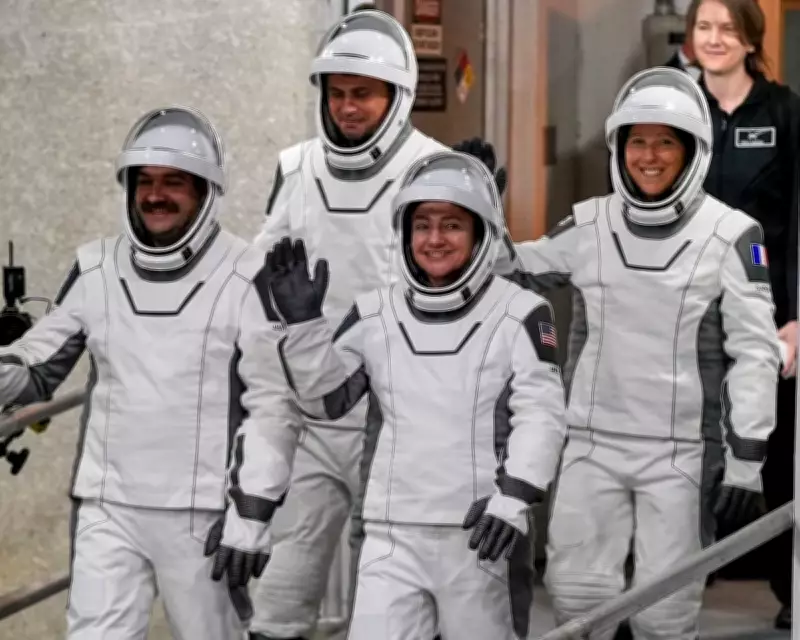
International Space Station Achieves Full Crew Complement for 2026 Operations
The International Space Station (ISS) has officially reached its maximum crew capacity, with seven astronauts now on board for the 2026 mission. This milestone underscores the ongoing success of the orbiting laboratory, which serves as a hub for scientific research and international collaboration in space.
Details of the Crew and Mission Objectives
The full crew includes astronauts from multiple space agencies, such as NASA, Roscosmos, ESA, and JAXA, reflecting the global nature of the ISS partnership. Their arrival was completed through a series of recent spacecraft dockings, ensuring all positions are filled for the scheduled six-month expedition.
Key activities planned for this mission include:

- Advanced experiments in microgravity to study effects on human biology and materials science.
- Maintenance and upgrades to the station's systems to extend its operational lifespan.
- Earth observation projects aimed at monitoring climate change and natural disasters.
This crew configuration allows for optimal efficiency in conducting daily operations and research, with astronauts working in shifts to maximize productivity. The increased manpower enables more complex tasks, such as spacewalks and equipment repairs, to be carried out safely and effectively.
Implications for Future Space Exploration
Reaching full crew capacity is a critical step for the ISS, as it demonstrates the station's readiness to support intensive scientific endeavors. This achievement comes at a time when global interest in space exploration is growing, with plans for lunar missions and eventual Mars expeditions gaining momentum.
The presence of a full crew enhances the station's role as a testbed for technologies and protocols that will be essential for long-duration space travel. By maintaining a robust human presence in low Earth orbit, the ISS continues to provide invaluable data on living and working in space, which informs future missions beyond our planet.
Overall, the successful assembly of a full crew for the 2026 mission highlights the enduring value of the International Space Station as a symbol of international cooperation and a cornerstone of modern space science.