Scientists May Have Located Long-Lost Soviet Moon Lander
In a breakthrough that could solve a decades-old space mystery, scientists believe they may have finally spotted the Luna 9 lander, a Soviet spacecraft that vanished on the moon over 60 years ago. This discovery, if confirmed, would mark the end of a long search for the historic craft that achieved the first-ever soft landing on the lunar surface.
The Historic Mission of Luna 9
On February 3, 1966, the uncrewed Luna 9 lander made history by executing a soft landing on the moon, a full three years before the United States Apollo missions. After beaming back a picture of the lunar landscape, the craft's batteries depleted, and due to its chaotic landing, its final resting place became a mystery that has puzzled researchers for generations.
The lander, which weighed 99 kilograms and had a diameter of 58 centimetres, deployed a spherical capsule with airbags that allowed it to survive an impact at 14 miles per hour. It bounced several times in the moon's low gravity before coming to rest, but without solar panels, its batteries died just three days later, transmitting only nine images back to Earth.

How the Discovery Was Made
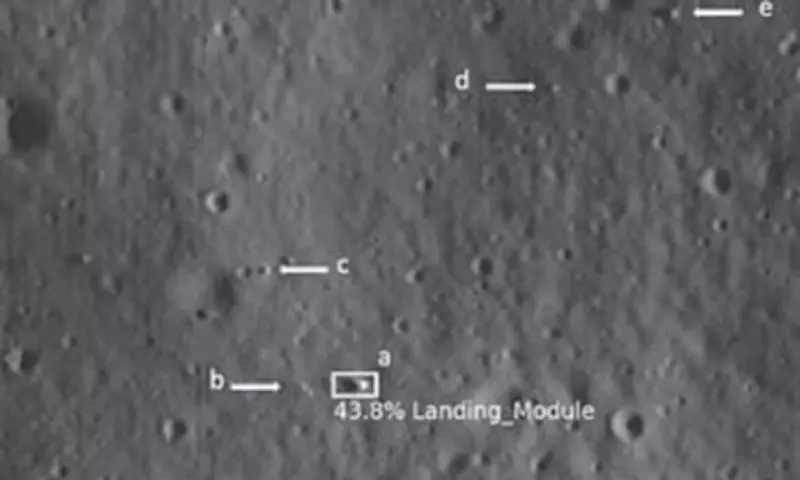
A team of scientists developed a machine learning algorithm, dubbed 'You-Only-Look-Once—Extraterrestrial Artifact' (YOLO-ETA), to analyse hundreds of images captured by NASA's Lunar Reconnaissance Orbiter. They focused on a roughly three-mile by three-mile area in the moon's Oceanus Procellarum region, where the Soviets had initially targeted the landing.
The algorithm, trained on known lunar landing sites like those from Apollo missions and the Soviet Luna 16 probe, identified several previously unseen marks on the surface. These disturbances in the soil are believed to correspond to Luna 9's tumbling descent and its ejected components.
Potential Location and Evidence
In a paper published in the journal npj Space Exploration, the researchers pinpoint a location at approximately 7.029° N, –64.329° E as a strong candidate for Luna 9's final resting place. Scattered within 200 metres of this main object, the algorithm detected smaller marks that could be parts of the lander.
The scientists note that the topography and horizon from this spot match the images sent back by Luna 9 in 1966, adding credibility to their findings. They write: 'The multiple detections by YOLO-ETA within this distance range could plausibly correspond to the lander and its ejected components.'
Challenges and Future Steps
Despite the promising results, the researchers caution that the images from NASA's Lunar Reconnaissance Orbiter are not clear enough to provide definitive confirmation. Future observations with more advanced spacecraft under varied lighting conditions will be necessary to verify the discovery.
Luckily, India's Chandrayaan-2 mission, scheduled to launch in March 2026, is set to fly over the same area identified by the researchers. If its images reveal more details of the potential landing site, it could finally confirm the location of the long-lost Luna 9 lander, closing a chapter in lunar exploration history.