NASA Updates Artemis 2 Launch Status After Minor Scare
Just hours before the scheduled lift-off, NASA provided a crucial update on the Artemis 2 mission, which aims to send four astronauts on humanity's first crewed Moon mission in over 50 years. The space agency clarified earlier reports of a "minor issue," ensuring that all systems are go for the historic flight.
Launch Commentator Corrects Earlier Statement
NASA launch commentator Derrol Nail initially mentioned a small problem but later retracted, stating, "I mentioned that there was a small issue. That actually was incorrect. There was no issue." He explained that engineers are monitoring a display unit inside the Orion spacecraft running slightly cooler than normal, but it remains within safe limits and is not a concern for the mission.
Mission Details and Crew Preparation
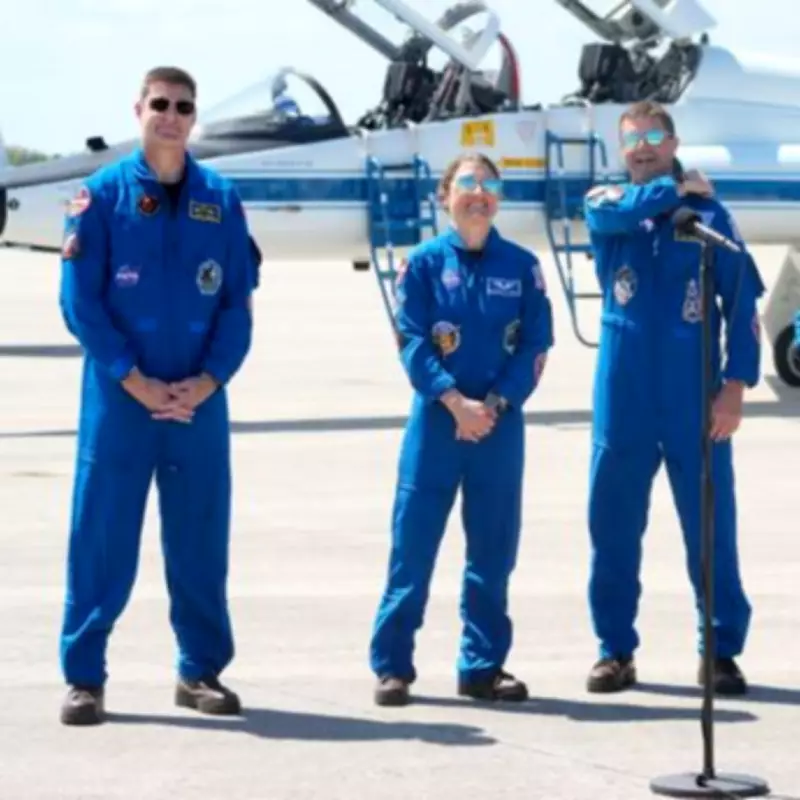
The Space Launch System rocket and Orion spacecraft are poised to launch from NASA's Kennedy Space Center in Cape Canaveral, Florida, at approximately 6:24 PM EDT (11:24 PM BST). The crew includes NASA astronauts Reid Wiseman, Victor Glover, and Christina Koch, along with Canadian Space Agency astronaut Jeremy Hansen. They are currently suiting up and undergoing final preparations, with a live broadcast capturing their activities.

Weather and Timing Considerations
NASA weather experts have been closely tracking forecasts, with an 80% chance of favorable conditions for launch. The main concerns include cloud coverage and high winds, but AccuWeather meteorologists support NASA's assessment, predicting low risk of rain or lightning during the launch window. The timing is critical, as the trajectory must avoid extended eclipses to maintain power and temperature control for Orion.
Historical Significance and Public Excitement
Artemis 2 represents a major milestone, marking the first crewed lunar mission since Apollo 17 in 1972. It will take astronauts farther into space than ever before, with a planned flyby 5,000 miles beyond the Moon. Over 35,000 people are watching NASA's live stream, and thousands are gathering in Florida to witness the event, highlighting widespread public interest.
Crew Backgrounds and Mission Goals
The diverse crew brings unique experiences: Reid Wiseman, a former Navy captain; Victor Glover, the first Black astronaut on a lunar mission; Christina Koch, who holds the record for the longest single spaceflight by a woman; and Jeremy Hansen, the first Canadian to travel to the Moon. The 10-day mission aims to test Orion's systems and pave the way for future lunar exploration and Mars missions.
Technical Updates and Fuelling Process
NASA has completed fuelling the core stage's liquid hydrogen tank to 100% capacity and is replenishing it to account for natural boil-off. The fast fill phase for the upper stage is underway, ensuring the rocket is ready for lift-off. Despite past delays due to hydrogen leaks, current checks indicate no significant issues.
Life Onboard and Mission Timeline
Astronauts will live in the Orion capsule, roughly the size of a garden shed, for the duration of the mission. They have selected favorite foods and beverages, with a menu including hot sauces and various drinks. After launch, they will spend 25 hours in Earth orbit before heading to the Moon, with a splashdown planned on flight day 10.
This mission underscores NASA's efforts to re-establish human capability for deep space exploration, with Artemis 2 serving as a key step toward sustained lunar presence and future interplanetary travel.