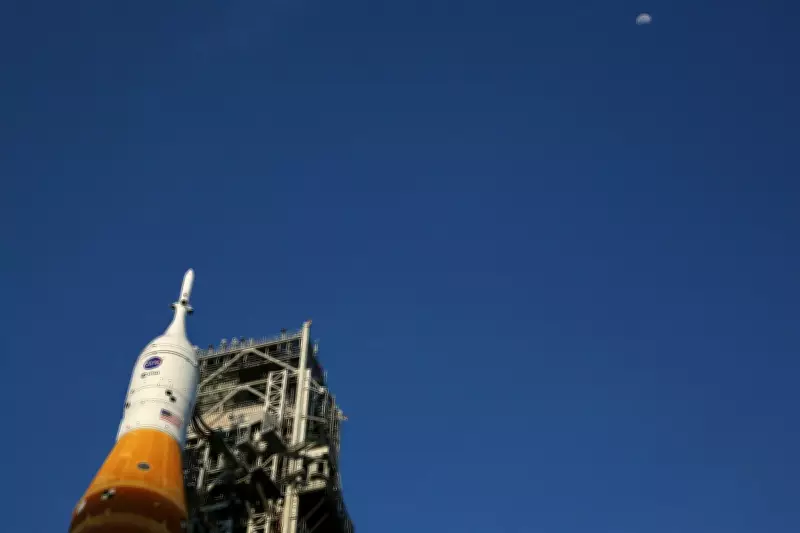
NASA Announces New Launch Date for Artemis II Moon Mission
NASA has set a new target launch date for its Artemis II mission, which will mark humanity's first crewed journey to the Moon in more than five decades. The 98-metre (322-foot) Space Launch System (SLS) rocket will roll out of the hangar and return to the launch pad on 19 March at the Kennedy Space Center in Cape Canaveral, Florida, with a launch attempt possible as early as 1 April.
Delays and Technical Challenges
The Artemis II crew, consisting of commander Reid Wiseman, pilot Victor Glover, and mission specialists Christina Koch and Jeremy Hansen of the Canadian Space Agency, were originally slated to blast off on a lunar fly-around earlier this year. However, fuel leaks and other issues with the SLS rocket caused significant delays. Although NASA managed to address hydrogen fuel leaks at the pad in February, a helium-flow problem forced the agency to return the rocket to the Vehicle Assembly Building for repairs, pushing the mission into April.
NASA has only a limited number of days in early April to launch before standing down until late April into early May, making this a critical window for the historic mission.

Program Overhaul and Future Plans
In late February, NASA's new administrator, Jared Isaacman, announced a major overhaul of the Artemis program. Dissatisfied with the slow pace and lengthy gaps between lunar missions, he added an extra practice flight in Earth orbit for next year, now designated as Artemis III. The Moon landing by two astronauts has been shifted to Artemis IV, with Isaacman targeting one or even two lunar landings in 2028.
Safety Concerns and Technical Hurdles
This week, NASA's Office of Inspector General warned in an audit that the space agency needs to develop a rescue plan for its lunar crews. The report highlighted that landing near the Moon's south pole will be riskier than the Apollo missions near the equator due to the rough polar terrain.
Contractors SpaceX, led by Elon Musk, and Blue Origin, led by Jeff Bezos, have accelerated work on the moon landers to meet the new 2028 target date. However, the inspector general's office noted that many technical challenges remain, including refueling the landers in Earth orbit before flying to the Moon.
In a press briefing on Thursday, Lori Glaze, NASA’s Exploration Systems Development acting associate administrator, stated, "During the flight readiness review, we had extremely thorough discussions — very open, transparent. We talked a lot about our risk posture and how we're mitigating those risks. We reviewed the challenges that we've had and how we've addressed them, and we talked about the work that remains, what's left to do, and how we're going to get through all of that."
This announcement comes as NASA prepares for a pivotal moment in space exploration, aiming to reignite lunar missions after a long hiatus since the Apollo era.