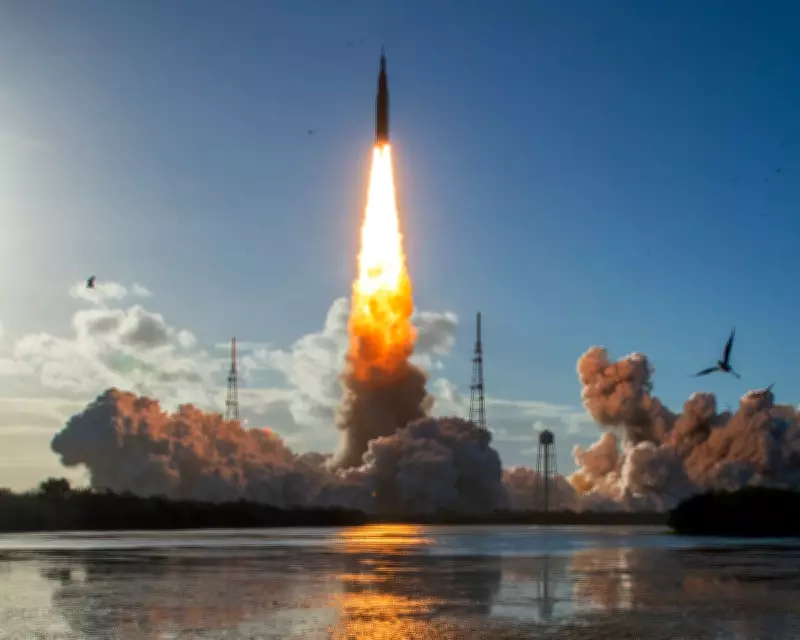
NASA Trials Ultra-Local Weather Model for Rocket Launches and Events
In a significant advancement for meteorological science, NASA has initiated trials of a high-resolution weather model designed to produce ultra-local, short-term forecasts. This development is particularly crucial for rocket launches, where adverse weather conditions can lead to catastrophic failures, and for large-scale events such as Wimbledon, where precise weather predictions are essential for planning and safety.
High-Resolution Model for Enhanced Predictions
Meteorologists at NASA's Wallops Flight Facility in Virginia are currently testing the US1k model, developed by Meteomatics. This model boasts a resolution nine times finer than existing solutions, operating on a 1km grid and providing updates in 15-minute increments. The MetX interface is specifically engineered to deliver critical information clearly, even in high-stress scenarios like launch countdowns.
The importance of accurate weather forecasting for space missions cannot be overstated. Historical incidents underscore this need: in 1992, the Chinese Long March 2E satellite launch disintegrated after encountering high-altitude winds, and in 1969, Apollo 12 was struck by lightning shortly after liftoff, causing severe damage to instruments. Fortunately, the Apollo mission continued successfully, but such events highlight the potential risks.

Applications Beyond Space Exploration
While improved short-term forecasts may be a lifesaver for NASA, their utility extends to other domains. Event organisers, such as those at Wimbledon, heavily rely on ultra-local forecasts to monitor individual clouds and predict imminent heavy showers. This allows for timely decisions that can protect attendees and ensure smooth operations.
A future public service offering local forecasts could gain widespread popularity. Many people find national monthly outlooks less relevant than knowing whether they will encounter rain during a short trip to the shops in the next half-hour. This shift towards hyper-local weather data reflects a growing demand for precision in everyday life.
As meteorologists continue to refine long-range predictions, the focus on ultra-short-term models like US1k demonstrates a commitment to addressing specific, high-stakes needs. The trials at Wallops Flight Facility mark a promising step towards safer rocket launches and more reliable event planning, potentially saving lives and resources in the process.