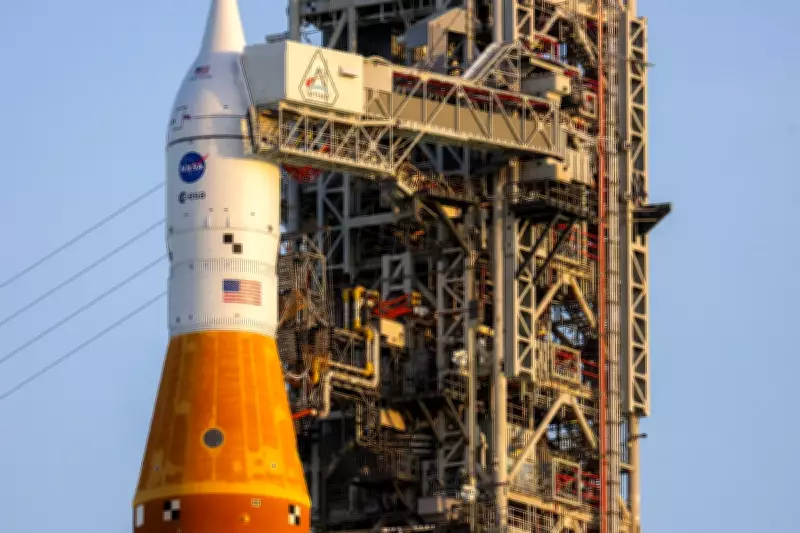
NASA has embarked on a monumental journey back to the moon with the launch of the Artemis II mission, marking humanity's first lunar flyby in more than five decades. This historic event, which saw four astronauts depart from Florida on Wednesday evening, represents a critical step in America's ambitious $93 billion Artemis program, aimed at returning humans to the lunar surface by 2028 and eventually reaching Mars.
The Artemis Program: A New Era of Lunar Exploration
The Artemis II mission, costing $4 billion, is the second phase of NASA's comprehensive return-to-moon initiative, originally launched under the Trump administration. Unlike the Apollo missions of the 1960s and 1970s, which focused on brief visits, Artemis aims to establish a permanent presence on the moon. Newly-appointed NASA administrator Jared Isaacman emphasized in an interview on The Conversation podcast that this program is not merely about planting flags but about building an enduring base to unlock scientific and economic value from the lunar surface.
Why Return to the Moon?
If America has already been to the moon, why invest $93 billion in going back? The answer lies in long-term goals that extend far beyond lunar exploration. The Artemis program serves as a gateway to Mars, with plans to test commercial spacecraft from companies like SpaceX and Blue Origin in 2027, leading to a nuclear-powered moon base by the 2030s. This base will not only solidify U.S. leadership in spaceflight but also ensure human survival beyond Earth, according to NASA officials.

Retired astronaut Dr. Bonnie Dunbar, who joined NASA in 1978, stated in a release to The Independent that Artemis advances science, tests technology, and forges the path to Mars. Additionally, launching rockets from the moon, with its lower gravity, makes logistical sense for deep-space missions, as explained by planetary scientist Professor Sara Russell.
Economic and Geopolitical Implications
The Artemis program is poised to bolster the commercial space industry through partnerships that reduce government costs and accelerate progress. NASA recently announced plans to incorporate more commercially produced hardware for frequent lunar landings, targeting missions every six months. Beyond economics, the stakes are high in a great-power competition with China, which aims to send astronauts to the moon by 2030. Scott Pace of George Washington University's Space Policy Institute noted that rules are made by those who show up, highlighting the urgency for U.S. leadership.
Diversity and Environmental Concerns
Artemis II also marks a stride for diversity, with mission specialist Christina Koch set to become the first woman and NASA pilot Victor Glover the first Black man to journey to the moon. Canadian astronaut Jeremy Hansen will be the first non-U.S. citizen to achieve this feat. However, the mission raises environmental issues, such as space junk pollution and carbon emissions from rocket launches, which contribute to climate change—a concern the Trump administration has dismissed as a hoax.
Scientific Benefits and Future Prospects
Despite challenges, the moon holds 4.5 billion years of history that can reveal insights into Earth's evolution and cosmic rays. NASA plans to build a base at the lunar South Pole, home to ancient geological features like the South-Pole Aitken Basin, offering fertile ground for research. While some argue the funds could address urgent Earth-based issues like climate change, proponents see Artemis as essential for humanity's multi-planetary future.
In summary, Artemis II is more than a nostalgic return; it's a strategic investment in space exploration, economic growth, and international prestige, setting the stage for humanity's next giant leap to Mars.